

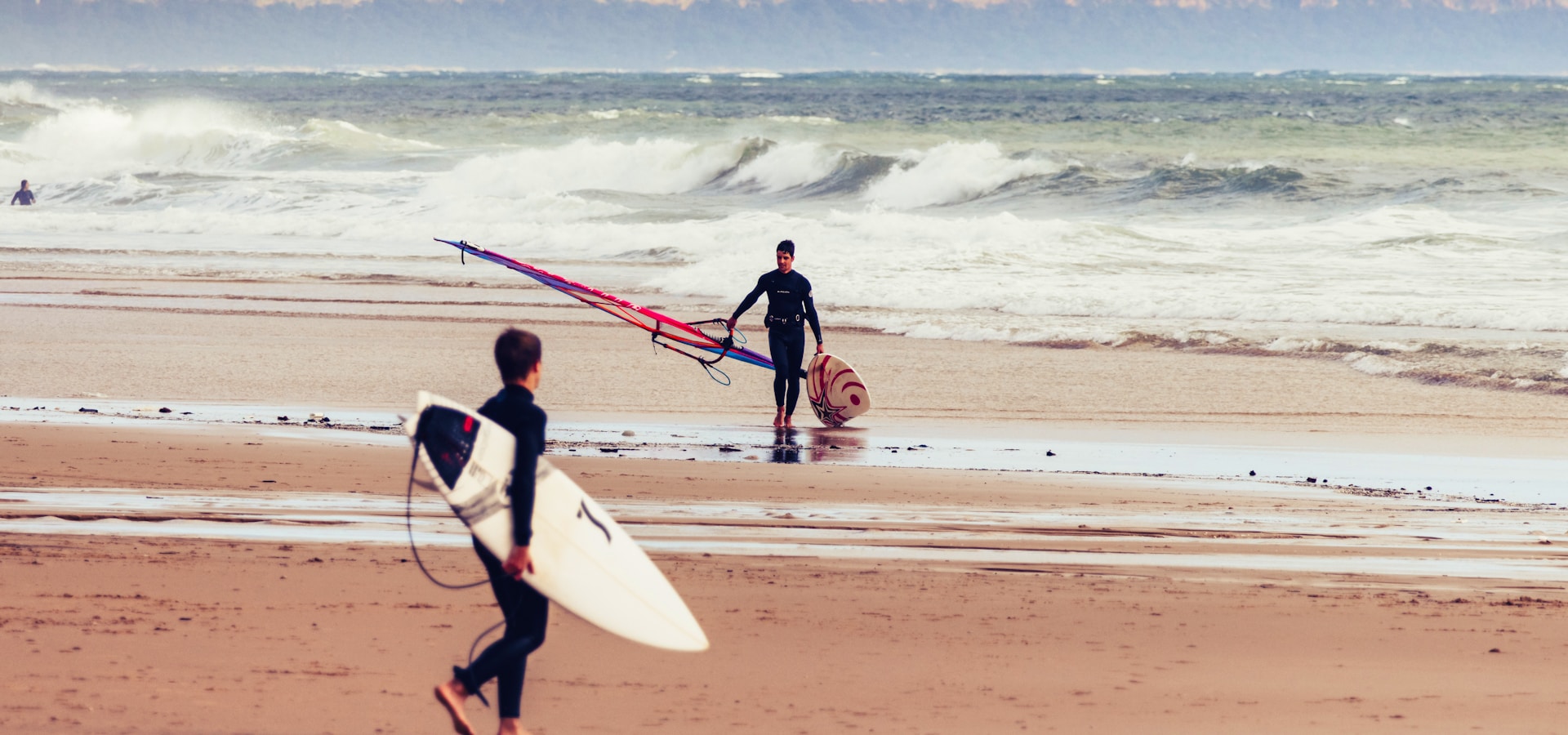
OESTE
Home of Nazaré's 80ft tow-in monsters and a string of mellow bays from Santa Cruz to São Martinho do Porto — Oeste is Portugal's big-wave coast 90min north of Lisbon.
About Oeste
Oeste is the stretch of Portuguese coast between Lisbon and Peniche, and it owns the most famous wave on Earth: Praia do Norte in Nazaré, where an undersea canyon focuses Atlantic swell into 50–100ft tow-only walls every winter. Garrett McNamara's 78ft ride here in November 2011 launched the global big-wave era.
Beyond the monster, the region offers gentle horseshoe bays at São Martinho do Porto and intermediate beach breaks around Santa Cruz.
Surf level
| Skill level | Jan-Feb | Mar-Apr | May-Jun | Jul-Aug | Sep-Oct | Nov-Dec |
|---|---|---|---|---|---|---|
| Beginners | ||||||
| Intermediate | ||||||
| Advanced |
- Best time to go
- Good time to go
- Ok time to go
- Less desirable time to go
- Not recommended time to go
Weather & Travel Comfort


| Metric | Jan-Feb | Mar-Apr | May-Jun | Jul-Aug | Sep-Oct | Nov-Dec |
|---|---|---|---|---|---|---|
| Weather | ~12–14°C | ~14–17°C | ~18–23°C | ~21–26°C | ~18–22°C | ~12–15°C |
| Rainy days | 12d | 10d | 6d | 3d | 8d | 12d |
| What to Pack |  Water Temperature~13°C Water Temperature~13°C | Water Temperature~13–14°C | Water Temperature~15–18°C | Water Temperature~19–20°C | Water Temperature~17–19°C | Water Temperature~14–15°C |
- Boots if neededFor cold water or reef breaks
- Full protection wetsuitCold water
- Shorty / springsuitMild conditions
- No wetsuitWarm water
Tips for Surfing Oeste
Portugal's Silver Coast hides São Martinho do Porto's beginner horseshoe between Peniche and Nazaré's tow-only giants. The four tips below cover lessons in the bay, where to watch Praia do Norte from above, and which paddle-out you should never attempt.

Start at São Martinho
Beginners: head to São Martinho do Porto's horseshoe bay. Group lessons run €30–€45.
Watch Nazaré From Above
On giant winter swells, walk to the Forte de São Miguel Arcanjo lighthouse for photos.

Wetsuit by Season
3/2mm June–October, 4/3mm November–May. Water dips to 13°C in February — pack a hood.
Never Paddle Praia do Norte
Praia do Norte is tow-only with jet-ski support. Surf Praia da Vila instead.
Frequently Asked Questions
When is the best time to surf in Oeste?
Skill drives the answer. Beginners score in July, with good conditions May, June and August at São Martinho do Porto's sheltered bay. Intermediates peak May, June, August and September on the Santa Cruz and Areia Branca beach breaks. Advanced and big-wave surfers come September through April, when NW Atlantic swells light up Santa Cruz and the Nazaré Canyon turns Praia do Norte into a 30–80ft amphitheatre.
Is Oeste good for beginners?
Yes — at the right beach. São Martinho do Porto is a near-enclosed horseshoe bay 13km south of Nazaré, and the narrow ocean opening filters most of the swell energy before it reaches the inside reform. That makes it the safest lesson spot on the whole coast. Praia da Vila in Nazaré also works on small days. Stay completely away from Praia do Norte regardless of conditions.
How big do the waves get in Oeste?
Beach breaks like Santa Cruz and Foz do Arelho run 2–4ft most of summer and 4–10ft from October through March. Praia do Norte in Nazaré is the outlier on Earth: 30–80ft tow-only walls in winter, with paddle days at 15–25ft and outliers above 100ft on rare canyon-aligned swells. Sebastian Steudtner's 86ft 2020 ride at Nazaré stands as the WSL world record.
Do I need a wetsuit to surf in Oeste?
Yes, year-round. Water sits between 13°C in February and 20°C in August. A 3/2 fullsuit covers June through October, while a 4/3 handles November through May. Pack a hood for January and February if you feel the cold — the Atlantic at 13°C bites quickly. Boots are optional; most regional surfers skip them outside the depths of winter.
How do I get to Oeste from Lisbon?
Take the Rede Expressos bus from Sete Rios station in Lisbon. Buses leave roughly every two hours, the trip to Nazaré takes about 2 hours, and tickets run around €10. From Lisbon airport, ride the red metro to São Sebastião, switch to blue for one stop to Praça de Espanha, then walk five minutes to the bus terminal. Driving the A8 toll road is about 1h 30min for €10 in tolls. Nazaré has no train.
Where should I stay in Oeste for surfing?
Stay in Nazaré if you want the big-wave atmosphere — lower-town cafes, the harbour fish auction, and the funicular up to the Sítio cliff for the Praia do Norte view. Pick São Martinho do Porto for a calmer family base around its sheltered horseshoe bay and easy beginner access. Santa Cruz is the smaller surf-scene pick, closer to Lisbon and well placed for the southern Oeste beach breaks.
Other regions in Portugal
 2
2 1
1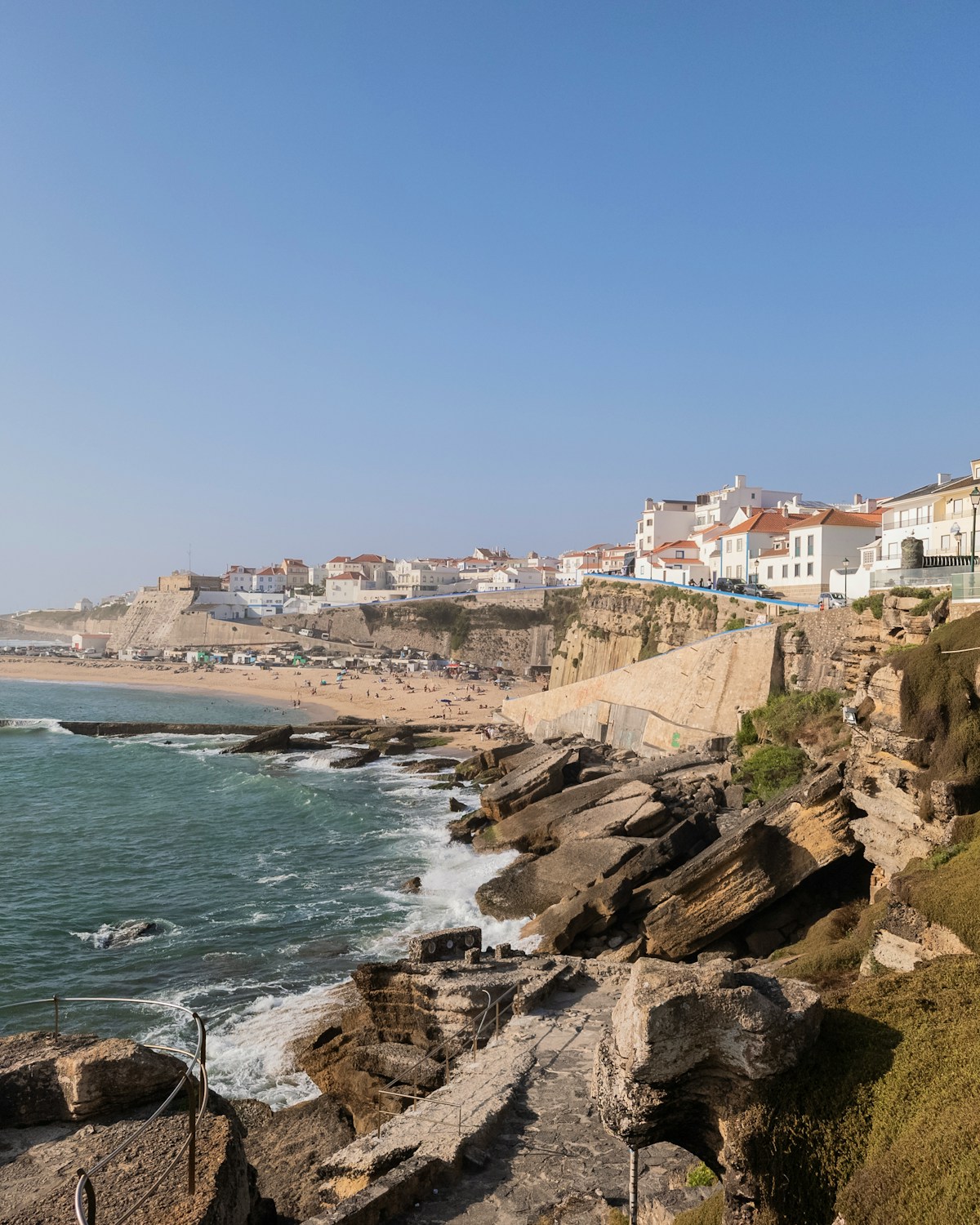
The Ultimate Guide to Surfing in Oeste
What makes Oeste unique
One wave defines this region. Praia do Norte in Nazaré sits above the Nazaré Canyon — a 5km-deep underwater trench that funnels open-ocean swell straight into the cliff and amplifies it on contact with the shallows. The result is the largest rideable surf on the planet. Garrett McNamara towed a 78-foot wave here in November 2011 and dragged the global big-wave circus to a sleepy Portuguese fishing village; in October 2020, German charger Sebastian Steudtner posted an 86ft ride that still stands as the WSL world record. The marquee event is the TUDOR Nazaré Big Wave Challenge, with a November-to-March waiting period and a 25ft minimum face. Beyond Nazaré, Oeste stretches south through Santa Cruz and São Martinho do Porto toward Peniche, 30 minutes down the coast — a chain of beach breaks and horseshoe bays inside Portugal that cover every skill level except the truly extreme.
Oeste surf spots by skill level
Praia do Norte (Nazaré) is the monster. Tow-only on giant winter swells, paddle-rideable for elite big-wave crews on the smaller days, and lethal for everyone else. Holds 30–100ft. The break is unmanageable from the sand — locals and pros launch jet-skis from the harbour. Big-wave crews and tow teams only. Walk to the Forte de São Miguel Arcanjo lighthouse for photos instead.
Praia da Vila (Nazaré) is the town beach, tucked under the cliffs south of the headland. A completely different wave from Praia do Norte: gentle, sand-bottom, sheltered when the giant swell wraps around the point. Works through summer and on smaller winter days. Beginners and improvers when small.
São Martinho do Porto sits 13km south inside a near-perfect horseshoe bay with a single narrow opening to the Atlantic. The geometry strips most of the swell energy at the mouth, leaving a soft inside reform that holds up while neighbouring beaches close out. Beginners — the safest lesson spot in the region.
Foz do Arelho is a beach break at the mouth of the Óbidos lagoon, 10km south of São Martinho. Mixed banks, less crowded than Peniche, fun on small-to-medium NW swell. Improvers to intermediates.
Santa Cruz anchors the southern half of Oeste with a long beach-break stretch that picks up consistent NW swell and rarely sees the school crowds you find further south. Intermediates.
Praia da Areia Branca continues that intermediate beach-break menu another 15km down the coast. Long sand stretch, room to spread out, peaks shifting after every storm. Intermediates.
Praia de São Lourenço (the Oeste version, near the Ericeira border — not to be confused with Ericeira's big-wave reef) rounds out the menu when northern Oeste maxes out.
When to surf Oeste: month-by-month
October to March is when the canyon does its work. Swell averages 6–15ft on exposed beaches, Praia do Norte goes 30–80ft on the marquee days, water cools from 17°C in October to 13°C in February, and the WSL big-wave window opens. Santa Cruz and Foz do Arelho stay rideable; Nazaré goes from spectator sport to reality TV. April to June is the shoulder — 3–5ft swell, water climbing through 14–18°C, Santa Cruz and Areia Branca peaking for intermediates. July and August flip the script entirely: 2–4ft mush, 19–20°C water, São Martinho's bay becoming the regional beginner classroom, and Praia do Norte going dormant. September is the local sweet spot — 19°C water still, swell starting to refill, summer crowds gone home, and the big-wave crew watching the charts.
Where to stay in Oeste
Nazaré is the anchor. Stay in the lower town near Praia da Vila for cafe culture, the daily fish auction at the harbour, and walking access to the funicular up to Sítio (the cliff-top neighbourhood with the lighthouse and the Praia do Norte viewpoint). Mid-range pricing, busy in summer, transformed during the big-wave season. São Martinho do Porto is the calm family pick — guesthouses around the bay, walkable beach, lower nightly rates than Nazaré. Santa Cruz is the smaller surf-scene option, closer to Lisbon and the regional intermediate beach breaks.
How to get to Oeste from Lisbon
From Lisbon, the Rede Expressos bus runs roughly every two hours from Sete Rios station to Nazaré — about 2 hours, around €10 one way. Santa Cruz and São Martinho do Porto sit on the same line at shorter distances. From Lisbon airport, ride the red metro line to São Sebastião, switch to blue for one stop to Praça de Espanha, then walk five minutes to Sete Rios. Driving the A8 toll road takes about 1h 30min for €10 in tolls; coming south from Leiria is faster. Note: Nazaré has no train station — it's bus or car only.
Surf schools, gear rentals and local culture
Lesson operators worth knowing as reference points: Nazaré Surf School and Onda Pura Nazaré in town, plus a thicker school cluster around Santa Cruz. The big-wave scene is a separate world — the North Canyon Show team built around the McNamara era pioneered tow-in operations from the harbour, and the modern crew still runs the same protocols. Soft-top rentals run €15–€20/day; performance shortboards €25–€35/day. Big-wave guns are not casual rentals.
A cultural note: Nazaré was a working fishing village for centuries before McNamara showed up. The sete saias tradition — fishermen's widows wearing seven layered skirts — still appears in town festivals, and the morning fish auction at the harbour draws locals who've never paddled out. That working-class character grounds the place. The lineup at Praia da Vila treats visitors well; the cliff above Praia do Norte enforces one rule above all: respect what the canyon does, and don't paddle anything you can't tow off.