

ALGARVE
Two coastlines meet at Sagres, Europe's southwestern corner — the Algarve runs 6 named breaks from beginner Praia da Rocha to advanced Praia do Tonel, working 12 months a year.
About Algarve
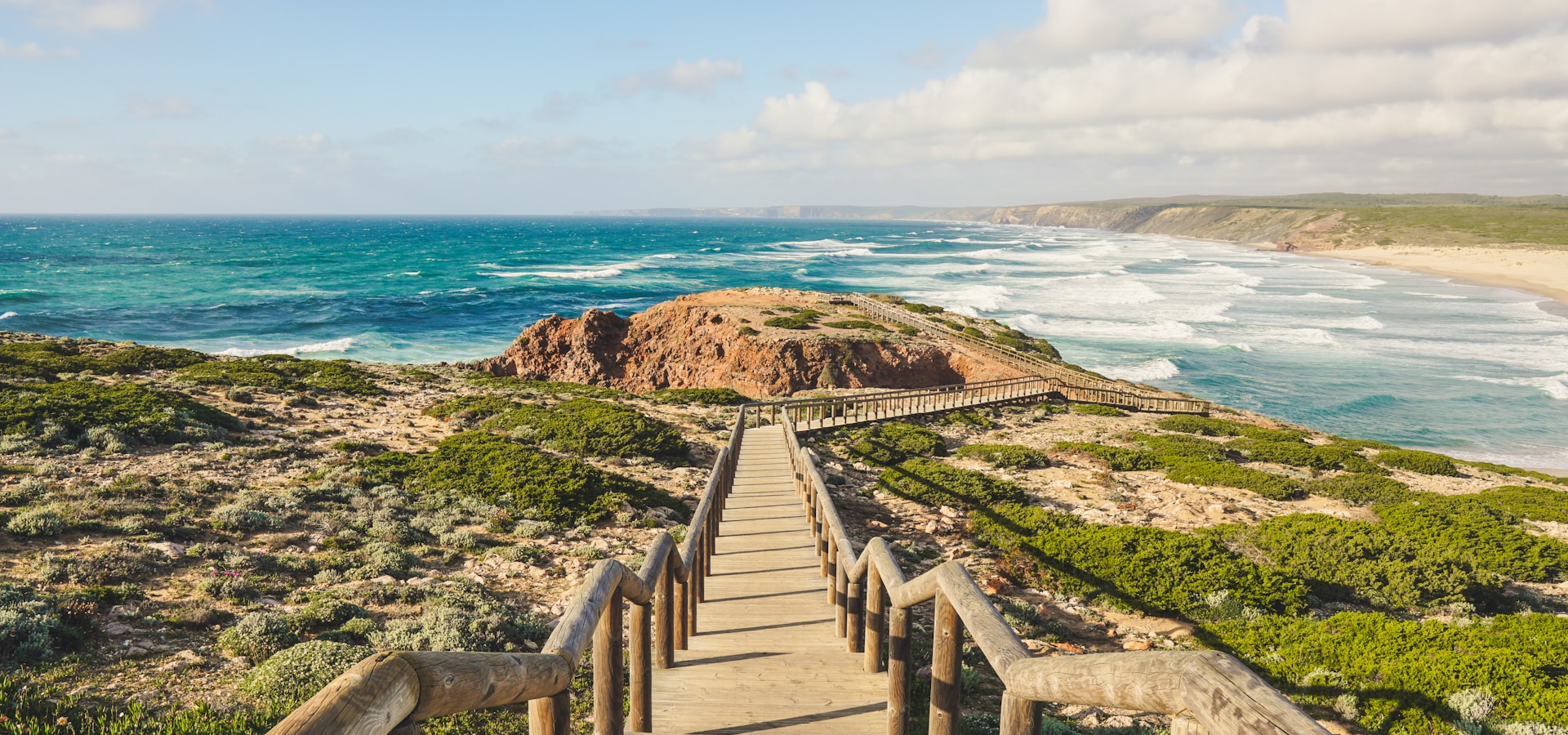
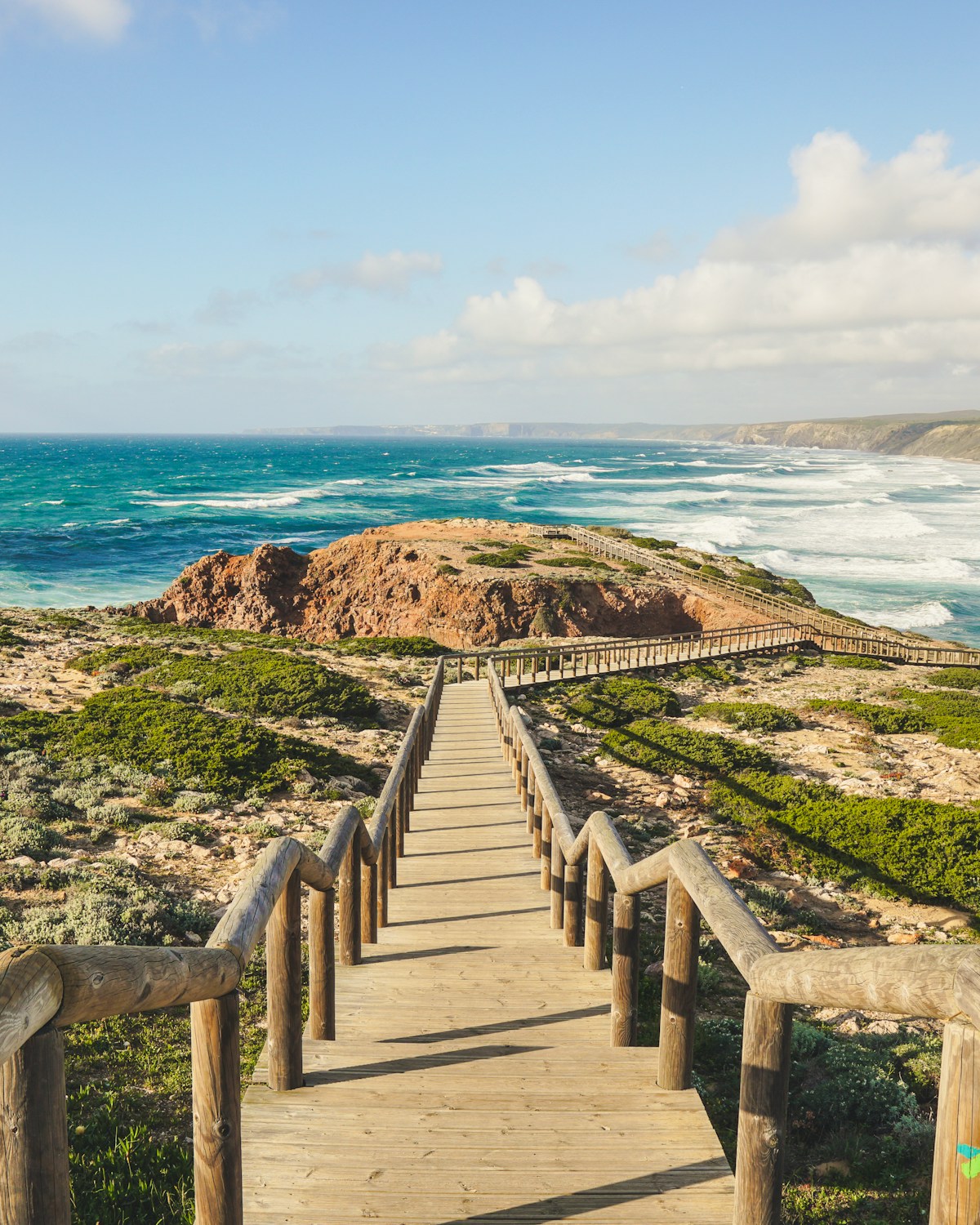
The Algarve wraps Portugal's southern tip in two coastlines that face different directions, so when one shuts down the other usually delivers. The exposed west coast picks up dominant NW Atlantic swell from autumn through spring; the sheltered south coast wakes up on summer south swells.
Everything pivots around Sagres, the windswept fishing port at mainland Europe's southwestern corner, where Praia do Tonel throws advanced beach-break peaks within walking distance of Praia do Beliche, the more sheltered pick.
Surf level
| Skill level | Jan-Feb | Mar-Apr | May-Jun | Jul-Aug | Sep-Oct | Nov-Dec |
|---|---|---|---|---|---|---|
| Beginners | ||||||
| Intermediate | ||||||
| Advanced |
- Best time to go
- Good time to go
- Ok time to go
- Less desirable time to go
- Not recommended time to go
Weather & Travel Comfort


| Metric | Jan-Feb | Mar-Apr | May-Jun | Jul-Aug | Sep-Oct | Nov-Dec |
|---|---|---|---|---|---|---|
| Weather | ~12–17°C | ~14–21°C | ~19–27°C | ~23–31°C | ~19–26°C | ~13–18°C |
| Rainy days | 8d | 5d | 2d | 0d | 4d | 9d |
| What to Pack |  Water Temperature~14–15°C Water Temperature~14–15°C | Water Temperature~15–17°C | Water Temperature~19–22°C | Water Temperature~24°C | Water Temperature~20–23°C | Water Temperature~16–17°C |
- Boots if neededFor cold water or reef breaks
- Full protection wetsuitCold water
- Shorty / springsuitMild conditions
- No wetsuitWarm water
Tips for Surfing Algarve
The Algarve's twin coasts trade off daily — when the west goes onshore at Cordoama, the south's glassy peaks at Praia da Rocha pick up the slack. The four tips below explain how to switch coasts without wasting a session.

Begin at Praia da Rocha
Beginners: start at south-coast Praia da Rocha. Group lessons run €35–€50 for 2 hours.

Switch Coasts Daily
West coast windy? Drive 30 minutes to a south-coast beach for sheltered, glassy peaks.

Wetsuit by Season
Boardshorts July–August, 3/2mm most of the year, 4/3mm December–February only.
Mind the Cliffs
At Cordoama and Arrifana, check tides before paddling out — exits get tricky at high.
Frequently Asked Questions
When is the best time to surf in the Algarve?
Skill drives the answer. Beginners score from May to September at Praia da Rocha and Amado, when 2–4ft mush and 19–24°C water make for forgiving sessions. Intermediates peak in April and October — clean shoulder swell, both coasts often working, water still warm. Advanced surfers come November through March for 4–10ft NW swell at Tonel, Cordoama and the Arrifana point, with N offshore winds grooming the west coast at dawn.
Is the Algarve good for beginners?
Yes — and the dual coastline is the reason. Praia da Rocha, on the south coast at Portimão, offers wide sand and gentle reform whitewater that stays mellow even when the west goes big. On smaller west-coast days, the south end of Praia do Amado near Carrapateira works as a school basecamp. Avoid Tonel, Cordoama and the Arrifana point in your first week — they pick up size fast and break with current.
How big do the waves get in the Algarve?
Waves run 2–4ft most of summer and 4–10ft from November to March on the west coast. Praia do Tonel holds clean head-high+ peaks on a NW swell, Cordoama sucks in size and can throw double-overhead pulses in deep winter, and Arrifana point lines up to head-high on W swell. The south coast stays gentle year-round — knee-to-chest-high south-swell peelers in summer.
Do I need a wetsuit to surf in the Algarve?
Mostly — but not always. Water sits between 14.3°C in February and 23.8°C in August. A 3/2 fullsuit covers most of the year, boardshorts or a 2mm top are enough in July and August when water tops 23°C, and a 4/3 handles December through February when temps dip to 14°C. Boots, gloves and hood are unnecessary; the Algarve is the warmest water on mainland Portugal.
How do I get to the Algarve from Lisbon?
Fly into Faro airport if you're coming from abroad — it's a 1h drive west to Sagres on the A22 motorway. From central Lisbon, the Rede Expressos coach from Sete Rios reaches Lagos in roughly 4 hours for €20–€25 one way; a local bus or short drive then connects to Sagres or Aljezur. Driving the A2 plus A22 takes about 3 hours with €25 in tolls. Rent a car once you arrive.
Where should I stay in the Algarve for surfing?
Stay in Sagres if you want walkable access to Tonel and Beliche and the end-of-the-world atmosphere — best base for advanced surfers chasing winter swell. Pick Aljezur for the rural surf scene and short drives to Arrifana, Amado and Bordeira. Lagos trades surf proximity for nightlife and restaurants, useful for mixed-group trips. Carrapateira is the smallest, quietest option, 5 minutes from Praia do Amado.
Other regions in Portugal
 1
1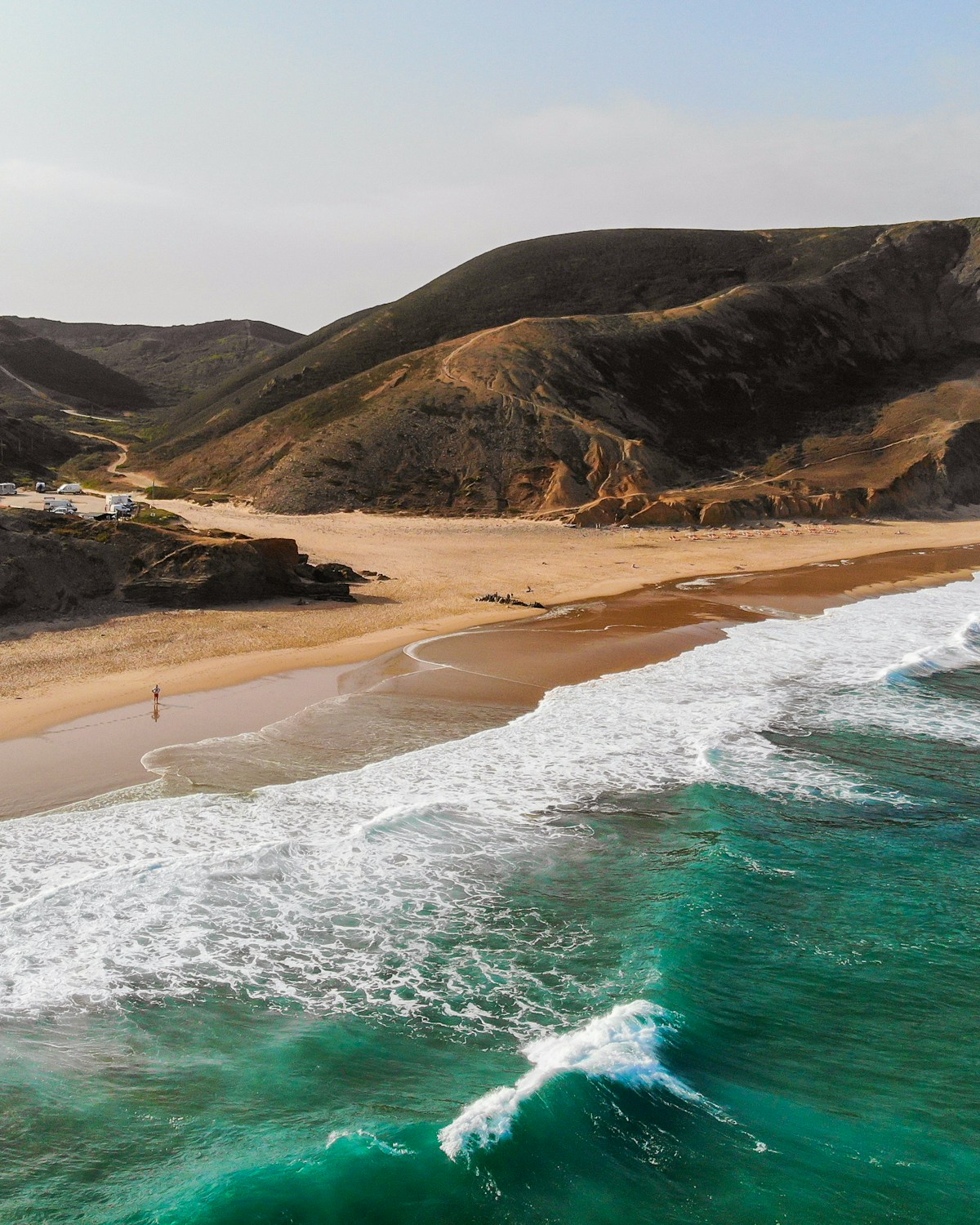
 1
1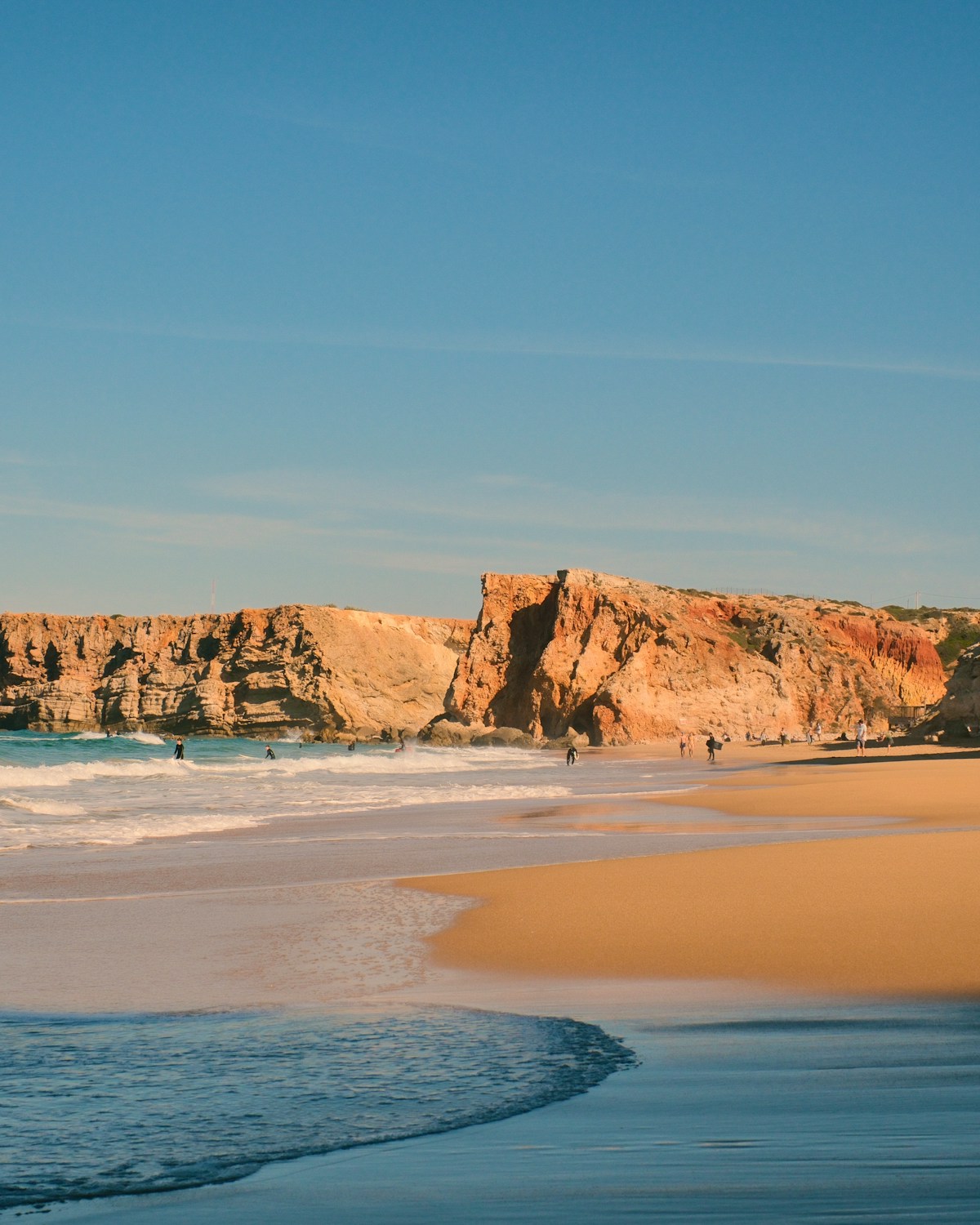
The Ultimate Guide to Surfing in Algarve
What makes the Algarve unique
Geography decides everything here. The Algarve is the only Portuguese region with two distinct coastlines pointing different ways: the western Costa Vicentina, hammered by NW Atlantic swell from autumn through spring, and the southern Barlavento, sheltered behind the Sagres headland and lit up by summer south swells. That dual exposure is the editorial differentiator — when the west coast goes 12ft and onshore in January, you can drive 25 minutes to a knee-high south-coast peeler with no wind. The pivot is Sagres, perched on the cliffs at mainland Europe's southwestern corner, where Henry the Navigator launched his school of cartography in the 15th century. The protected Costa Vicentina Natural Park covers most of the western shoreline, which is why the breaks here still feel raw and undeveloped compared to the resort strip east of Lagos. For the country context, see Portugal; for a quieter sibling region just north, Alentejo extends the same wild west coast for another 100km.
Algarve surf spots by skill level
Praia do Tonel, on the western edge of Sagres, fires fast left and right beach-break peaks on a clean NW-to-W swell with N or NE offshore wind. Sand bottom, occasionally hollow, peak season October to April. Advanced and confident intermediates when the west coast lights up.
Praia do Beliche sits 1km west of Tonel, tucked under tall cliffs that filter wind and size. Same swell window but smaller and more forgiving — the obvious step-down on a big day. Intermediates and improvers.
Praia da Cordoama, 15km north near Vila do Bispo, is an exposed beach break that sucks in any swell going. Heavy on bigger pulses, mellow A-frames at chest-high, no shelter from wind. Intermediates to advanced, with current to watch on size.
Praia da Arrifana, the bay near Aljezur, is a long sandy crescent with a right-hand point on its north end and beach peaks down the strand. The point holds up to head-high+ on W swell; the beach is workable for first-week surfers when it's small. Beginners to advanced depending on the section.
Praia do Amado and neighbouring Bordeira, north of Carrapateira, share a long sandy bay with multiple peaks shifting along the bank. Schools cluster at the south end of Amado from May through September. All levels by zone.
Praia da Rocha, in Portimão on the south coast, is the calm-water beginner basecamp — wide sand, gentle reform whitewater, and rideable on south swells when the rest of the country is flat. Beginners.
When to surf the Algarve: month-by-month
November to March is when the west coast comes alive — 4–10ft NW swell, water at 14–17°C, and N/NE offshores grooming Tonel and Cordoama at dawn. Bring the 4/3 in deep winter when water dips to 14.3°C. April to June is the shoulder sweet spot: 3–5ft swell, water climbing from 16°C to 22°C, fewer crowds, and both coasts often working in the same week. July and August flip the equation entirely. The west goes small or windy under the nortada (the summer northerly), water hits 23.5°C, and beginners take over Amado and Arrifana. The south coast wakes up on south swells — boardshorts only. September and October are local-favourite months: 22°C water, swell rebuilding, and the August holiday traffic gone. Rain stays under 2 days a month from May through September.
Where to stay in the Algarve
Sagres is the surf hub — end-of-the-world feel, walkable to Tonel and Beliche, and a tight cluster of camps and hostels around the harbour. Higher demand in winter when advanced surfers chase the swell. Aljezur, 30 minutes north, is the rural pick: a riverside village with a Moorish castle ruin, lower nightly rates, and 10-minute drives to Arrifana, Amado and Bordeira. Lagos sits 30 minutes east and trades surf proximity for a bigger-town package — nightlife, restaurants, boat trips to the sea caves — useful if you're travelling with non-surfers. Carrapateira is the smallest and quietest option: a cluster of guesthouses 5 minutes from Amado, suited to surfers who want zero distractions.
How to get to the Algarve from Lisbon
Faro airport is the play — most international flights land here, and it's a 1h drive west to Sagres on the A22 motorway (around €5 in tolls). From Lisbon, the Rede Expressos coach runs Sete Rios to Lagos in roughly 4 hours for €20–€25 one way; from Lagos, a local bus or 1h drive reaches Sagres. Driving the full A2 plus A22 from Lisbon takes about 3 hours with €25 in tolls. Trains run Lisbon Oriente to Lagos in 4h via Tunes for similar money. Once you're in the region, a rental car is effectively required — public transport between west-coast breaks is sparse.
Surf schools, gear rentals and local culture
Three established operators anchor the lesson scene: Wavesensations (Sagres), Pure Surf Camp (Carrapateira) and Surfivor (Aljezur) — useful reference points whether you book with them or not. Board rentals run €15–€20/day for soft-tops, €25–€35/day for performance shortboards, and €30–€40/day for longboards. Most camps will swap your board mid-week if conditions change.
A cultural note: the Algarve coast was a fishing economy long before it was a surf destination, and the western villages — Sagres, Carrapateira, Aljezur — still treat the lineup as a working community asset. The Costa Vicentina Natural Park protections came in 1995 and limited the resort sprawl east of Lagos from creeping west. At Tonel and Arrifana, the local crew expect eye contact and patience: take the shoulder a few times, learn the rotation, then join the inside. Burn a takeoff and word travels the cliff path fast.