

WELIGAMA
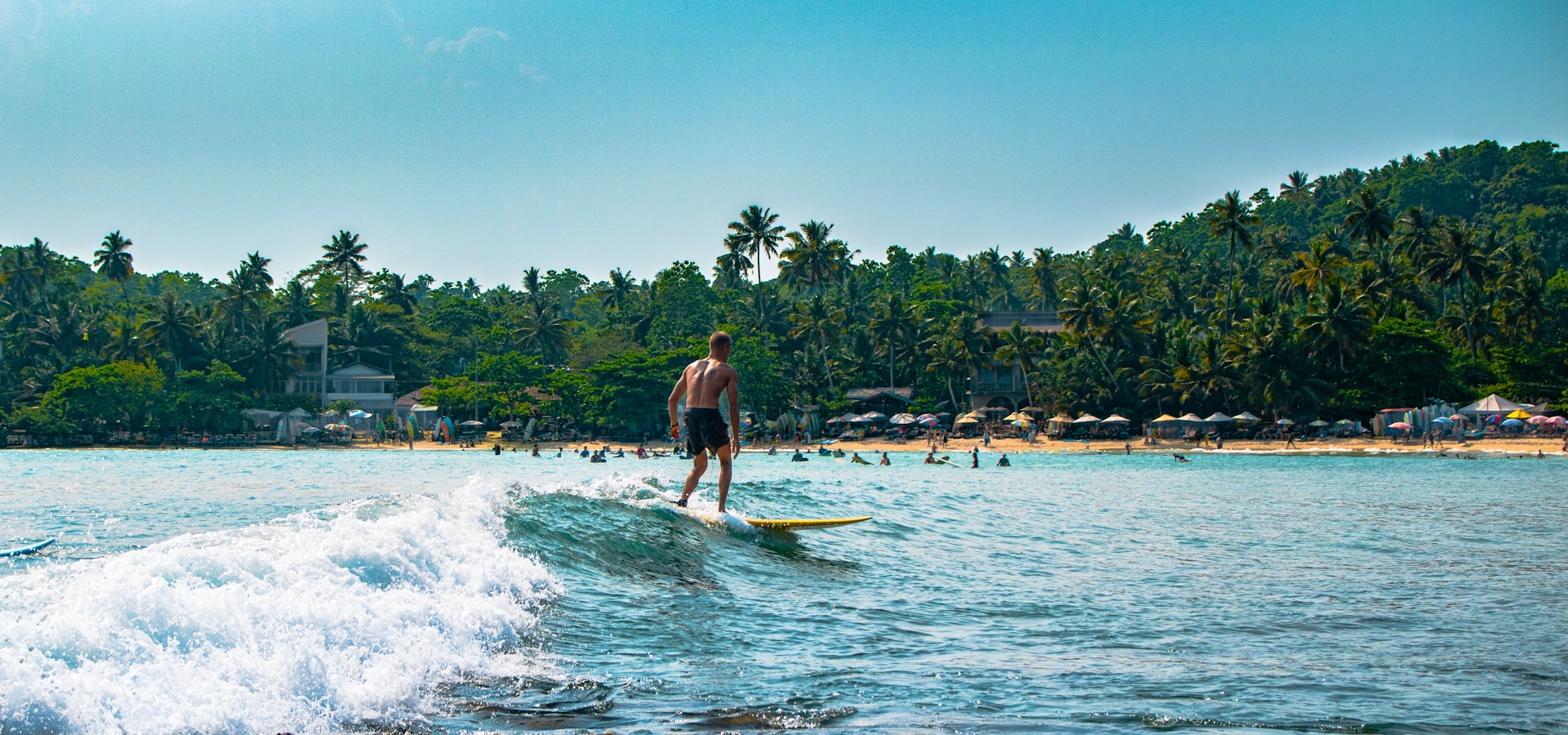
Sri Lanka's #1 beginner surf town — Weligama Bay's protected crescent serves soft, slow sand-bottom waves with 80+ surf schools clustered along a 1.5km strip of warm-water coast.
About Weligama
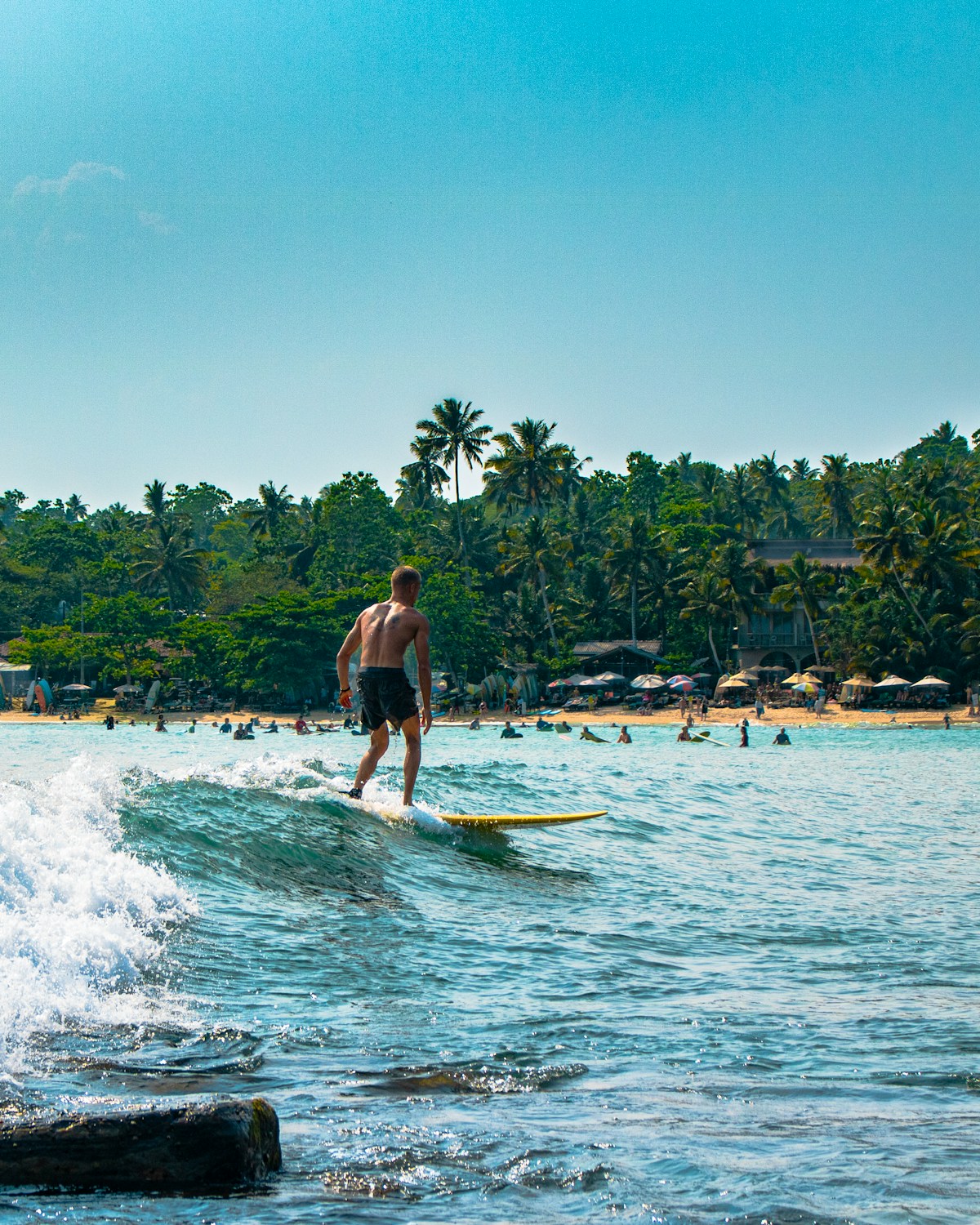
Weligama is Asia's most concentrated beginner-surf factory — a wide, calm-water bay on Sri Lanka's south coast where 80+ surf schools cluster along a 1.5km strip of sand. Headlands at either end cut down the dominant SW swell, leaving Weligama Main Beach with soft, slow, forgiving whitewater perfect for first-timers.
Plantation Reef offers a clean right-hand reef option for intermediates at the eastern headland, and the Lazy Left rounds out the menu on the western side.
Surf level
| Skill level | Jan-Feb | Mar-Apr | May-Jun | Jul-Aug | Sep-Oct | Nov-Dec |
|---|---|---|---|---|---|---|
| Beginners | ||||||
| Intermediate | ||||||
| Advanced |
- Best time to go
- Good time to go
- Ok time to go
- Less desirable time to go
- Not recommended time to go
Weather & Travel Comfort


| Metric | Jan-Feb | Mar-Apr | May-Jun | Jul-Aug | Sep-Oct | Nov-Dec |
|---|---|---|---|---|---|---|
| Weather | ~24–29°C | ~25–30°C | ~25–29°C | ~25–28°C | ~24–28°C | ~24–28°C |
| Rainy days | 11d | 17d | 21d | 20d | 20d | 17d |
| What to Pack |  Water Temperature~28–29°C Water Temperature~28–29°C | Water Temperature~30°C | Water Temperature~29–30°C | Water Temperature~28°C | Water Temperature~28–29°C | Water Temperature~29°C |
- Boots if neededFor cold water or reef breaks
- Full protection wetsuitCold water
- Shorty / springsuitMild conditions
- No wetsuitWarm water
Tips for Surfing Weligama
Sri Lanka's mellow south-coast town offers Main Beach's sand-bottom whitewater for newcomers November through April, when the SW monsoon retreats. The four tips below cover lessons, the dry-season window, and reef booties on Plantation's low tide.

Start at Main Beach
Beginners: book a 2-hour group lesson at Weligama Main Beach for around US$20–30.

Surf the Dry Season
Cleanest conditions run November to April — the May–October monsoon brings onshore afternoon wind.

No Wetsuit Needed
Water sits 27–30°C year-round — pack boardshorts and a long-sleeve rashguard for sun protection.

Mind the Crowd
Sit east of the swimming flags and bring booties for Plantation Reef on low tide.
Frequently Asked Questions
When is the best time to surf in Weligama?
Weligama works year-round for beginners thanks to the forgiving sand-bottom wave, but cleanest conditions run November to March with light offshore mornings, 1–3ft swell and the lowest rainfall. Intermediates chasing Plantation Reef and the Lazy Left peak in the same November-to-March window. The May–October SW monsoon brings 19–21 rainy days per month and onshore afternoon wind — schools still run lessons, but expect washed-out conditions after lunch.
Is Weligama good for beginners?
Yes — Weligama is the country's #1 beginner surf town and arguably Asia's most concentrated learn-to-surf hub. Weligama Main Beach is a wide sand-bottom crescent that produces soft, slow, forgiving whitewater, and 80+ schools cluster along a 1.5km strip ready to teach. The bay's headlands cut the dominant SW swell down to a manageable 1–3ft on most days, which is exactly what a first board rental needs.
How big do the waves get in Weligama?
Waves run 1–3ft most days and 2–4ft on bigger SW pulses — Weligama is by design the small-wave option on Sri Lanka's south coast. The bay's headlands filter incoming swell, leaving Main Beach at a forgiving size for whole sessions. Plantation Reef at the eastern headland and Mirissa Reef in the next bay over hold slightly more size on solid pulses, but neither approaches the head-high reef days at Arugam Bay on the east coast.
Do I need a wetsuit to surf in Weligama?
No wetsuit needed — water sits between 27°C and 30°C year-round, peaking around 30°C in April. Boardshorts plus a long-sleeve rashguard is the standard kit, primarily for sun protection during multi-hour beginner sessions under equatorial UV. Reef booties are useful at Plantation Reef on low tide where coral gets sharp, but otherwise barefoot is fine on Main Beach. Pack reef-safe sunscreen — application matters more than neoprene here.
How do I get to Weligama from Colombo?
The fastest route is the Southern Expressway E01 from Bandaranaike International Airport — 2 hours 15 minutes by car. A metered taxi runs US$45–55; the PickMe ride-hail app drops it to US$25–30. The scenic alternative is the coastal-line train from Colombo Fort to Weligama station — 3 hours 30 minutes on the slow service for around LKR 200, with ocean views most of the ride. Local transit is tuk-tuks (LKR 200–500).
Where should I stay in Weligama for surfing?
Stay on Main Beach Road in Weligama town for the cheapest learn-to-surf base — guesthouses and school dorms run US$15–40/night and you walk to the lesson zone in 2 minutes. Pick Mirissa, 10 minutes east, for more restaurants, beach bars and mid-range hotels (US$40–120/night) plus access to whale-watching boats. Midigama, 10 minutes west, is the quieter intermediate base near the Lazy Left and Plantation Reef breaks.
Other regions in Sri Lanka
 1
1
The Ultimate Guide to Surfing in Weligama
Why Weligama works for beginners
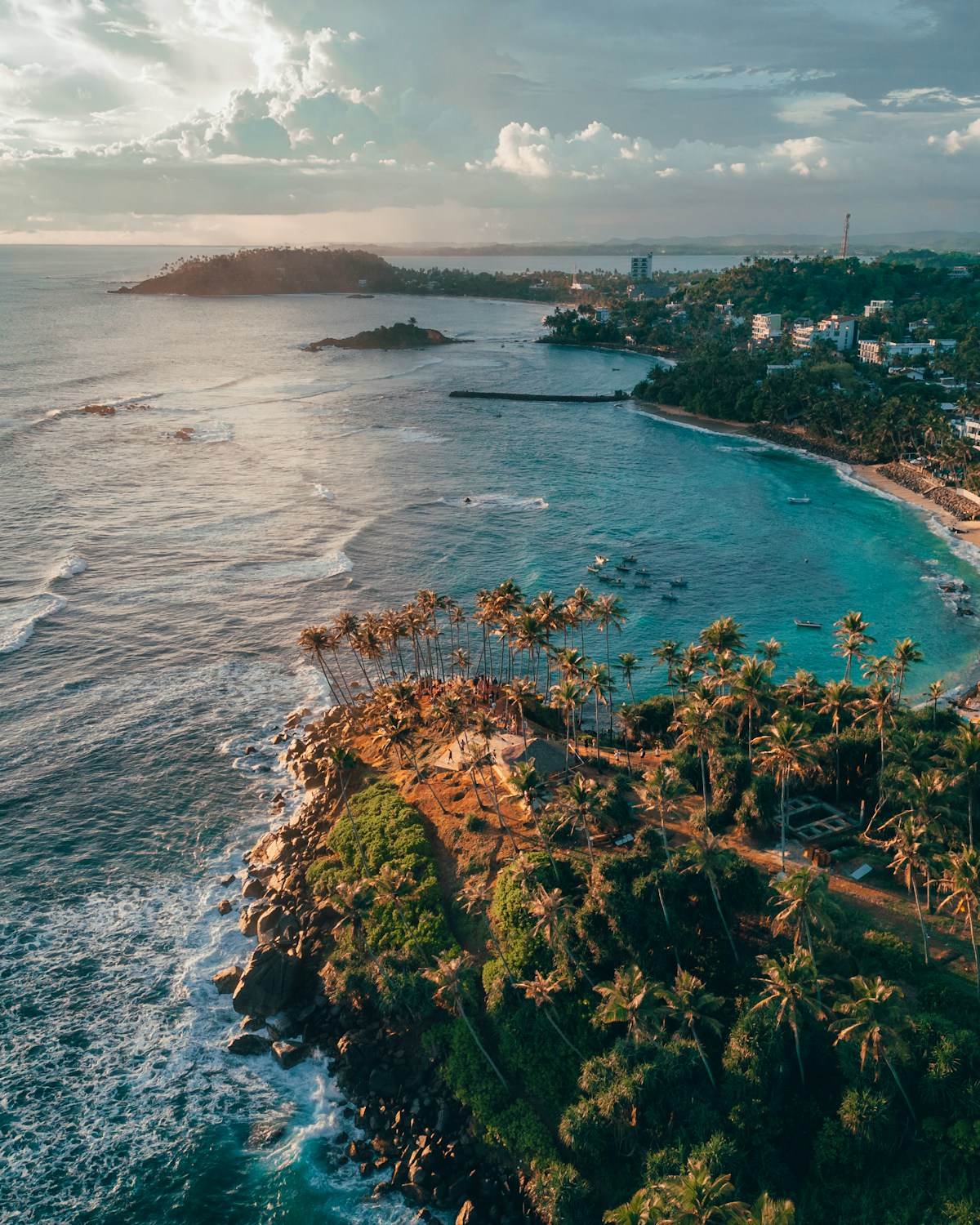
Weligama Bay is the right answer when a friend wants to learn to surf in Asia. The crescent geometry — a wide, calm-water bay roughly 10 minutes west of Mirissa on Sri Lanka's south coast — is wrapped by headlands that knock down the dominant SW swell before it reaches the beach. What lands inside is a soft, slow, sand-bottom wave that forgives almost every mistake. That single fact has produced the densest concentration of surf schools anywhere in Asia: 80+ outfits run lessons along a 1.5km strip on any given dry-season morning. The cluster is a post-2010 phenomenon, scaling up after Sri Lanka's 2009 civil-war end opened the south coast to international surf tourism. For broader country context see Sri Lanka.
Weligama surf spots by skill level
Weligama Main Beach is the basecamp. A long sand-bottom crescent in front of the village, it produces forgiving whitewater all day and small green peaks at the eastern end. Hundreds of beginners are in the water at any moment in dry season. Beginners.
Plantation Reef is the clean right-hand reef break at the eastern headland of the bay — the local intermediate-friendly reef option, with a defined takeoff and a workable shoulder. Reef booties recommended on low tide. Intermediate.
Lazy Left is the soft, slow left-hand wave on the western side of the bay. Mellow shoulder, sand and soft reef bottom. Intermediate. Its counterpart Lazy Right wraps the same headland for a right-hander on bigger SW pulses.
Mirissa Reef is a short paddle or 10-minute walk to the next bay east — slightly heavier reef, less crowded than Weligama. Intermediate.
Polhena is a protected sand-bottom beach 5 minutes east, useful when Weligama gets too busy. Beginners. Goyambokka, 30 minutes east toward Tangalle, is a quieter sandy beach for a half-day escape. Beginners.
When to surf Weligama: month-by-month
Sri Lanka's south coast runs on monsoon timing. November to April is the dry season and the only window worth booking — light offshore mornings, 1–3ft most days, 2–4ft on bigger SW pulses, and water at 28–29°C. December through March is the cleanest stretch with the lowest rainfall (10–16 rainy days per month). April transitions: water peaks at 30°C but rain climbs to 19 days and afternoon storms start rolling in. May to October is the SW monsoon — heavy daily rain (19–21 rainy days per month), onshore wind by mid-morning and choppy beach conditions. Schools still run lessons in summer because the wave is so forgiving, but expect washed-out afternoons. September to October is the wettest stretch.
Where to stay in Weligama
Weligama town and Main Beach Road is the obvious pick — guesthouses and surf-school dorms within a 2-minute walk of the lesson zone, US$15–40/night. Best for first-timers who want to roll out of bed into a board rental. Mirissa, 10 minutes east by tuk-tuk, has more nightlife, beach bars and mid-range hotels (US$40–120/night) — a good base if you want post-session restaurants and the Mirissa whale-watching boats nearby. Midigama, 10 minutes west, is the quieter intermediate option: a string of guesthouses near the Lazy Left and Plantation Reef breaks, with lower prices and far less foot traffic than Weligama Bay itself.
How to get to Weligama from Colombo
From Bandaranaike International Airport (CMB) the fastest route is the Southern Expressway E01 — 2 hours 15 minutes door to door. A metered taxi runs US$45–55 one way; PickMe (Sri Lanka's ride-hail app) drops it to US$25–30. The scenic alternative is the coastal-line train from Colombo Fort to Weligama station — 3 hours 30 minutes on the slow service for around LKR 200, with views straight onto the Indian Ocean for most of the ride. Once in town, tuk-tuks dominate local transit at LKR 200–500 within Weligama.
Surf schools, gear and local culture
Three useful reference operators: Surfing Lanka runs the largest school operation on Main Beach, Weligama Bay Resort Surf School packages lessons with accommodation, and Burger's Surf Point is a popular smaller outfit. Lazy Left Surf School and Margos Surf School also draw repeat students. Group lessons run US$20–30 for 2 hours; soft-top rentals US$5–8/day.
The lineup in Weligama is the most crowded in Sri Lanka thanks to that school density. Sit east of the swimming flags to avoid swimmers and tourist boats. Off the water, post-session culture is rice-and-curry plates, hoppers, kottu rotti and dhal at street stalls along the bay. Stilt fishing — a now-mostly-staged but iconic Sri Lankan visual — is photographed on the eastern headland, and the Mirissa whale-watching ports are 10 minutes away by tuk-tuk. For coastal-protection context see Save The Waves and the official Sri Lanka Tourism board.