

MIRISSA
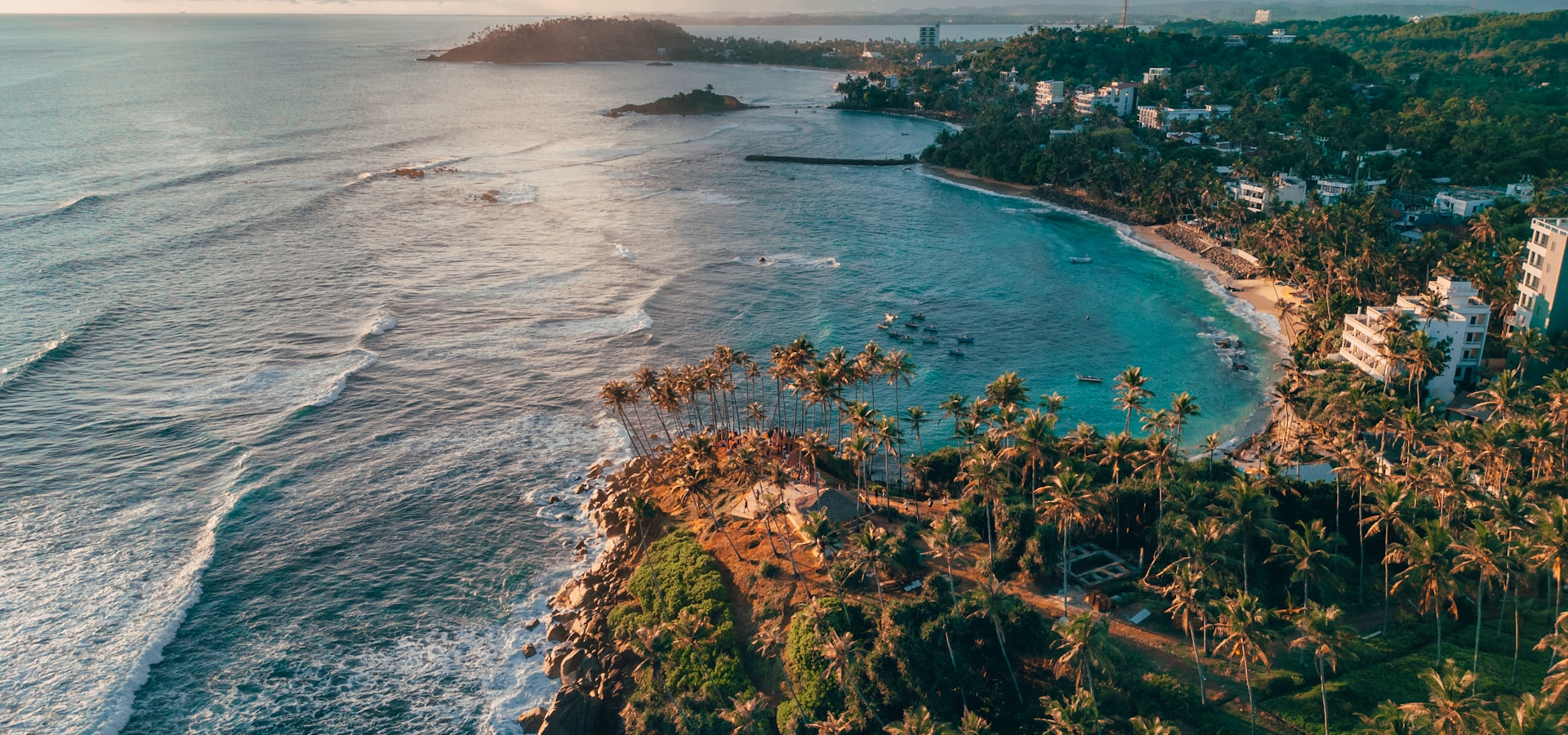
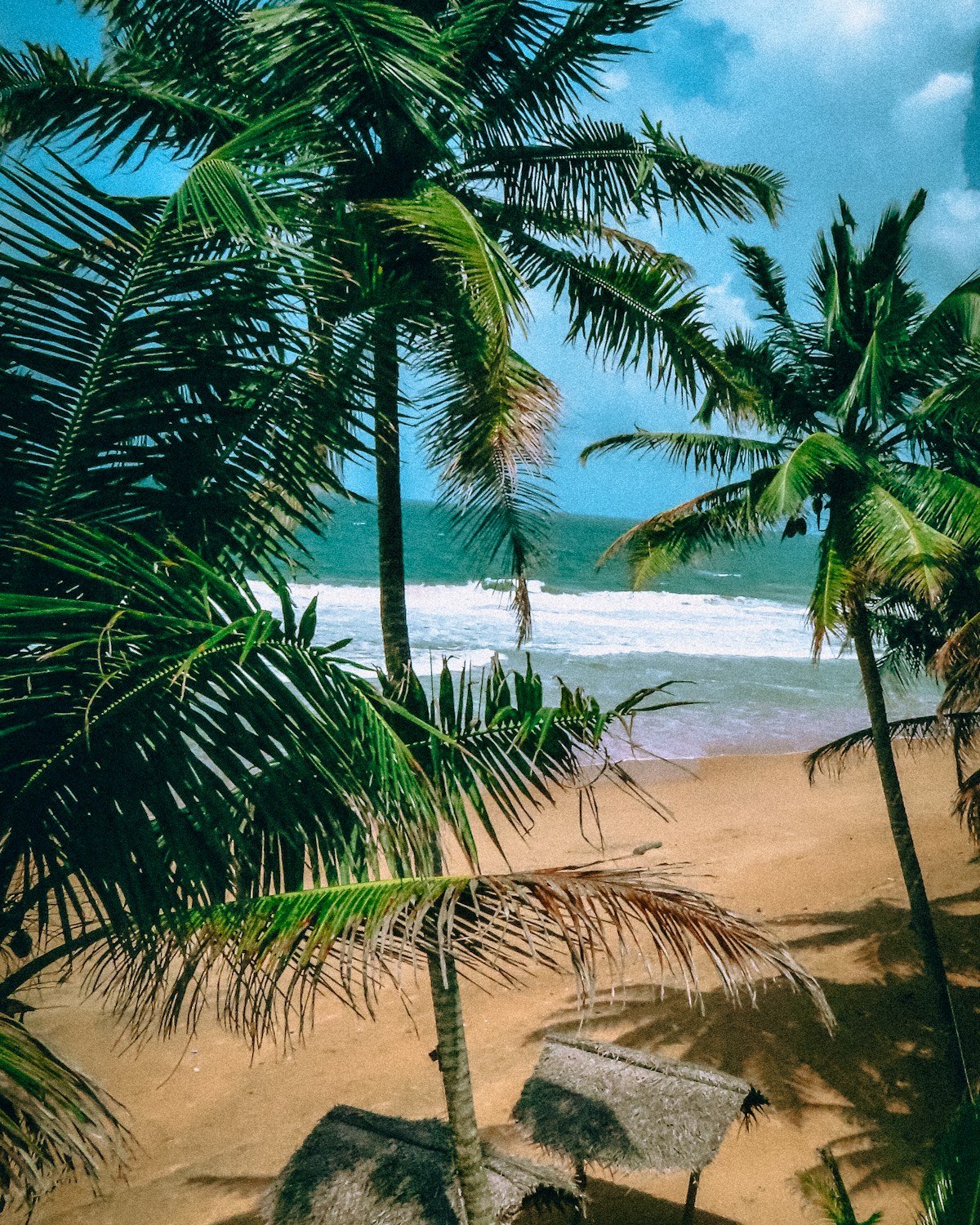
A 1.2km crescent beach on Sri Lanka's south coast — Mirissa pairs intermediate-friendly sand-bottom peaks with the country's primary blue-whale watching port.
About Mirissa
Mirissa is a 1.2km crescent-shaped beach on Sri Lanka's south coast, sitting between Weligama's protected bay and Ahangama's reef cluster. The town is the south coast's best intermediate-friendly option — more wave than Weligama, friendlier than Ahangama.
Mirissa Main is a sand-bottom beach break with multiple mellow peaks; Plantation Reef offers a clean right-hand reef for improvers. The same harbour also runs the country's blue-whale watching fleet — November to April, Sri Lanka is one of three reliable spots on Earth to see blue whales from a small boat.
Surf level
| Skill level | Jan-Feb | Mar-Apr | May-Jun | Jul-Aug | Sep-Oct | Nov-Dec |
|---|---|---|---|---|---|---|
| Beginners | ||||||
| Intermediate | ||||||
| Advanced |
- Best time to go
- Good time to go
- Ok time to go
- Less desirable time to go
- Not recommended time to go
Weather & Travel Comfort


| Metric | Jan-Feb | Mar-Apr | May-Jun | Jul-Aug | Sep-Oct | Nov-Dec |
|---|---|---|---|---|---|---|
| Weather | ~23–29°C | ~25–30°C | ~25–29°C | ~25–28°C | ~24–28°C | ~24–28°C |
| Rainy days | 11d | 17d | 21d | 20d | 20d | 17d |
| What to Pack |  Water Temperature~28–29°C Water Temperature~28–29°C | Water Temperature~30°C | Water Temperature~29–30°C | Water Temperature~28°C | Water Temperature~28–29°C | Water Temperature~29°C |
- Boots if neededFor cold water or reef breaks
- Full protection wetsuitCold water
- Shorty / springsuitMild conditions
- No wetsuitWarm water
Tips for Surfing Mirissa
Sri Lanka's whale-watching town hides a quiet surf scene at Madiha and Polhena, plus crowded Mirissa Main 9am–3pm. The four tips below cover beginner spots, the dawn-and-dusk windows, and how to yield to whale boats leaving the harbour at 06:30.

Beginners go to Madiha
Beginners: pick Madiha or Polhena for quiet sand-bottom peaks. Lessons run US$15–25 for 90min.

Surf the Bookend Hours
Mirissa Main crowds 09:00–15:00 — paddle out 06:00–08:00 or 16:00–18:00 for clean sessions.

No Wetsuit Needed
Water sits 27–30°C year-round. Pack boardshorts and a long-sleeve rashguard — no wetsuit, ever.
Yield to Whale Boats
Whale-watching boats leave the harbour at 06:30 daily — yield right-of-way at the eastern end.
Frequently Asked Questions
When is the best time to surf in Mirissa?
Skill drives the answer. Beginners can surf Mirissa year-round in the dry season — November through April covers it. Intermediates peak from November to March, when 2–5ft SW pulses meet clean offshore N–NE winds and 28°C water. Advanced surfers will outgrow the south coast quickly: Mirissa is fundamentally an easy wave town. Avoid May to October — the SW monsoon brings heavy rain, onshore wind and shut-down schools.
Is Mirissa good for beginners?
Yes — Mirissa is one of the friendliest beginner towns in Asia. Mirissa Main offers sand-bottom A-frames the length of the bay, but it crowds fast in season. Madiha (10 min east) and Polhena (15 min east) are the quieter alternatives — protected sand-bottom beaches with mellow whitewater that reform on inside banks. Pick a school, take a 90-minute lesson at US$15–25, and rent a soft-top for follow-up sessions.
How big do the waves get in Mirissa?
Waves run 1–3ft on most days and 2–5ft on prime SW pulses from December through February. Mirissa is fundamentally an easy surf town — the sand-bottom beach absorbs size and rarely produces head-high faces. Mirissa Reef is the exception, picking up a touch more shape on big swells. If you want overhead reef walls, drive 15 minutes west to Ahangama. If you want easy intermediate peaks, Mirissa is the south coast's sweet spot.
Do I need a wetsuit to surf in Mirissa?
No. Water sits at 27–30°C year-round — there is no month cold enough to warrant neoprene. Pack boardshorts and a long-sleeve rashguard for sun protection during long sessions; the equatorial sun burns through cloud cover fast and most travellers regret skipping the rashguard within two days. Reef booties are optional — Mirissa's main breaks are sand-bottom, but useful if you surf Plantation Reef or Mirissa Reef regularly.
How do I get to Mirissa from Colombo?
From Bandaranaike Airport (CMB), drive 2h 30min south on the Southern Expressway E01. A taxi runs US$50–60; a PickMe booked through the app runs US$30–35 and is the locals' default. The scenic alternative is the coastal-line train from Colombo Fort to Mirissa — about 4 hours, around LKR 200, with the famous palm-fringed stretch south of Galle. Once in town, tuk-tuks cost LKR 200–500 for any village hop.
Where should I stay in Mirissa for surfing?
Stay in Mirissa village centre if you want walkable beach access, fish-curry sunsets and 30-second proximity to the whale-watching harbour — best for most trips. Pick Madiha or Polhena (5-minute tuk-tuk east) if you want quieter beginner breaks and less nightlife. Weligama (10 minutes west) is the budget-and-surf-camp cluster: bigger lesson inventory, lower rates, and a quick tuk-tuk back to Mirissa for evening meals.
Other regions in Sri Lanka
 1
1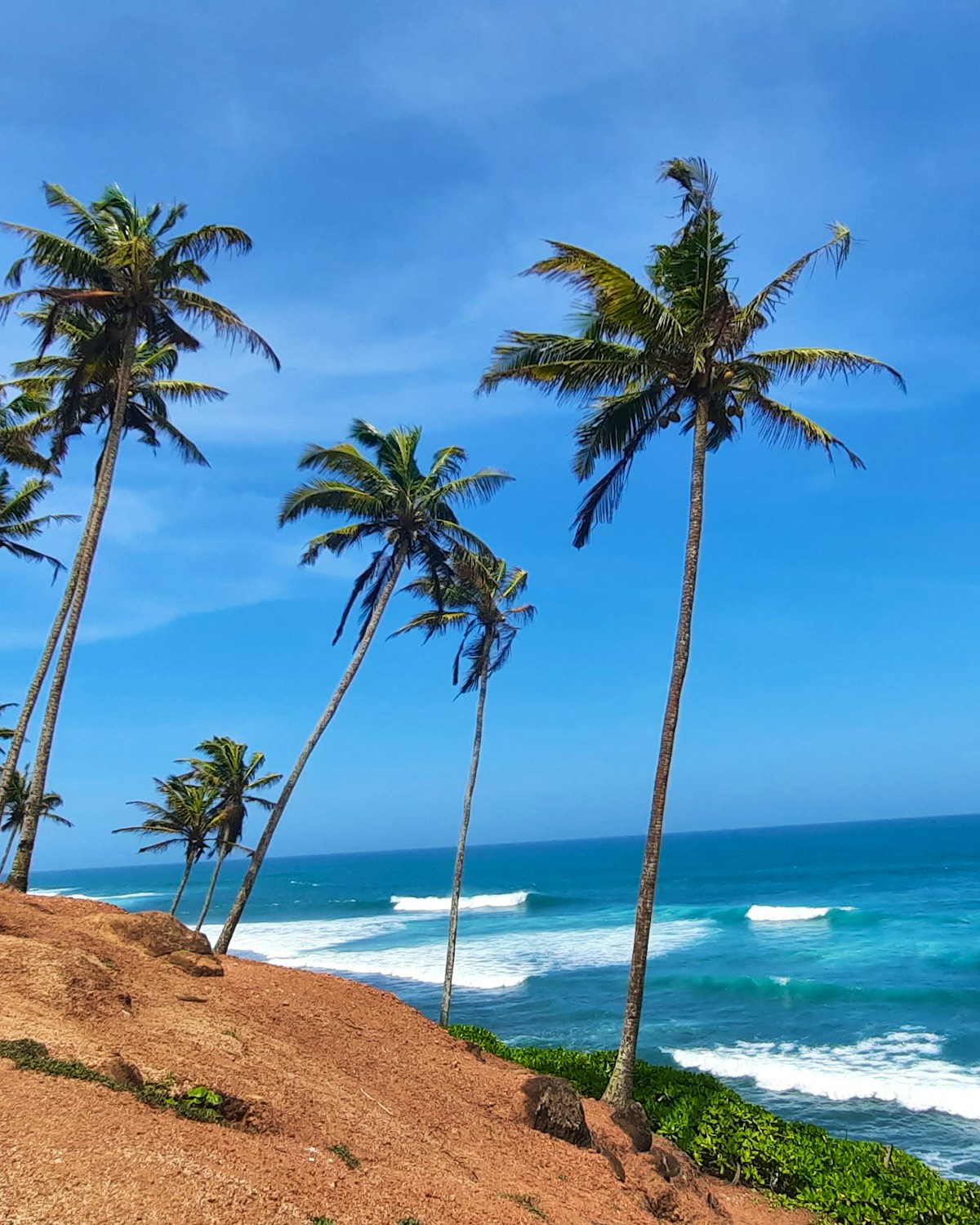
The Ultimate Guide to Surfing in Mirissa
What makes Mirissa unique
Mirissa is a 1.2km crescent of sand wedged between Weligama and Ahangama on Sri Lanka's south coast — small enough to walk in 15 minutes, but doing two jobs at once. By day it is a sand-bottom surf town with the friendliest intermediate peaks on the south coast: more shape than Weligama's protected bay, less consequence than Ahangama's reefs. By dawn it is the country's primary blue-whale watching port. Between November and April, Sri Lanka is one of the world's three reliable spots to see blue whales from a small boat, and Mirissa harbour pushes its fleet out at 06:30 every morning. The modern surf-and-whale identity took shape in the late 2000s as travellers expanded south from Hikkaduwa, and the village has stayed small-scale — guesthouses over resorts, tuk-tuks over taxis, fish auctions still on the harbour wall.
Mirissa surf spots by skill level
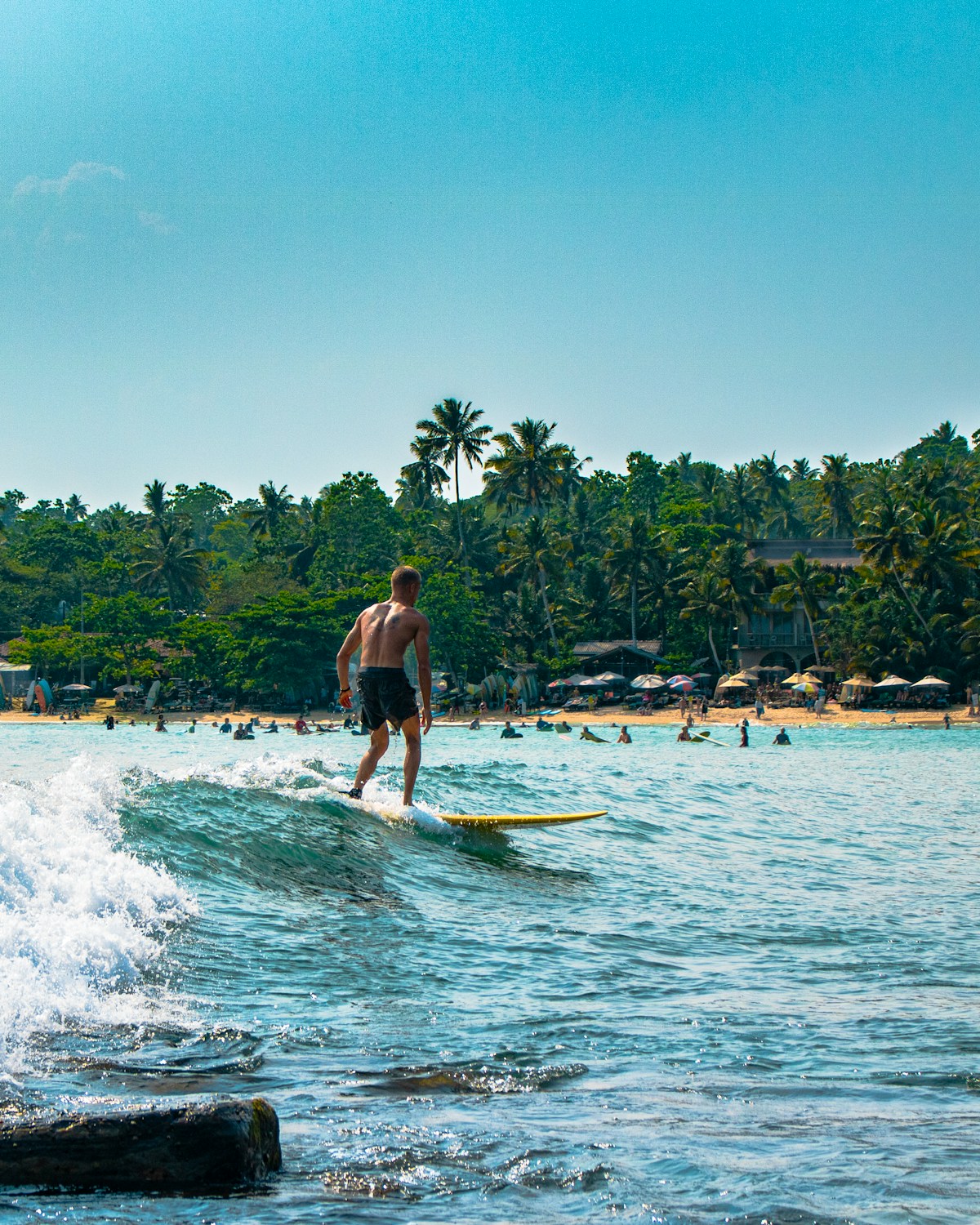
Mirissa Main is the village wave — a long sand-bottom beach break with multiple peaks running the length of the bay. Mellow A-frames, forgiving paddle-out, works on any south or southwest swell with light variable wind. Beginner-to-intermediate and the busiest break on the south coast in season.
Plantation Reef sits west of Mirissa town and is the cleanest right-hand reef in the immediate area. Peels for 80–120 metres on a SW pulse with offshore N wind. Intermediate — paddle out from the small beach and sit wide of the locals on the inside takeoff.
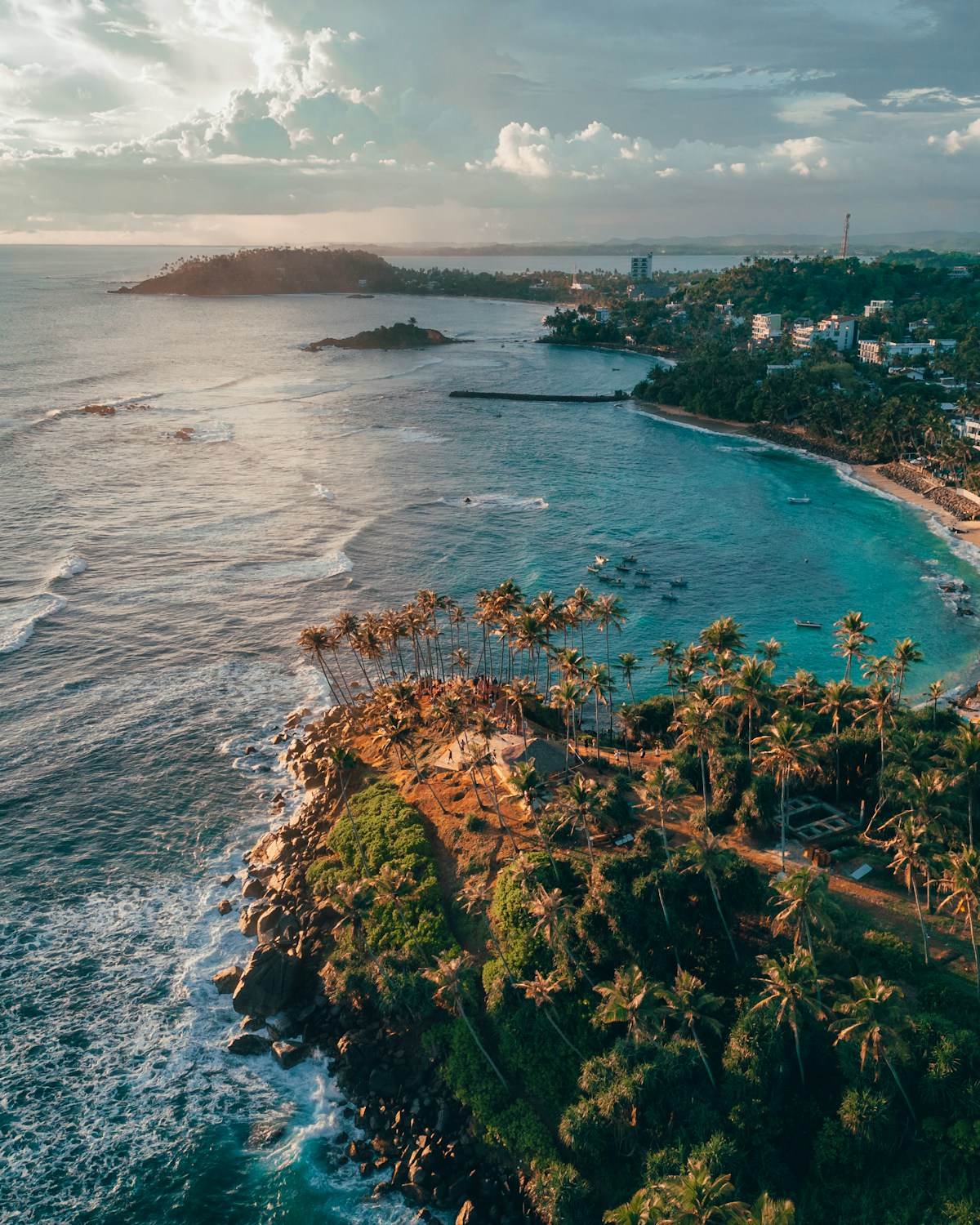
Coconut Tree Hill breaks off the eastern headland — a sandy stretch with a small reef shoulder that turns on when the swell is small and the wind goes light. Beginner-to-intermediate when conditions cooperate.
Madiha is a quieter sand-bottom beach 10 minutes east toward Matara — fewer peaks, fewer surfers, and the standard recommendation when Mirissa Main fills up. Beginner-friendly.
Polhena is a protected sand-bottom beach 15 minutes further east, sheltered by an offshore reef. The waves break small and slow — the south coast's safest first-week spot. Beginner.
Mirissa Reef is the bonus: a small reef shoulder that picks up size on big SW pulses when the beach break maxes out. Intermediate on those days.
When to surf Mirissa: month-by-month
November to April is the entire surf and travel season — the dry monsoon. Waves run 1–3ft on average days and 2–5ft on prime SW pulses, water sits at a flat 27–29°C, and offshore N–NE winds groom the bay through morning. December through March is the sweet spot: cleanest water, smallest crowds outside the New Year peak, and the blue whales are mid-season. April marks the shoulder — still surfable, water creeping toward 30°C, the first heavy showers landing late in the month. May through October is the SW monsoon: heavy daily rain, onshore wind, and most surf schools shut down or relocate to the east coast at Arugam Bay. Don't book a Mirissa surf trip in monsoon — the wave is technically there, but the experience isn't.
Where to stay in Mirissa
Mirissa village centre — the lanes set back from the beach between the harbour and Coconut Tree Hill — is the obvious pick. Walk to every break, fish curry on the sand at sunset, and 30-second access to the whale-watching boats. Guesthouses run US$15–40/night, boutique stays US$60–120. Madiha and Polhena to the east are the quieter play: 5-minute tuk-tuk to Mirissa Main, less nightlife, and direct access to easier beach breaks for early sessions. Weligama, 10 minutes west, is the budget-and-school cluster — bigger surf-camp inventory, lower nightly rates, and a 15-minute tuk-tuk back to Mirissa for evening dinner.
How to get to Mirissa from Colombo
From Bandaranaike International Airport (CMB), the Southern Expressway E01 runs 2h 30min straight south to Mirissa. A standard taxi costs US$50–60; a PickMe booked through the app runs US$30–35 — the locals' choice. The slow option is the coastal-line train from Colombo Fort station to Mirissa: roughly 4 hours, around LKR 200 (under US$1), with the famous palm-fringed coast section south of Galle. Once in town, tuk-tuks run LKR 200–500 for any village hop, and Madiha or Polhena are LKR 500–700.
Surf schools, gear rentals and local culture
Three schools anchor the Mirissa lesson scene: Mirissa Surf School, Sunshine Stories (the south-coast retreat cluster), and Wave Mirissa Surf School. Salt House Mirissa runs board rentals and casual lessons. Group lessons run US$15–25 for 90 minutes; soft-top rentals US$5–10/day; performance shortboards US$10–15/day.
A word on the lineup. Mirissa Main is small (1.2km of beach) and gets crowded fast — surf the bookend hours (06:00–08:00, 16:00–18:00) for clean water and fewer paddle-battles. Whale-watching boats use the eastern channel from the harbour at 06:30; if you're surfing Coconut Tree Hill or Mirissa Reef, give them right-of-way without question. The annual Galle Literary Festival draws international travellers to nearby Galle (30 minutes west) in late January and early February — book accommodation early if your trip overlaps. Stilt fishing, a now-mostly-staged Sri Lankan icon, is photographed on the cliffs east of Mirissa beach. For broader context on the country's coastline, see Sri Lanka Tourism and the Lonely Planet Mirissa overview.