

TAMARINDO
Costa Rica's most-developed surf town sits 1h from Liberia airport — Tamarindo serves whitewater school sessions plus boat trips to Witch's Rock made famous by Endless Summer II.
About Tamarindo
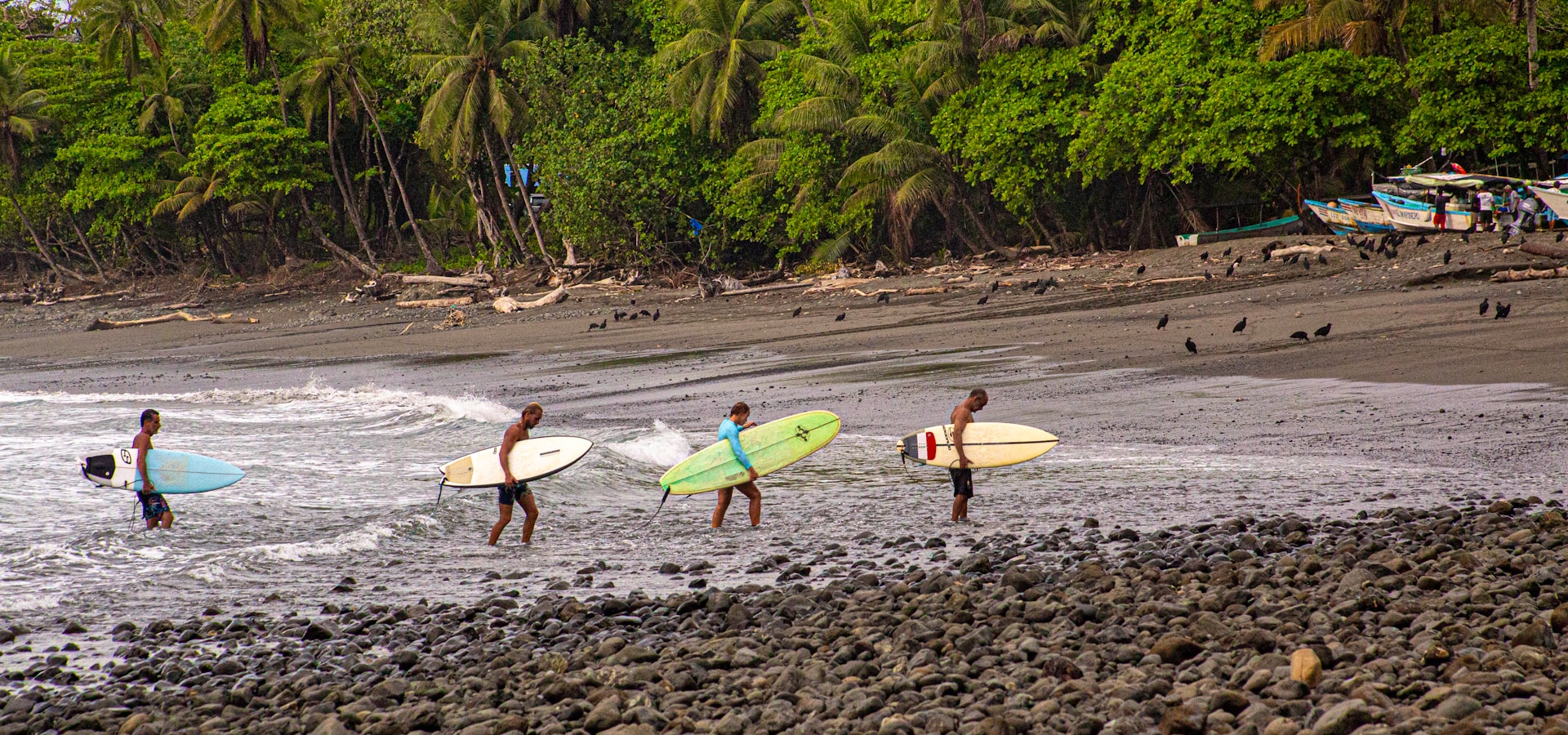
Tamarindo is Costa Rica's most-developed and most-accessible surf town, a 30km stretch of Guanacaste coast 1h from Liberia airport. The protected river-mouth bay at Playa Tamarindo runs hundreds of school students daily, while a 2h panga skiff ride north reaches Witch's Rock and Ollie's Point — the boat-access advanced waves Bruce Brown cemented in The Endless Summer II (1994).
Intermediates graduate at Playa Avellanas and the heavy reef at Playa Negra, both 15–30min south.
Surf level
| Skill level | Jan-Feb | Mar-Apr | May-Jun | Jul-Aug | Sep-Oct | Nov-Dec |
|---|---|---|---|---|---|---|
| Beginners | ||||||
| Intermediate | ||||||
| Advanced |
- Best time to go
- Good time to go
- Ok time to go
- Less desirable time to go
- Not recommended time to go
Weather & Travel Comfort


| Metric | Jan-Feb | Mar-Apr | May-Jun | Jul-Aug | Sep-Oct | Nov-Dec |
|---|---|---|---|---|---|---|
| Weather | ~24–32°C | ~25–33°C | ~25–30°C | ~25–29°C | ~24–28°C | ~24–29°C |
| Rainy days | 1d | 4d | 18d | 18d | 20d | 7d |
| What to Pack |  Water Temperature~28°C Water Temperature~28°C | Water Temperature~28–29°C | Water Temperature~29°C | Water Temperature~29°C | Water Temperature~28°C | Water Temperature~28°C |
- Boots if neededFor cold water or reef breaks
- Full protection wetsuitCold water
- Shorty / springsuitMild conditions
- No wetsuitWarm water
Tips for Surfing Tamarindo
Costa Rica's Guanacaste basecamp surfs cleanest before 9am, when Avellanas and Negra glass off and Río Tamarindo's crocodiles haven't gotten interested. The four tips below cover Playa Tamarindo for beginners, the dawn-patrol routine, and which estuaries to never wade across.

Beginners Stay at Tamarindo
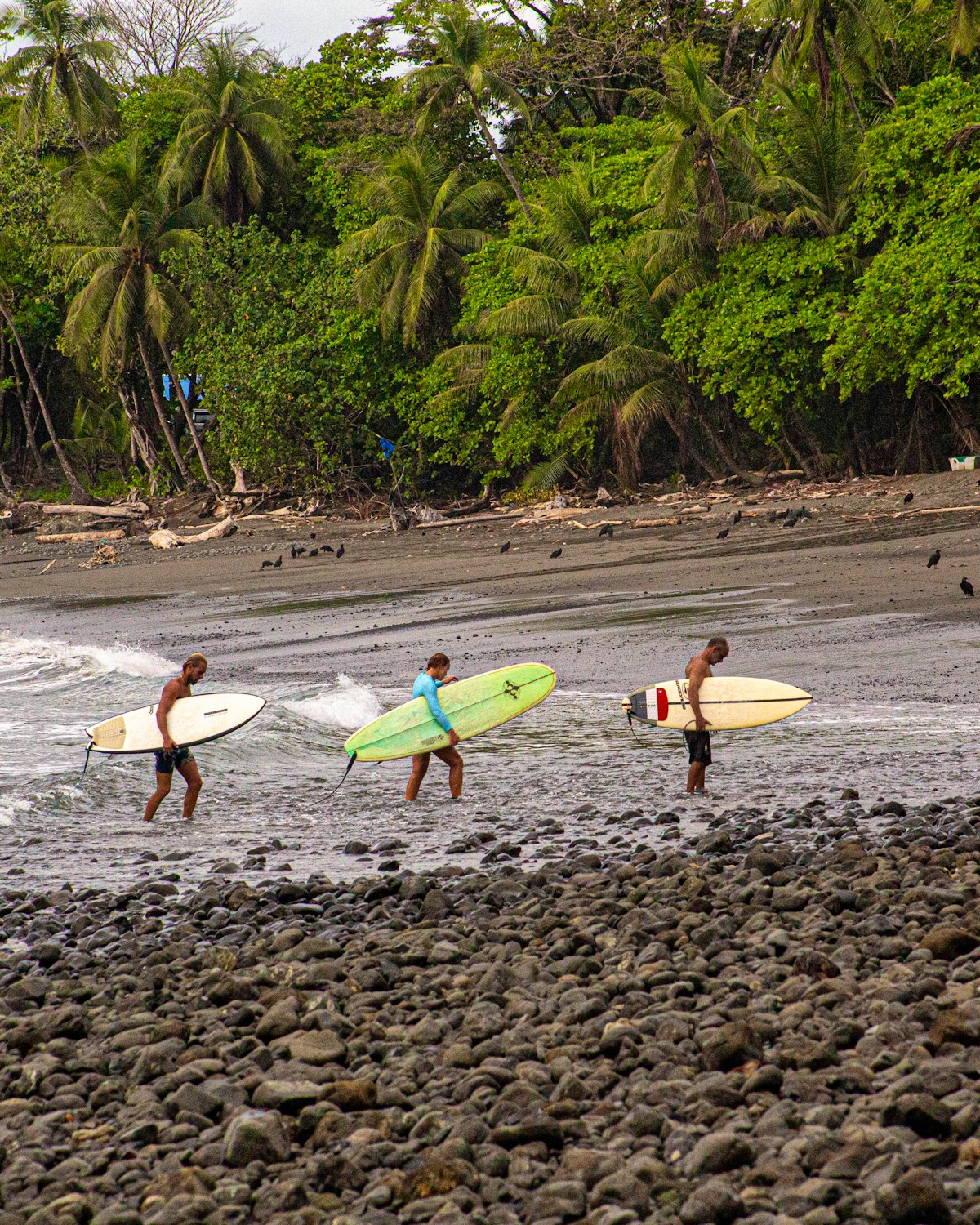
Start on Playa Tamarindo inside whitewater. Group lessons run US$45–US$65 for 2hrs.

Dawn Patrol the Reefs
Surf Avellanas and Negra before 9am — onshore wind builds across Guanacaste by mid-morning.

Boardies and a Rashguard
Water sits 27–29°C year-round. Skip the wetsuit; pack a long-sleeve rashguard for UV.
Mind the River Mouth
Crocodiles inhabit the Río Tamarindo estuary — never wade across. Strong rips at Playa Grande.
Frequently Asked Questions
When is the best time to surf in Tamarindo?
Skill drives the answer. Beginners score from October to May, when 2–4ft Tamarindo bay sessions and 27–28°C water make for forgiving lessons. Intermediates peak May to October as S/SW pulses light up Playa Avellanas at 4–6ft. Advanced surfers come June to September for 6–10ft+ on Witch's Rock and Ollie's Point — boat access only, 2h panga ride north into Santa Rosa National Park.
Is Tamarindo good for beginners?
Yes — it is Costa Rica's number-one entry point for international beginners. Playa Tamarindo's wide protected river-mouth bay produces forgiving inside whitewater that hundreds of school students share daily. Group lessons run US$45–US$65 for 2 hours through operators like Witch's Rock Surf Camp and Iguana Surf. Avoid Playa Negra and Witch's Rock in your first week — both are advanced reef and boat-access only.
How big do the waves get in Tamarindo?
Tamarindo's main beach runs 2–4ft most of the year and 4–8ft on bigger S/SW pulses from May to October. Playa Avellanas and Playa Negra hold 4–6ft cleanly, and Witch's Rock absorbs 6–10ft+ on solid winter and green-season swells. Small days send everyone to the inside whitewater at Tamarindo bay; bigger days push the school crowd onto Playa Langosta.
Do I need a wetsuit to surf in Tamarindo?
No. Water sits between 27°C in November and 29°C in May — warm year-round. Boardshorts and a long-sleeve rashguard are the standard kit; the rashguard is more for sun protection than warmth, since the equatorial UV at 10° latitude is brutal between 10am and 3pm. Pack reef-safe sunscreen, a wide-brim hat for between sessions, and consider a lycra hood for full-day boat trips to Witch's Rock.
How do I get to Tamarindo from Liberia?
Fly into Liberia (LIR) — direct flights from LAX, JFK, Miami, Dallas, Houston and Toronto. Liberia to Tamarindo takes 1h 15min on Highway 21: a private taxi runs around US$80, a shared shuttle around US$30. Alternatively, Sansa Airlines flies San José (SJO) to Tamarindo airfield (TNO) in 50 minutes. Driving from SJO takes around 5 hours via Highway 1 and the Tempisque crossing.
Where should I stay in Tamarindo for surfing?
Stay in Tamarindo town centre if you want walkable access to the main beach, every school and the restaurant scene on Calle Central — the right pick for most trips. Pick Playa Langosta, 5 minutes south, for quieter upmarket boutique hotels with a short drive back to town. Intermediates and advanced surfers chasing dawn sessions can base directly at Playa Avellanas or Playa Negra, accepting the 30-minute drive to nightlife.
Other regions in Costa Rica
The Ultimate Guide to Surfing in Tamarindo
Why Tamarindo works year-round
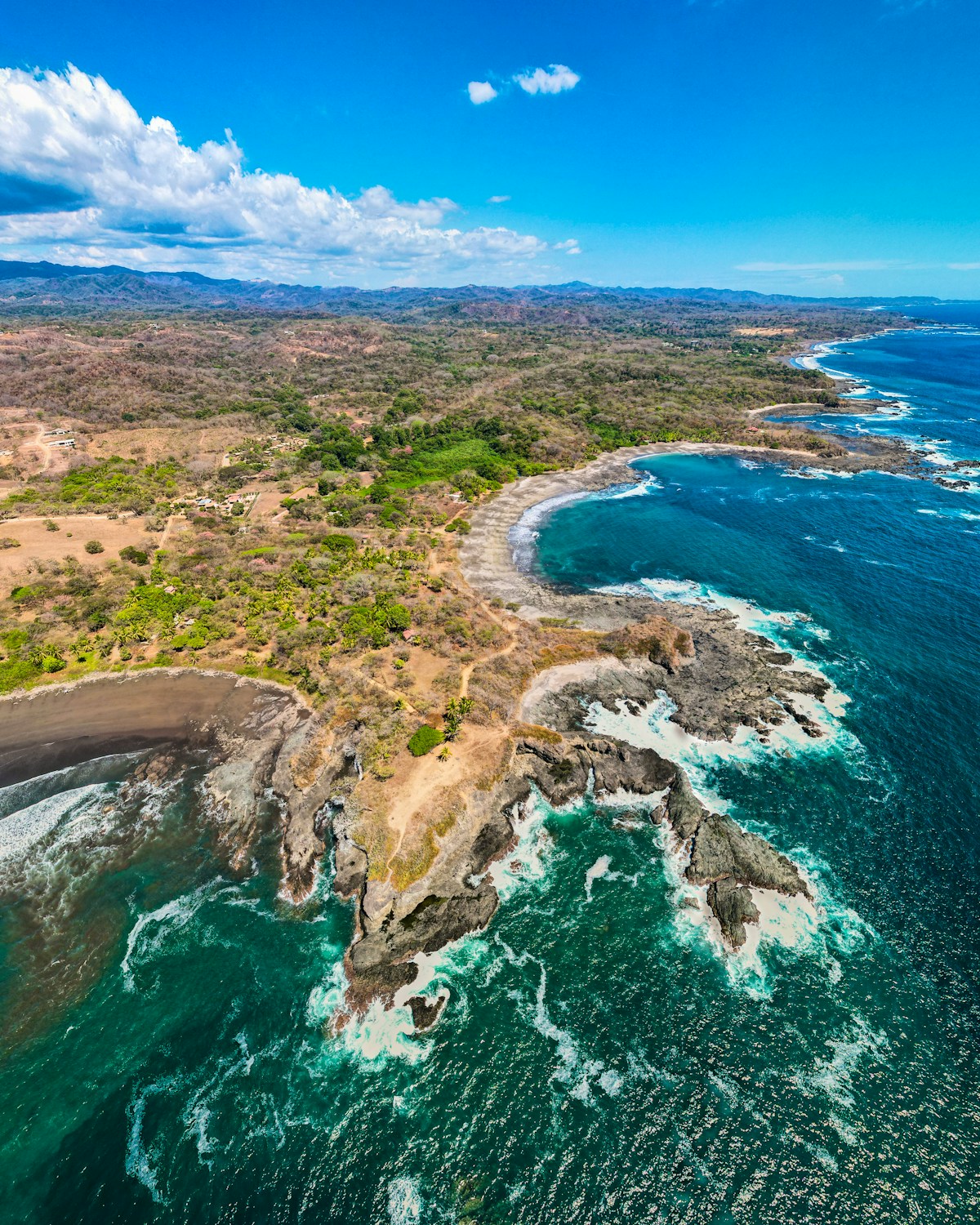
Tamarindo is the front door to surfing in Costa Rica. One hour from Liberia airport, the town packs every layer of the sport into a 30km radius: whitewater for absolute beginners at the protected river-mouth bay, sand-bottom intermediate peaks 15 minutes south at Avellanas, a heavy advanced reef at Playa Negra, and the two boat-access waves — Witch's Rock and Ollie's Point — made internationally famous when Bruce Brown filmed Robert August and Wingnut Weaver there for The Endless Summer II in 1994. The dry season (December to April) brings glass-off mornings and 27°C water; the green season (May to October) drops fewer crowds and bigger S/SW pulses. Pura vida is the operating phrase, but the town went from a sleepy 1990s fishing port to a 2010s mass-tourism beach hub — easy logistics, English everywhere, jetskis included.
Tamarindo surf spots by skill level
Playa Tamarindo is the basecamp. A long sand-bottom beach with a river-mouth break and forgiving inside whitewater that absorbs hundreds of school students daily. Beginner on small days; intermediate when the river-mouth bank stacks up to 4–6ft on a S/SW pulse.
Playa Grande sits across the river-mouth, north side. Long sand-bottom beach, heavier and faster than Tamarindo, with stronger rips. Intermediate to advanced. The beach is inside Las Baulas Marine Park — leatherback turtles nest October to March, so respect park rules and stay between flagged areas.
Playa Avellanas is the intermediate graduation, 15 minutes south by car. Long sand-bottom beach with multiple peaks; the most popular is the river-mouth left known as Little Hawaii. Intermediate.
Playa Negra is the heavy right-hand reef break, 30 minutes south. Robert August's segment in Endless Summer II runs here. Shallow lava reef, fast takeoff, short barrel section. Advanced only.
Playa Langosta is the river-mouth break next to Tamarindo town. Sandy with rocks, works on most swells, holds size when Tamarindo proper closes out. Intermediate.
Witch's Rock (Roca Bruja, Playa Naranjo) is the boat-access beach break inside Santa Rosa National Park. A 2h panga ride north of Tamarindo, holding 6–10ft+ on solid swell. Advanced. Ollie's Point (Potrero Grande), named after Oliver North, is the long right-hand point near Witch's Rock — also boat access only. Advanced. Day trips run roughly US$300 per person.
When to surf Tamarindo: month-by-month
December to April is the dry season — 2–4ft trade-wind groomed swell most days, glass-off dawn sessions before the offshore picks up, water at 27–28°C, almost no rain. Tamarindo's main beach is busiest in February and March with school groups. May to August is the green season prime — 4–8ft S/SW pulses light up Avellanas, Negra, and Witch's Rock, water climbs to 29°C, and afternoon thunderstorms clear by sunset. September and October are the swell peak: consistent 6–10ft on the boat-access waves and the rainiest months — 19–20 rainy days per month, but morning sessions still go. November transitions back to dry, often the local sweet spot — leftover S swell, cleaner winds, fewer crowds.
Where to stay in Tamarindo
Tamarindo town centre is the obvious base — walking distance to the main beach, every school, restaurants on Calle Central, and shuttle pickups for Avellanas and Negra. Mid-range to high prices in February–March. Playa Langosta, 5 minutes south, is the quieter upmarket option — boutique hotels and villas on a less-developed beach, with a 5-minute drive back to town. Playa Avellanas and Playa Negra are the intermediate-to-advanced play: stay on the reef itself if you want dawn sessions, accept that the night scene is a 30-minute drive away. Budget travellers cluster in Villarreal, the inland village 5 minutes east of town, where rates drop 30–50% from beachfront.
How to get to Tamarindo from Liberia
Fly into Liberia (LIR) Daniel Oduber Quirós airport — direct flights from LAX, JFK, Miami, Dallas, Houston and Toronto. Liberia to Tamarindo is 1h 15min on Highway 21: a private taxi runs around US$80, a shared shuttle around US$30. From San José (SJO), Sansa Airlines flies the 50-minute hop to Tamarindo airfield (TNO) several times daily. Driving SJO to Tamarindo takes about 5 hours via Highway 1 plus the Tempisque crossing. Once in town, breaks south of Tamarindo (Avellanas, Negra) need a rental car or a US$15–US$25 shuttle each way.
Surf schools, gear and local culture
Three operators anchor the lesson scene: Witch's Rock Surf Camp (the original Tamarindo operator and boat-trip headquarters), Iguana Surf and Tamarindo Surf School — useful reference points whether you book with them or not. Costa Rica Surf Camp and Surfer's Beach Tamarindo round out the menu. Soft-top rentals run US$15–US$20/day, performance shortboards US$25–US$35/day, longboards US$30–US$40/day.
A word on the lineup. Tamarindo's main beach is busy with hundreds of beginners daily — sit east or west of the school cluster if you want clean takeoffs, and never drop in on a learner closer to shore. Strong rip currents pull through the river-mouth and at Playa Grande; stay between flagged areas. The 2h boat ride to Witch's Rock can be rough on swell days, so pack motion-sickness medication. Crocodiles inhabit the Río Tamarindo estuary — never wade across the river to reach Playa Grande; take a water taxi (US$2). Get the basics right and the 30km coast opens up. See Visit Costa Rica for park entry rules at Las Baulas and Santa Rosa.