

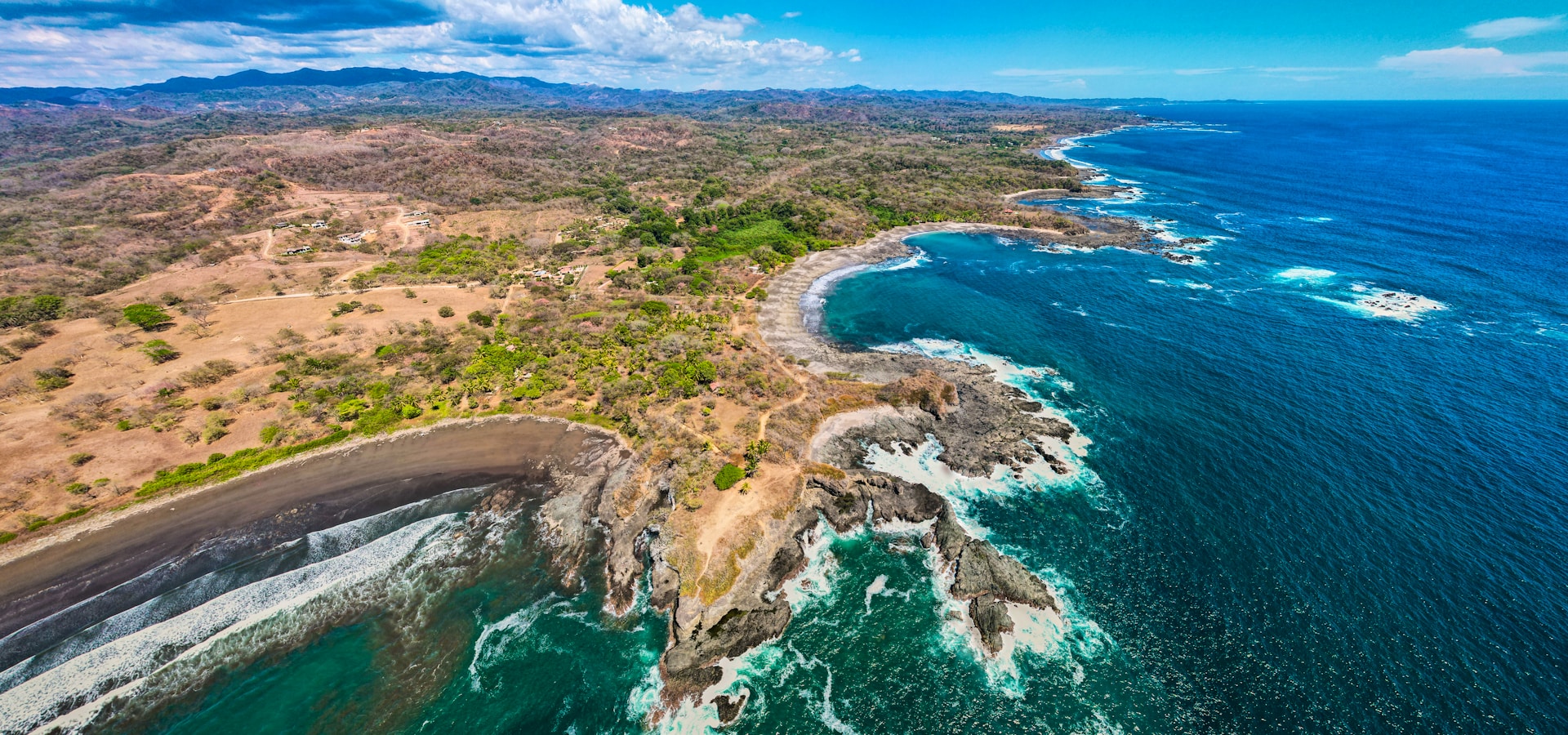
NOSARA
Costa Rica's yoga + surf coaching capital sits inside a Blue Zone — Nosara packs 5 sand-bottom breaks around 7km Playa Guiones, ridable year-round in boardshorts.
About Nosara
Nosara sits on the Nicoya Peninsula in Guanacaste — one of the world's five Blue Zones, where residents routinely live past 100. The town built its identity around Playa Guiones, a 7km wide-open sand-bottom beach that holds a soft A-frame from waist-high to overhead and forgives mistakes.
A 2018 building moratorium kept the jungle intact, so howler monkeys still soundtrack the dawn paddle-out. The arrival of Surf Simply in 2009 anchored the town's reputation as Costa Rica's boutique-coaching capital.
Surf level
| Skill level | Jan-Feb | Mar-Apr | May-Jun | Jul-Aug | Sep-Oct | Nov-Dec |
|---|---|---|---|---|---|---|
| Beginners | ||||||
| Intermediate | ||||||
| Advanced |
- Best time to go
- Good time to go
- Ok time to go
- Less desirable time to go
- Not recommended time to go
Weather & Travel Comfort


| Metric | Jan-Feb | Mar-Apr | May-Jun | Jul-Aug | Sep-Oct | Nov-Dec |
|---|---|---|---|---|---|---|
| Weather | ~23–31°C | ~24–32°C | ~24–29°C | ~23–28°C | ~23–27°C | ~23–29°C |
| Rainy days | 2d | 6d | 19d | 20d | 21d | 10d |
| What to Pack |  Water Temperature~28°C Water Temperature~28°C | Water Temperature~29°C | Water Temperature~29°C | Water Temperature~29°C | Water Temperature~28°C | Water Temperature~28°C |
- Boots if neededFor cold water or reef breaks
- Full protection wetsuitCold water
- Shorty / springsuitMild conditions
- No wetsuitWarm water
Tips for Surfing Nosara
Costa Rica's yoga-retreat coast fires offshore at dawn from May through October before mid-morning trades fill in. The four tips below cover Playa Guiones for beginners, the dawn glass window, and the river estuary crocodiles you should never wade across.

Beginners Start at Guiones
Playa Guiones is the basecamp. Group lessons run US$50–US$70 for 2 hours.

Surf the Dawn Glass-Off
Offshore winds die by mid-morning May–October. Paddle out before 8am for the cleanest faces.

Boardshorts All Year
Water sits 27–29°C year-round. Boardshorts plus a long-sleeve rashguard — no wetsuit needed.
Mind the Estuary
Crocodiles live in estuaries near Playa Nosara. Cross rivers by bridge — never wade across.
Frequently Asked Questions
When is the best time to surf in Nosara?
Skill drives the answer. Beginners score September to May at Playa Guiones, when 2–4ft conditions and offshore mornings keep the wave forgiving. Intermediates peak May to October on stacked S/SW groundswell, with clean 4–6ft faces at Guiones and Garza. Advanced surfers come June to August for 6–10ft pulses on prime swells, when the outside peaks at Guiones and the river-mouth at Playa Nosara show their teeth.
Is Nosara good for beginners?
Yes — it's one of the best beginner setups in Central America. Playa Guiones is a 7km sand-bottom beach with soft, slow A-frame peaks that forgive mistakes. Every school in town teaches here, and the lineup spreads across kilometres so crowds disperse. For even gentler whitewater, walk 1km north to Playa Pelada. Avoid the river-mouth at Playa Nosara on your first trip — currents are stronger and crocodiles live in the adjacent estuary.
How big do the waves get in Nosara?
Waves run 2–4ft most of the dry season and 4–8ft through the May-to-October wet season, with 6–10ft pulses on prime S/SW swells in June–August. Playa Guiones holds clean shape across the full range thanks to the wide sand bottom; smaller days send beginners to Playa Pelada while bigger pulses light up the outside peaks and the Playa Nosara river-mouth. October is the wettest and biggest — fewer crowds, more rain.
Do I need a wetsuit to surf in Nosara?
No. Water sits at 27–29°C year-round — the warmest end of the surfing world. Boardshorts plus a long-sleeve rashguard is the full kit, mainly for sun protection during 2-hour sessions under the equatorial sun. Reef-safe sunscreen on face and ears is non-negotiable; the UV index runs 11+ from March to September. No booties, no fullsuit, no shorty — pack lighter than you think.
How do I get to Nosara from Liberia?
From Liberia (LIR), drive south on Highway 21 for 2 hours to Nicoya, then 30 minutes on a dirt road — total 2h 30min by car, US$50–US$80/day rental with 4WD recommended in wet season. The faster option is Sansa Airlines, which flies 30min from San José (SJO) to Nosara airfield (NOB) for around US$120 one way. From SJO by car, allow 5–6 hours via the Tempisque bridge.
Where should I stay in Nosara for surfing?
Stay in Playa Guiones village if you want walkable access to the main wave and every coaching operator — most trips work best here, even at higher nightly rates. Pick Playa Pelada if you longboard and prefer a quieter scene 1km north. Esperanza and the inland jungle road are the budget option: 5-minute drive to the breaks, lower rates, and worth booking with a kitchen since restaurant supply tightens in low season.
Other regions in Costa Rica
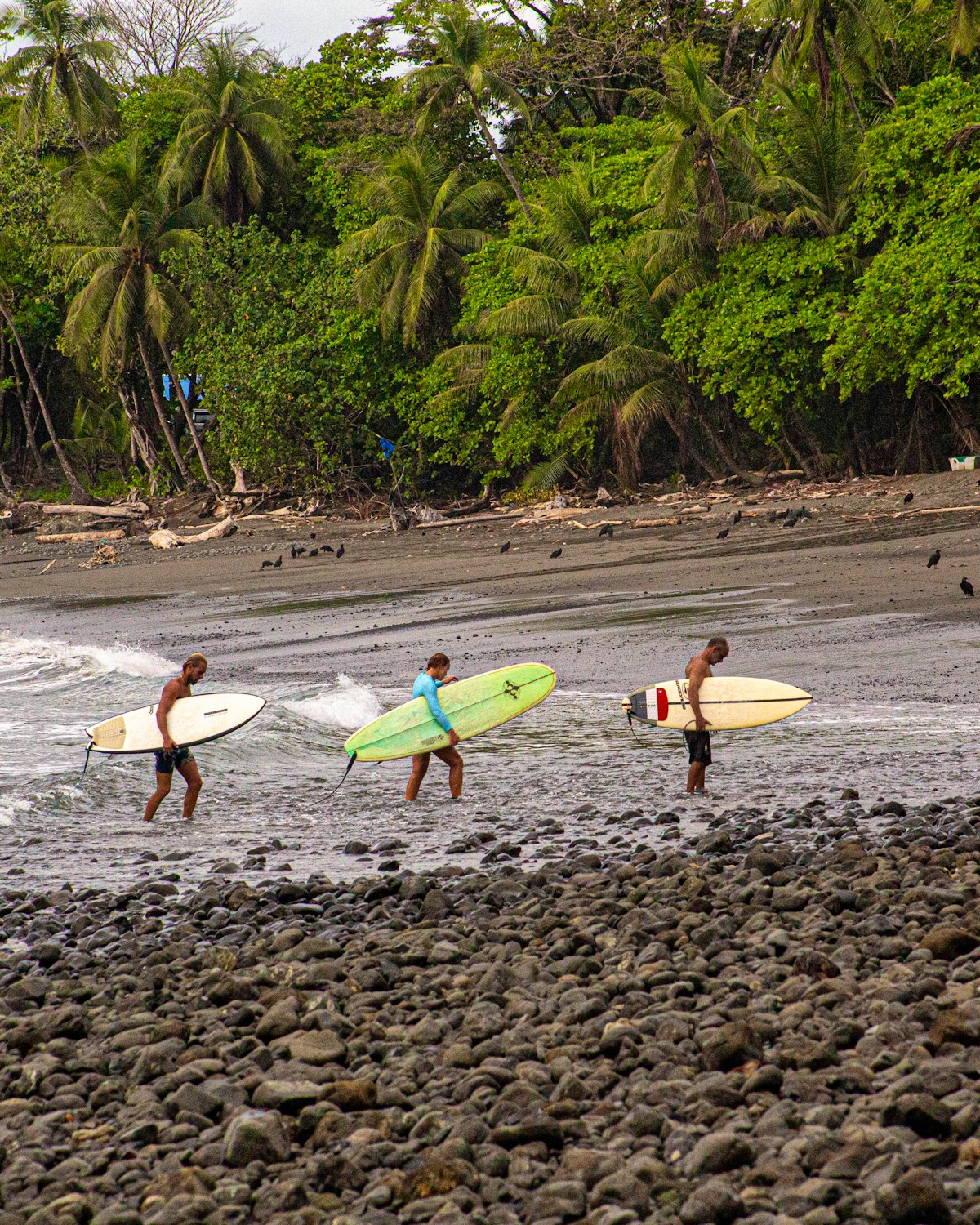
The Ultimate Guide to Surfing in Nosara
Why Nosara works year-round
Few surf towns carry the wellness pedigree Nosara does. The Nicoya Peninsula sits inside one of the planet's five Blue Zones — a designation from researcher Dan Buettner identifying populations with unusual rates of centenarians — and the town built a tourism economy around that fact: organic kitchens, daily yoga teacher-training intakes at the Nosara Yoga Institute, and fresh-fruit batidos on every corner. The 2018 development moratorium capped construction at single-story jungle bungalows, so howler monkeys still wake you at 5am and the canopy still touches the road. Surf-wise, the centrepiece is Playa Guiones, a 7km sand-bottom beach where the wave forgives you in a way reef points never do. That combination — gentle wave, warm water year-round, jungle setting, and the country's deepest coaching bench — is why intermediates and improvers fly into Costa Rica specifically for Guanacaste.
Nosara surf spots by skill level
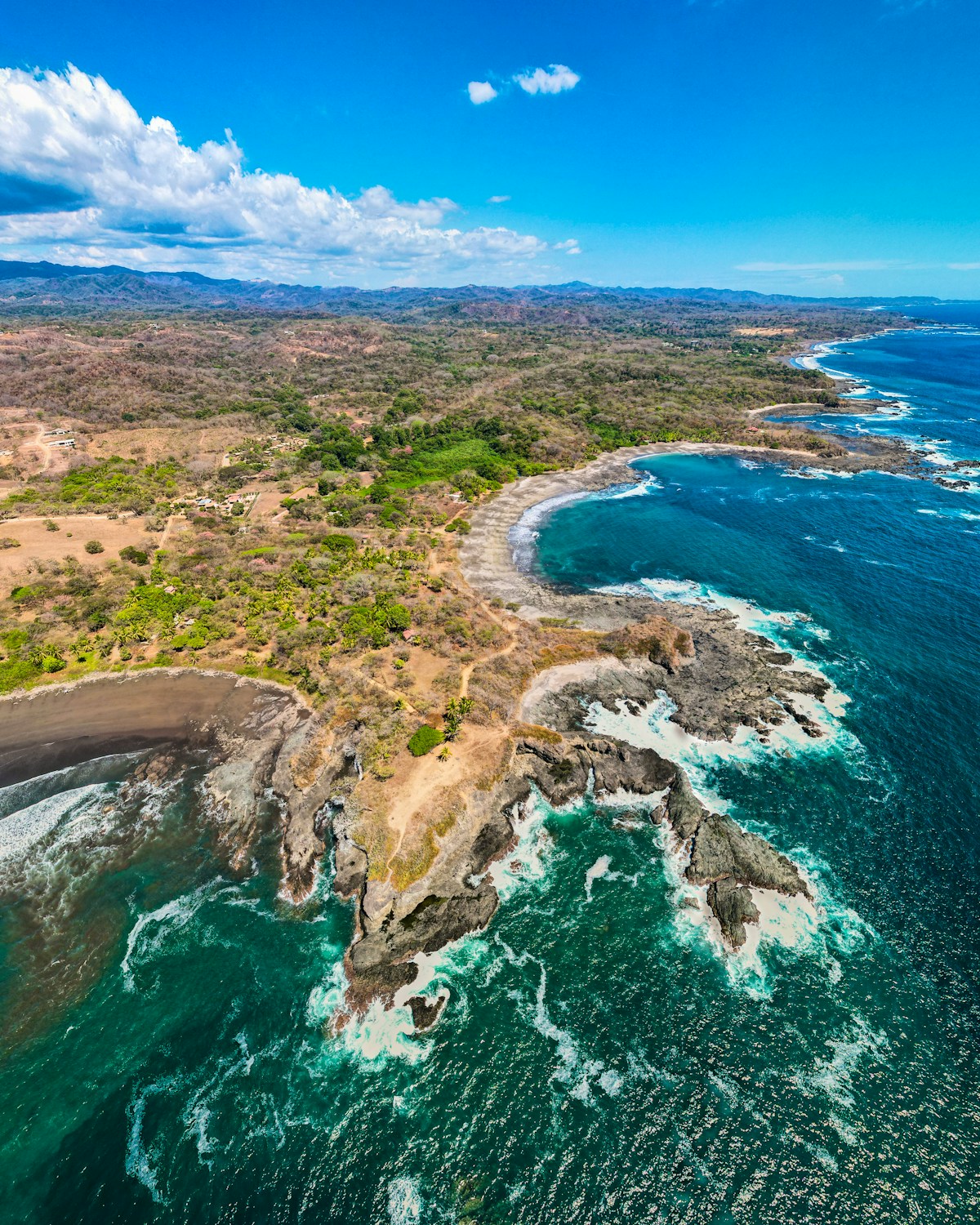
Playa Guiones is the marquee. A 7km open sand-bottom beach with consistent A-frame peaks, soft and slow on most days, holding shape from waist-high to overhead. On the right combination of S/SW swell and offshore E wind, inside lefts can run for over a minute. Beginner to intermediate — every school in town meets here.
Playa Pelada is the protected pocket beach 1km north of Guiones. Gentler whitewater, a small reef section on the south end, and a quieter scene than the main beach. Beginners and longboarders.
Playa Garza is a long quiet sandy beach 10 minutes south of town. Smaller crowds, cleaner banks on offshore mornings, and a fishing-village atmosphere. Beginner to intermediate.
Playa Nosara — confusingly different from Playa Guiones — is the river-mouth break north of town. Stronger currents, sharper shape, and crocodiles in the adjacent estuary. Intermediate.
Playa Ostional sits 15 minutes north and doubles as an olive ridley sea turtle arribada zone — protected by SINAC, the national parks authority. The sandbanks shift with the rains; the wave is beginner-friendly when small and best surfed on smaller swells outside turtle nesting peaks.
When to surf Nosara: month-by-month
December to March is the dry season — offshore E winds blow clean every morning, swells run 2–4ft most days, water stays at 28°C, and beginners get the best conditions of the year. April and May transition into wet season: the first S/SW pulses arrive, swells climb to 4–6ft, and intermediates start scoring. June to August is the prime window — clean S/SW groundswell stacks consistently, wave height runs 4–8ft with occasional 10ft pulses, water peaks at 29°C, and rainy afternoons clear by sunset for the dawn session. September and October stay big but get the wettest weather of the year (20+ rainy days/month); crowds thin, advanced surfers score, beginners look elsewhere. November is the shoulder — swells fading, rain dropping, and the best price-to-conditions ratio of the calendar.
Where to stay in Nosara
Playa Guiones is the obvious pick — the village sits 5 minutes' walk from the sand, every coaching operator runs from here, and the dirt-road grid keeps everything walkable. Bungalow rates run higher than elsewhere on the peninsula but you skip the rental-car requirement. Playa Pelada is the quieter alternative 1km north: smaller guesthouses, fewer restaurants, more residential. Pick this if you ride longboards and want low-key sessions. Esperanza and the inland jungle road put you 5 minutes' drive from the breaks at lower nightly rates — book accommodation with kitchen access, since the town's 2018 development cap means restaurant supply gets tight in low season.
How to get to Nosara from Liberia
Liberia (LIR) in Guanacaste is the closest international airport — direct flights from DFW, LAX, IAH, JFK, MIA and Toronto. From Liberia, drive Highway 21 south for 2h to Nicoya, then 30min on a dirt road locals call "the Nicoya potholes" — total 2h 30min by car. The faster path from international connections is Sansa Airlines, which flies 30min from San José (SJO) to Nosara airfield (NOB) for around US$120 one way. San José SJO by car is 5–6h via the Pan-American highway and the Tempisque bridge. Rental cars in Costa Rica run US$50–US$80/day — a 4WD is recommended in the wet season.
Surf schools, rentals and local culture
Three operators anchor the coaching scene: Surf Simply is the high-end marquee — week-long video-coaching packages run US$2,500+ and book months ahead — followed by Coconut Harry's and Safari Surf School Nosara for daily lessons and rentals. Soft-top board rentals run US$15–US$25/day, performance shortboards US$25–US$40/day, longboards US$30–US$45/day.
A word on local culture: surfing arrived in Nosara in the 1970s with a small wave of US expats, but the modern coaching identity dates to 2009 when Surf Simply opened. The yoga-retreat boom that followed turned the town into a wellness hub — book accommodation+meals together if you visit in low season, and pack earplugs for the howler monkey dawn chorus. Cross rivers by bridge only; the estuary crocodiles are real. For broader regional context, Visit Costa Rica and Lonely Planet Nosara cover non-surf logistics. Surfing-coast conservation is tracked by Save The Waves.