

GALICIA
Spain's most consistent surf belt sits on the Atlantic-facing northwest coast — Galicia delivers Pantín Classic Pro barrels, 6+ named breaks and the lowest crowd density in the country.
About Galicia
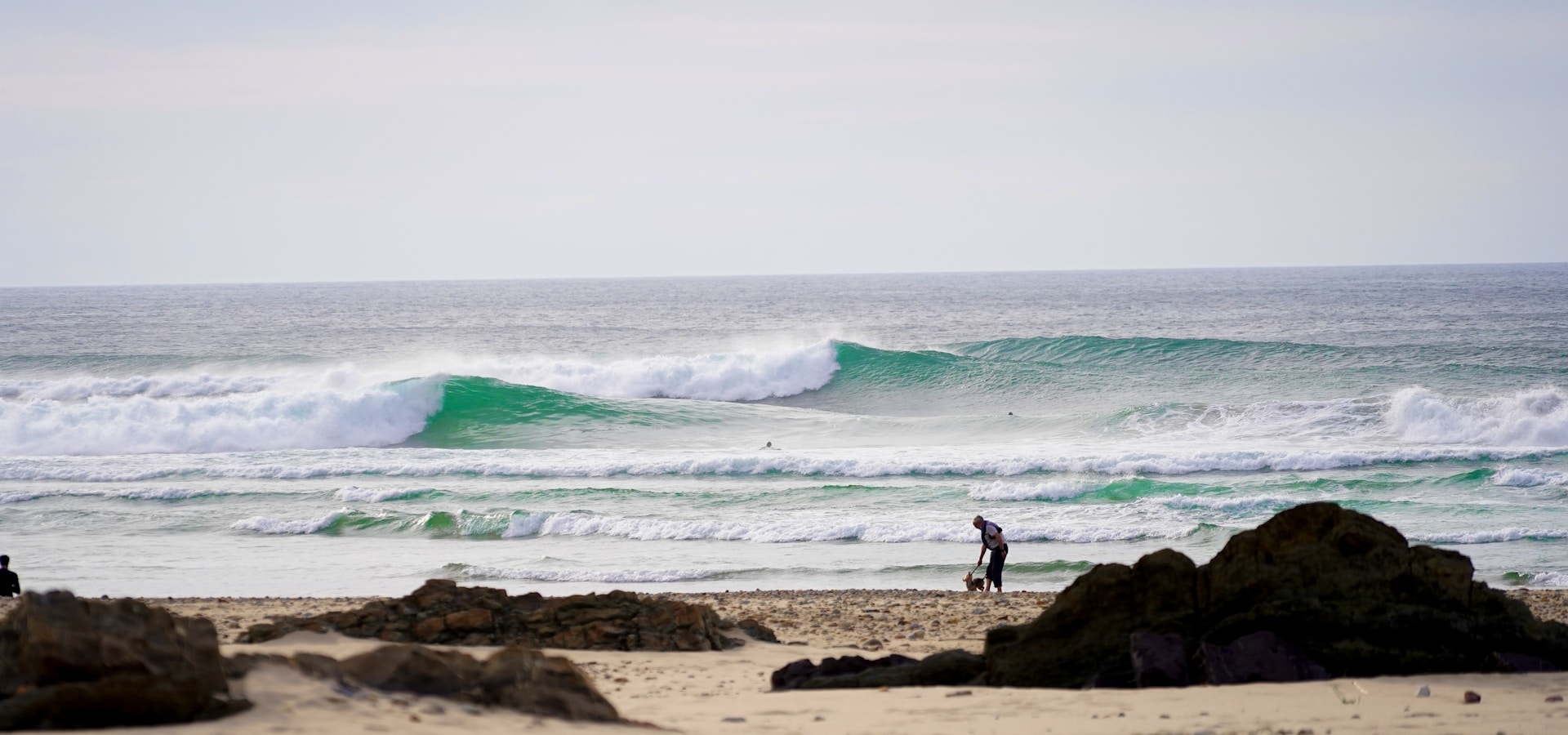
Galicia is the Celtic-rooted northwest tip of Spain, a granite coast battered directly by NW Atlantic systems and stitched with empty beach breaks. The marquee wave is Praia de Pantín, host of the Pantín Classic Pro since 1988 — one of the longest-running QS events in Europe.
Heavier surfers head to Razo near A Coruña; beginners learn at Praia de Patos outside Vigo. Octopus, gaitas and the Santiago pilgrim cathedral round out the cultural backdrop.
Surf level
| Skill level | Jan-Feb | Mar-Apr | May-Jun | Jul-Aug | Sep-Oct | Nov-Dec |
|---|---|---|---|---|---|---|
| Beginners | ||||||
| Intermediate | ||||||
| Advanced |
- Best time to go
- Good time to go
- Ok time to go
- Less desirable time to go
- Not recommended time to go
Weather & Travel Comfort


| Metric | Jan-Feb | Mar-Apr | May-Jun | Jul-Aug | Sep-Oct | Nov-Dec |
|---|---|---|---|---|---|---|
| Weather | ~7–13°C | ~9–16°C | ~14–20°C | ~17–23°C | ~14–20°C | ~8–14°C |
| Rainy days | 12d | 11d | 9d | 7d | 9d | 13d |
| What to Pack |  Water Temperature~10–11°C Water Temperature~10–11°C | Water Temperature~11°C | Water Temperature~13–15°C | Water Temperature~17°C | Water Temperature~15–17°C | Water Temperature~11–13°C |
- Boots if neededFor cold water or reef breaks
- Full protection wetsuitCold water
- Shorty / springsuitMild conditions
- No wetsuitWarm water
Tips for Surfing Galicia
Spain's Atlantic corner stacks its cleanest NW swell September–November, around the time the Pantín Classic books up town. The four tips below cover Praia de Patos for newcomers, the autumn window worth chasing, and why nobody paddles Razo solo.

Start at Praia de Patos
Beginners: head to Praia de Patos near Vigo. Group lessons run €30–€40 for 2 hours.

Chase the Autumn Window
September–November stacks the cleanest NW swell with light easterlies — book around the Pantín Classic.

Wetsuit by Season
4/3mm + boots October–June (water 10–13°C). 3/2mm July–September only.
Mind the Sets at Razo
Razo shifts hard on big days — sit deeper than feels safe and never paddle out alone.
Frequently Asked Questions
When is the best time to surf in Galicia?
Skill drives the answer. Beginners score from June to August at Praia de Patos and small-day Pantín, when 2–4ft mush and 16–17°C water make for forgiving sessions. Intermediates peak from May to September — clean shoulder swell, warmer water, fewer crowds. Advanced surfers come September through May for 4–12ft NW Atlantic swell at Pantín, Razo and Doniños, with SE offshores grooming the beach breaks at dawn.
Is Galicia good for beginners?
Yes — at the right spot. Praia de Patos south of Vigo is sheltered by the Cíes Islands, so the headland filters bigger NW swells into chest-high whitewater that schools work all summer. Praia de Pantín also runs forgiving on small days. Skip Razo entirely until you're comfortable in head-high beach-break surf — it's heavy, fast and shifts on shallow banks.
How big do the waves get in Galicia?
Waves run 2–4ft most of summer and 4–12ft from September to April. Pantín holds clean head-high A-frames on a clean NW swell, Razo absorbs solid double-overhead pulses for advanced surfers, and Doniños stays rideable up to 8ft with the headland filtering size. The region's direct NW Atlantic exposure means it's the most consistent surf coast in Spain — flat days are rare from October onward.
Do I need a wetsuit to surf in Galicia?
Yes, year-round, and thicker than most of Spain. Water sits between 10°C in February and 17°C in August. A 4/3 fullsuit plus 3mm boots is the daily kit from October through June. A 3/2 works only July through September. Many locals add gloves and a hood from December to March. Galicia is the coldest mainland surf in Spain — pack the warmer suit.
How do I get to Galicia from Madrid?
Fly into A Coruña (LCG) or Santiago de Compostela (SCQ) on cheap Vueling, Iberia or Ryanair connections — both airports take direct flights from London, Dublin and Paris too. From Madrid by land, the Renfe Alvia train runs from Chamartín to A Coruña in about 4 hours for €35–€60. Once you land, rent a car: public transport between Pantín, Razo and Doniños is slow and patchy.
Where should I stay in Galicia for surfing?
Stay in A Coruña if you want a small Atlantic city with Riazor beach in the centre and a 30-minute drive to Razo. Pick Pantín or Cedeira for the rural surf hub — walk to the Classic beach, lower prices, dawn patrol on foot. Ferrol sits between the two near Doniños. For a cultural twist, base in Santiago de Compostela and drive the 30 minutes to the coast each morning.
Other regions in Spain
The Ultimate Guide to Surfing in Galicia
Why Galicia works year-round
Galicia gets surf when nowhere else in Spain does. The region's coast points directly into the path of every NW Atlantic low-pressure system that spins off Iceland, so swell lands here first and biggest before refracting south toward Portugal or east into the Bay of Biscay. The result is the most consistent wave count on the Iberian Peninsula — and, because Galicia stays off the package-holiday map, the lowest crowd density of any Spanish surf region. The editorial proof point is Pantín Classic Pro, a QS event that has run at Praia de Pantín since 1988, making it one of the oldest continually held competitions in Europe. Locals call the region o fin do mundo — the end of the world — and on a 12ft Tuesday in November with empty peaks up and down 200km of coast, the name fits.
Galicia surf spots by skill level
Praia de Pantín is the marquee. A 1.5km beach break north of Ferrol that holds clean A-frames on a NW swell with S/SE offshore wind, sand bottom, multiple peaks. Hosts the Pantín Classic each September. Works all levels at small size; sizes up fast and goes intermediate-to-advanced above 5ft. Peak season: September to April.
Razo sits 30 minutes west of A Coruña and is the heaviest beach break in the region. Powerful, fast, shifting peaks on shallow sandbanks, best on small-to-medium NW swell with SE wind. Intermediate-to-advanced only. Peak: October to March.
Doniños, just outside Ferrol, is the mellow counterweight — long beach, gentler banks, a forgiving inside that suits improvers and intermediates working into open ocean. Sizes up cleanly when bigger swells hit.
Praia de Patos, south of Vigo on the Rías Baixas, is the beginner basecamp. Sheltered by the Cíes Islands, it filters bigger NW swells into chest-high whitewater, and every Vigo-area school sets up here from May to October. Beginners.
Praia de Frouxeira in Valdoviño is a long exposed strand 10km from Pantín, picking up similar swell and burning off crowds when the Classic week packs the main beach. Mixed skills depending on size.
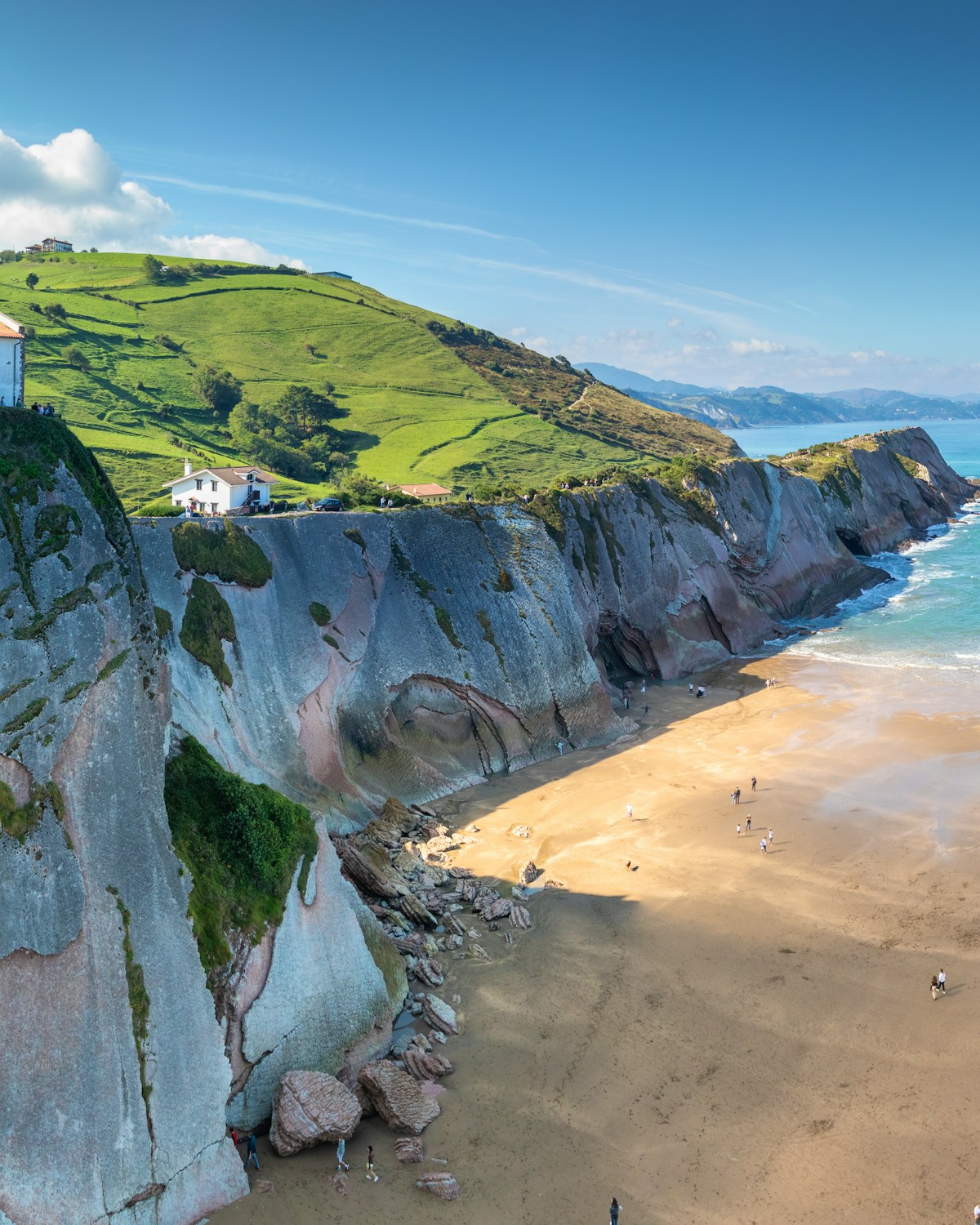
Praia das Catedrais, east toward Asturias, is the postcard beach with cathedral-arch sea stacks — surfable only on rare clean medium days at low tide, but worth a session for the scenery if you time it. Intermediate. Sibling region Asturias sits one hour east if you want to extend the trip.
When to surf Galicia: month-by-month
September to November is prime. NW swells run 4–10ft, the terral offshore wind grooms Pantín and Razo at dawn, water still holds 14–17°C, and the Classic draws the European QS circuit to the coast. December to March is the heavy season — 6–12ft pulses, water dropping to 10–11°C, full 4/3 plus boots, and only the committed paddle out. April to June is the shoulder: smaller 3–5ft swell, water climbing back to 11–13°C, fewer crowds. July and August is the beginner window — 2–4ft mush, 16–17°C water, packed schools at Patos and Pantín, and the nordés northerly shutting down exposed beaches by midday.
Where to stay in Galicia
A Coruña is the urban base — small Atlantic city with Praia de Riazor in the centre, walkable old town, the Tower of Hercules, and 30 minutes by car from Razo. Best for travellers who want city food and surf in one trip. Pantín and Cedeira are the rural surf hub: small villages, surf camps, direct access to the Classic beach, and dawn patrol on foot. Lower prices, fewer restaurants. Ferrol is the port-town middle ground, 10 minutes from Doniños with cheaper lodging than A Coruña. Santiago de Compostela, the medieval pilgrim destination, sits 30 minutes inland from the coast — a good cultural-plus-surf base if you want to walk the cathedral plaza after sessions.
How to get to Galicia from London or Madrid
Fly into A Coruña Airport (LCG) or Santiago Airport (SCQ) — both take cheap direct flights from London, Dublin and Paris on Ryanair, Vueling and easyJet. Santiago has more frequencies; A Coruña drops you closer to Pantín. From Madrid, the Renfe Alvia train runs to A Coruña in about 4 hours from Chamartín station (€35–€60 one way). Once on the coast, a rental car is essential — public transport between Pantín, Razo and Doniños is slow and infrequent. Reckon on €25–€40 per day for an economy hire from either airport.
Surf schools, gear rentals and local culture
Three operators anchor the region: Pantín Surf at the Classic beach, Prado Surf in Patos for the Vigo crowd, and Surf a Veces further along the coast — useful reference points whether you book with them or independently. Board rentals run €15–€20/day for soft-tops and €25–€35/day for performance shortboards; longboards are scarce, so reserve early.
A cultural note: Galicia is Celtic Spain, not Mediterranean Spain. The language is Galego, not Castilian. Bagpipes (gaitas) play at village festivals. Lunch is pulpo a la gallega (octopus with paprika and olive oil) and percebes (gooseneck barnacles pulled off the same rocks the swell smashes against). Surfing arrived late here — the 1990s Pantín Classic boom is what put the coast on the map — and the lineup still feels small, working-class and protective. Sit wide, nod to the locals, and the wave count looks after itself.