

TORQUAY
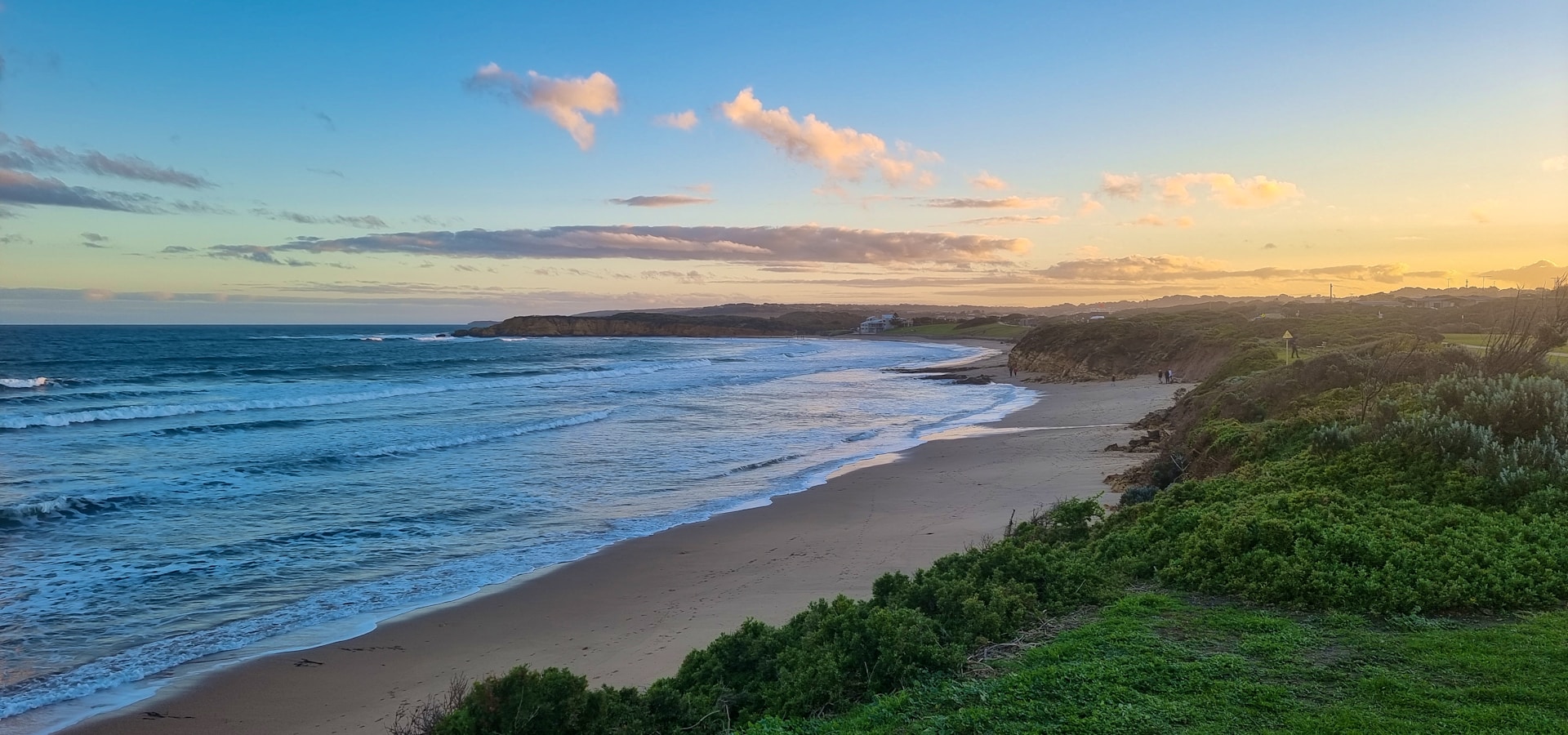
Bells Beach sits 5 minutes from Torquay — the Victorian town where Rip Curl and Quiksilver started in 1969 and the Easter Rip Curl Pro has run since 1961.
About Torquay
Torquay is a coastal town 1 hour south-west of Melbourne and the birthplace of the modern Australian surf industry — both Rip Curl and Quiksilver were started in beachside garages here in 1969. The town anchors the start of the Great Ocean Road and sits 5 minutes from Bells Beach, a long right-hand reef that has hosted the Rip Curl Pro every Easter since 1961, the longest-running professional surf event in the world.
Winkipop breaks next door, fast and hollow, while Front Beach inside town handles beginners.
Surf level
| Skill level | Jan-Feb | Mar-Apr | May-Jun | Jul-Aug | Sep-Oct | Nov-Dec |
|---|---|---|---|---|---|---|
| Beginners | ||||||
| Intermediate | ||||||
| Advanced |
- Best time to go
- Good time to go
- Ok time to go
- Less desirable time to go
- Not recommended time to go
Weather & Travel Comfort


| Metric | Jan-Feb | Mar-Apr | May-Jun | Jul-Aug | Sep-Oct | Nov-Dec |
|---|---|---|---|---|---|---|
| Weather | ~16–23°C | ~14–20°C | ~10–15°C | ~8–13°C | ~10–16°C | ~13–20°C |
| Rainy days | 4d | 5d | 7d | 8d | 8d | 6d |
| What to Pack |  Water Temperature~19°C Water Temperature~19°C | Water Temperature~18–19°C | Water Temperature~15–17°C | Water Temperature~13–14°C | Water Temperature~13–15°C | Water Temperature~16–18°C |
- Boots if neededFor cold water or reef breaks
- Full protection wetsuitCold water
- Shorty / springsuitMild conditions
- No wetsuitWarm water
Tips for Surfing Torquay
Australia's surf-industry capital packs Bells Beach's decades-deep pecking order ten minutes south of Torquay Front Beach's beginner whitewater. The four tips below cover lessons at Front Beach, the cold-water reality, and the shark advisories that aren't optional.

Beginners Head to Front Beach
Beginners start at Torquay Front Beach. Torquay Surf Academy runs 2-hour groups for around A$80.

Sit Wide at Bells
Bells and Winkipop locals enforce a strict pecking order — sit wide, never drop in.

Cold-Water Reality
3/2 fullsuit December–April; 4/3 with hood and boots May–November when water hits 12–14°C.
Mind the Sharks
White sharks patrol Victoria's coast — heed Surf Life Saving Australia warnings and beach closures.
Frequently Asked Questions
When is the best time to surf in Torquay?
Skill drives the answer. Beginners score November to February at Torquay Front Beach and Jan Juc, when 2–4ft summer swell and 17–19°C water make for forgiving sessions. Intermediates get the broadest window, August to April, with manageable size at Jan Juc and Steps. Advanced surfers come March to October for clean 4–15ft SW Southern-Ocean swell at Bells, Winkipop and Point Danger, with N offshore winds grooming the reefs.
Is Torquay good for beginners?
Yes — at the right spot. Torquay Front Beach, in the heart of town, is a protected sand-bottom beach with gentle whitewater that suits first sessions, and Jan Juc handles slightly more confident learners. Both are staffed by schools daily through the summer. Avoid Bells Beach, Winkipop and Point Danger in your first week: they are reef breaks with strict local pecking orders and serious consequences if you blow a takeoff.
How big do the waves get in Torquay?
Waves run 3–6ft on a typical day and 4–15ft on prime SW Southern-Ocean pulses through the autumn and winter months. Bells Beach holds genuine size cleanly across multiple sections — Outside Bells, Bells Bowl and Centreside — and stays rideable through head-and-a-half-plus swells when other breaks close out. Winkipop lights up at head-high and bigger, and Front Beach stays small and friendly all summer for learners.
Do I need a wetsuit to surf in Torquay?
Yes, year-round — this is cold water by Australian standards. Sea temperatures sit between 12°C and 19°C across the year. A 3/2 fullsuit covers December through April, when water sits at 17–19°C. From May to November, switch to a 4/3 fullsuit with a hood and boots — water drops to 12–14°C in deep winter, and a session at Bells or Winkipop in July without booties is genuinely painful.
How do I get to Torquay from Melbourne?
Drive from Melbourne Tullamarine (MEL) south-west via the Princes Highway and Surf Coast Highway — about 1h 30min. Melbourne Avalon (AVV) is closer at around 50 minutes but has limited flights. By public transport, ride a V/Line train from Southern Cross to South Geelong, then take the connecting bus to Torquay — roughly 2 hours total for around A$15 one way. A rental car is best if you plan to surf the wider Great Ocean Road.
Where should I stay in Torquay for surfing?
Stay in Torquay town centre if you want walkable cafes, the Australian National Surfing Museum and a 5-minute drive to Bells — most trips work best here. Pick Jan Juc if you want quieter streets between the beginner beach and the marquee reefs. Bellbrae and the inland Bells Beach side is the budget option: 5 minutes inland, lower nightly rates, and a fast dawn run to the Bells car park before the lineup fills up.
Other regions in Australia
The Ultimate Guide to Surfing in Torquay
What makes Torquay unique
No other town in Australia carries Torquay's surf-industry weight. In 1969, Doug "Claw" Warbrick and Brian Singer started shaping wetsuits in a Torquay garage that became Rip Curl; months later at the same address, Alan Green and John Law launched Quiksilver. Both companies still anchor the town's economy with HQ campuses near the Bells Beach turn-off, and the Australian National Surfing Museum sits on the main street. Five minutes down the road, Bells Beach has hosted the Rip Curl Pro Bells Beach every Easter since 1961 — the longest continuously running professional surf event on earth. That mix of industry origin story, marquee competition wave and Great Ocean Road gateway access is what sets Torquay apart from the rest of Victoria's surf coast.
Torquay surf spots by skill level
Bells Beach is the marquee. A long, peeling right-hand reef break with multiple sections — Outside Bells, Bells Bowl, Centreside and Inside Bells — that holds anything from 4ft to 15ft on a clean SW Southern-Ocean swell with N or NW offshore winds. Peak season is March to October. Intermediate to advanced.
Winkipop sits immediately south of Bells, a fast right-hand reef with a hollow inside section that breaks head-high and bigger on the same SW pulses. Faster and less forgiving than Bells. Advanced.
Jan Juc is the long sand-bottom beach 5 minutes from Bells, with multiple peaks across a wide stretch. Works through most of the year and absorbs the overflow when the reefs are tightly packed. Intermediate.
Torquay Front Beach is the protected sand-bottom beach inside town, where every learner starts. Gentle whitewater, easy paddle-out, schools running daily. Beginner.
Point Impossible is an exposed sand-bottom point 10 minutes east of Torquay — longer rides on the right swell, but watch the rips. Intermediate to advanced.
Point Danger, just south of Bells, is a short hollow reef break that handles size and rewards a precise takeoff. Advanced. Steps, a small reef next to Bells, gives intermediates a softer reef option, and Bird Rock, 30 minutes south, is the long left-hand reef for goofy-footers willing to drive.
When to surf Torquay: month-by-month
Torquay is a Southern Hemisphere destination — January is peak summer, June through August is freezing winter. March to October is when the reefs come alive: 4–8ft typical and 10–15ft on prime SW pulses, water cooling from 17°C in autumn to 13°C in deep winter. Bells holds genuine size cleanly through winter, and the Rip Curl Pro runs around Easter for a reason. November to February flips into the beginner-friendly window: 2–4ft beach-break days at Front Beach and Jan Juc, water climbing to 17–19°C, and the Front Beach lineup full of school groups. August to April is the broad sweet spot for intermediates — long days at Jan Juc and Steps with manageable size and tolerable water temps.
Where to stay in Torquay
Torquay town centre is the obvious base — walking distance to Front Beach, the Surfing Museum, cafes along Gilbert Street and a 5-minute drive to Bells. Jan Juc, the next suburb south, puts you between the beginner beach and the marquee reefs with quieter streets and more holiday-rental stock. Bellbrae and the inland Bells Beach side is the budget play: 5 minutes inland, lower nightly rates, and a fast morning run to the Bells car park before the dawn crowd turns up. Avoid relying on Anglesea or Lorne further down the Great Ocean Road unless you have a car — the daily commute back to Bells eats your sessions.
How to get to Torquay from Melbourne
Melbourne Tullamarine (MEL) is the international gateway, 1h 30min by car south-west via the Princes Highway and Surf Coast Highway. Melbourne Avalon (AVV) is closer — about 50 minutes — but has limited flights. By public transport, take a V/Line train + bus from Southern Cross station: rail to South Geelong, then bus to Torquay, totalling around 2 hours for roughly A$15 one way. The Great Ocean Road tourist route officially starts at Torquay, so a rental car is the way to explore the wider coast — Lorne, Apollo Bay and the Twelve Apostles are all within day-trip range. Drive the road slowly in winter rain; it is winding and slippery.
Surf schools, gear rentals and local culture
Three schools anchor the lesson scene: Torquay Surf Academy (the oldest in town), Go Ride a Wave and Westcoast Surf School. Group lessons typically run A$70–A$95 for 2 hours including board and wetsuit; private sessions cost more. Board rentals are easy to find along the Esplanade — soft-tops from around A$25/day, performance shortboards A$40–A$60/day.
A word on the lineup: Bells and Winkipop's pecking order is decades deep. Sit wide your first sessions, take what's offered, never drop in. White sharks are present along this stretch of southern Victoria — pay attention to Surf Life Saving Australia warnings and beach closures, and surf between the flags at Jan Juc and Point Impossible if you are not confident reading rips. Stewardship groups like Save The Waves also list this coast among Australia's priority surf zones.