

FUERTEVENTURA
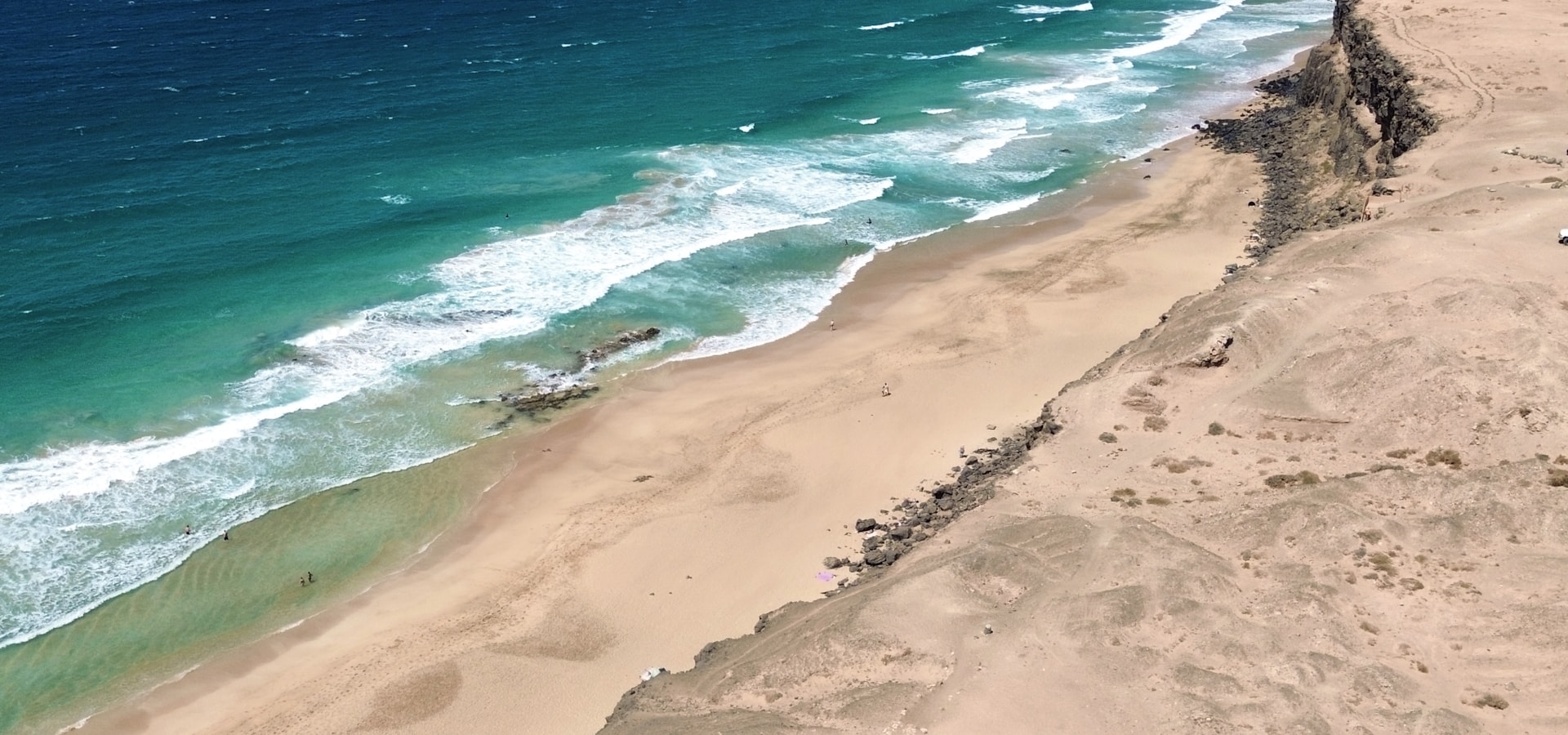
Easternmost Canary Island with constant NE trades — Fuerteventura packs 6+ rocky reef breaks across a 20min North Shore strip, from Lobos points to El Cotillo beaches.
About Fuerteventura
Fuerteventura is the easternmost Canary Island, a treeless volcanic strip 100km off the Moroccan coast where constant NE trade winds blow offshore on the entire North Shore. Surfers call it the European Hawaii because six serious reef breaks sit within a 20-minute drive of each other between El Cotillo, Lajares and Corralejo.
The standout wave is Lobos, a perfect right point on an islet you reach by boat. El Cotillo beach handles beginners year-round, and El Hierro delivers a heavy left reef that has hosted WSL QS competition.
Surf level
| Skill level | Jan-Feb | Mar-Apr | May-Jun | Jul-Aug | Sep-Oct | Nov-Dec |
|---|---|---|---|---|---|---|
| Beginners | ||||||
| Intermediate | ||||||
| Advanced |
- Best time to go
- Good time to go
- Ok time to go
- Less desirable time to go
- Not recommended time to go
Weather & Travel Comfort


| Metric | Jan-Feb | Mar-Apr | May-Jun | Jul-Aug | Sep-Oct | Nov-Dec |
|---|---|---|---|---|---|---|
| Weather | ~15–21°C | ~17–23°C | ~20–27°C | ~24–29°C | ~22–28°C | ~17–23°C |
| Rainy days | 4d | 2d | 1d | 1d | 2d | 4d |
| What to Pack |  Water Temperature~17°C Water Temperature~17°C | Water Temperature~16–17°C | Water Temperature~18–20°C | Water Temperature~22–23°C | Water Temperature~21–23°C | Water Temperature~18–19°C |
- Boots if neededFor cold water or reef breaks
- Full protection wetsuitCold water
- Shorty / springsuitMild conditions
- No wetsuitWarm water
Tips for Surfing Fuerteventura
The Canaries' driest island grooms its North Shore reefs all morning on NE trades — surf any tide window before sunset and the wind does the work. The four tips below cover Piedra Playa, the wetsuit-by-season reality, and which lava reefs need booties.

Beginners go to El Cotillo
Beginners: head to Piedra Playa at El Cotillo. Group lessons run €35–€45 for 2 hours.

Trades Blow Offshore
NE trade winds groom the North Shore reefs all morning — surf any tide window before sunset.

Wetsuit by Season
3/2mm December–April, shorty or 2mm May–November. Water sits 16–23°C — no hood needed.
Booties on the Reefs
Wear booties at El Hierro, Suicides and Bristol — urchins cover the lava bottom.
Frequently Asked Questions
When is the best time to surf in Fuerteventura?
Skill drives the answer. Beginners score from April to August at El Cotillo, when 2–4ft mush and 21–22°C water make for forgiving sessions. Intermediates can surf almost year-round, with the cleanest windows from December to October. Advanced surfers come September through March for 4–10ft N and NW swell at Lobos, Bristol and El Hierro, with NE trade winds blowing directly offshore on the North Shore reefs from dawn to dusk.
Is Fuerteventura good for beginners?
Yes — but stick to the right beach. El Cotillo (Piedra Playa) is a long crescent of sand-bottom beach south of El Cotillo village with a forgiving inside reform that produces clean whitewater for whole sessions. Schools cluster here from May to October. Playa del Moro in Corralejo is the second beginner option. Avoid Bristol, El Hierro, Suicides and Lobos in your first week — they are all reef bottom and most are advanced-only.
How big do the waves get in Fuerteventura?
Waves run 2–4ft most of summer and 4–10ft from November to March. Lobos holds clean head-and-a-half rights on a solid N or NW swell, Bristol stays rideable up to 8ft on a clean trade-wind morning, and El Hierro turns heavy and hollow once the swell tops 6ft. Small days send everyone to El Cotillo and Playa del Moro for sand-bottom sessions in waist-to-chest mush.
Do I need a wetsuit to surf in Fuerteventura?
Yes, but a thin one. Water sits between 16°C in March and 23°C in August. A 3/2 fullsuit covers December through April, while a shorty or 2mm springsuit handles May through November. No hood or gloves are needed at any point in the year. Booties are essential at the urchin-covered reefs of El Hierro, Suicides and Bristol — pack a 3mm pair if you plan to surf the Majanicho zone.
How do I get to Fuerteventura from the airport?
Fuerteventura Airport (FUE) takes direct flights from London, Madrid, Berlin and most European hubs. From FUE to Corralejo is 40 minutes — a taxi runs about €50, or ride the Tiadhe line 6 bus every hour for €3.40 (50 minutes). For El Cotillo there is no direct bus, so rent a car at the terminal and drive the FV-10 in 35 minutes. A rental car is the practical option for any week-long trip.
Where should I stay in Fuerteventura for surfing?
Stay in Corralejo if you want a walkable seafront, restaurants and easy boat access to Lobos — the most popular base for first-timers. Pick Lajares if you have a rental car and want a 15-minute drive to every North Shore break with cheaper accommodation and a quieter village feel. El Cotillo village is the third option: ideal if you plan to surf Piedra Playa and Punta Blanca daily and skip the Majanicho reefs.
Other regions in Canary Islands
The Ultimate Guide to Surfing in Fuerteventura
What makes Fuerteventura unique
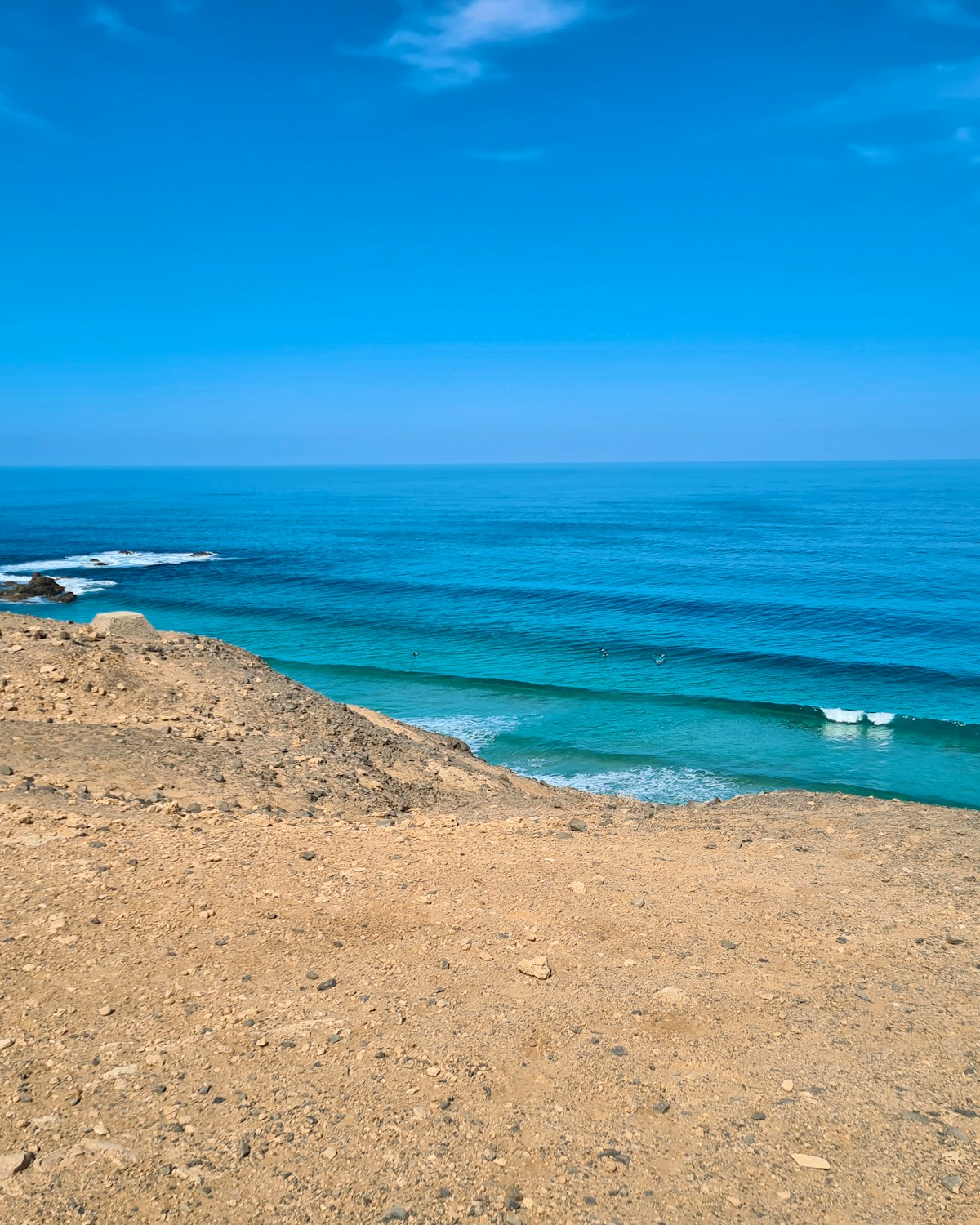
Fuerteventura is the second-largest island in the Canary Islands, 100km off the coast of Morocco and the easternmost point of the archipelago. The geology is the editorial fact: a treeless volcanic strip where black lava flats run straight into the Atlantic and form the rocky reef shelves that produce the wave count. Locals and German expats call it the European Hawaii because the North Shore — the 25km arc between Corralejo, Lajares and El Cotillo — concentrates six to eight quality reef breaks within a 20-minute drive of each other, all groomed by constant NE trade winds blowing directly offshore. That density plus the year-round warm water is what built the long-running German and UK surf-tourist colony in Corralejo and Lajares. The island has hosted WSL QS competition at El Cotillo, and the Visit Fuerteventura tourism board markets the island specifically as a winter surf destination for European travellers.
Fuerteventura surf spots by skill level
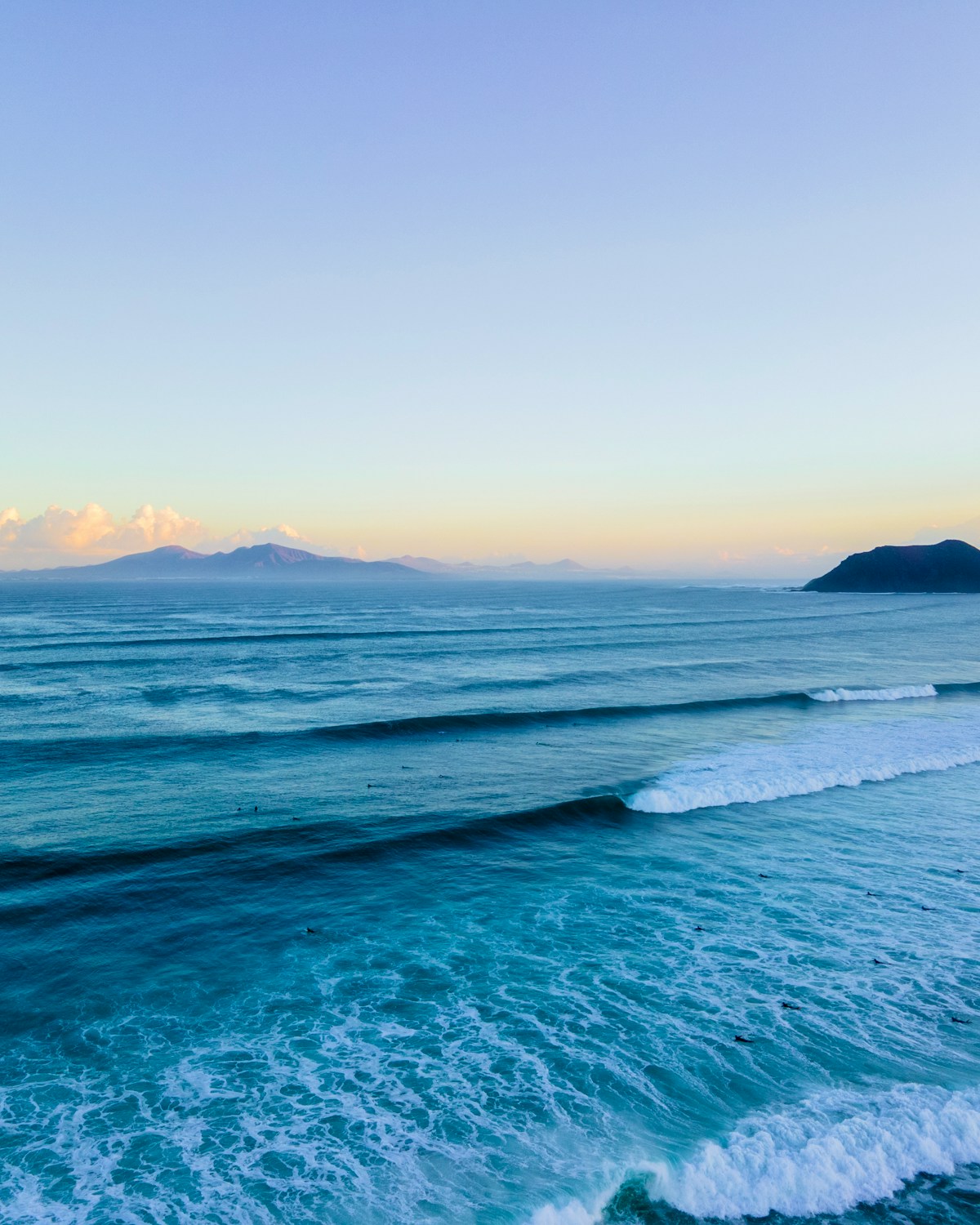
Lobos is the marquee. A long, peeling right point off the Isla de Lobos islet, accessed only by boat from Corralejo harbour, breaking over reef into deep water with the trades blowing offshore. Holds size and runs for 200 metres on a clean N or NW swell. Advanced.
Bristol (locally La Derecha) is the long right reef near Majanicho with a sand-bottom takeoff that bleeds into urchin reef on the inside. Best on N–NW swell with E offshore. Intermediate to advanced.
El Hierro is the heavy left reef near Majanicho — short, hollow, powerful, and the most localised wave on the island. Advanced only.
Generosa is the friendly A-frame near El Cotillo. Reef bottom but mellow shoulders both ways, works on smaller pulses when Bristol gets too big. Intermediate.
El Cotillo (Piedra Playa) is the beginner basecamp — a long crescent beach south of the village with sand bottom and a forgiving reform inside. Schools work this stretch from May to October. Beginners to intermediates.
Punta Blanca sits on the El Cotillo headland, a right reef that suits intermediates on a clean head-high day. Suicides and Bubble (La Caleta) round out the menu — both shallow advanced reefs in the Majanicho zone where booties are non-negotiable.
When to surf Fuerteventura: month-by-month
November to March is the prime season. North Atlantic swells stack up, waves run 4–10ft on the reefs, water sits 17–19°C and rain is rare (3–4 days a month). Trades blow offshore on the North Shore from dawn until dusk. April to June is the shoulder — 3–5ft swell, water climbing to 17–20°C, fewer crowds, almost zero rainfall. July and August flip to small-wave mode: 2–4ft mush, 22°C water, beginner heaven at El Cotillo and Playa del Moro, with the trade winds at their strongest mid-afternoon. September and October are the tactical sweet spot — 22°C water still, the first autumn NW pulses arriving, and the August holiday crowd gone home.
Where to stay in Fuerteventura
Corralejo is the obvious base for first-timers. Walkable seafront, the boat to Lobos leaves from the harbour, and the airport bus drops you in town. Higher prices, the most restaurants, and the German surf-tourist scene anchored here for 30 years. Lajares is the inland surf village — 15-minute drive to every North Shore break, cheaper rentals, yoga and cafe culture, and the choice of most repeat travellers. El Cotillo village puts you 30 seconds from Piedra Playa and Punta Blanca; quieter, fishing-town feel, ideal if you ride the El Cotillo zone daily and skip Majanicho.
How to get to Fuerteventura from the airport
Fuerteventura Airport (FUE) sits just outside Puerto del Rosario and takes direct flights from London, Madrid, Berlin, Manchester and most major European hubs year-round. From the airport to Corralejo is 40 minutes by car — a taxi runs about €50, or take the Tiadhe line 6 bus, which leaves roughly every hour, costs €3.40 and takes 50 minutes. From the airport to El Cotillo there is no direct bus, so rent a car at the terminal — the drive is 35 minutes via the FV-10. A rental car is the practical choice for any week-long trip, since the North Shore reefs are spread across a 25km strip.
Surf culture in Fuerteventura
Five operators anchor the lesson and rental scene: Wave Gypsy Surf School, Quiksilver Boardriders Surf School Fuerteventura, Homegrown Surf School, Acua Sport and OneSurf Camp — useful reference points whether you book with them or not. Group lessons run €35–€45 for two hours; soft-top rentals sit at €15/day, performance shortboards at €25–€30/day.
A word on the lineup: surfing took root here in the late 1980s as German and British travellers discovered the island, and the scene retains a strong European-expat flavour alongside a tight Canarian local crew. The unwritten rule applies hardest at El Hierro and Bristol — sit wide for your first three sessions and let the regulars cycle through the inside before you take a set wave. Boat access at Lobos means the lineup is naturally capped, but late boats lose priority. The wave count rewards patience here more than aggression.