

JEFFREYS BAY
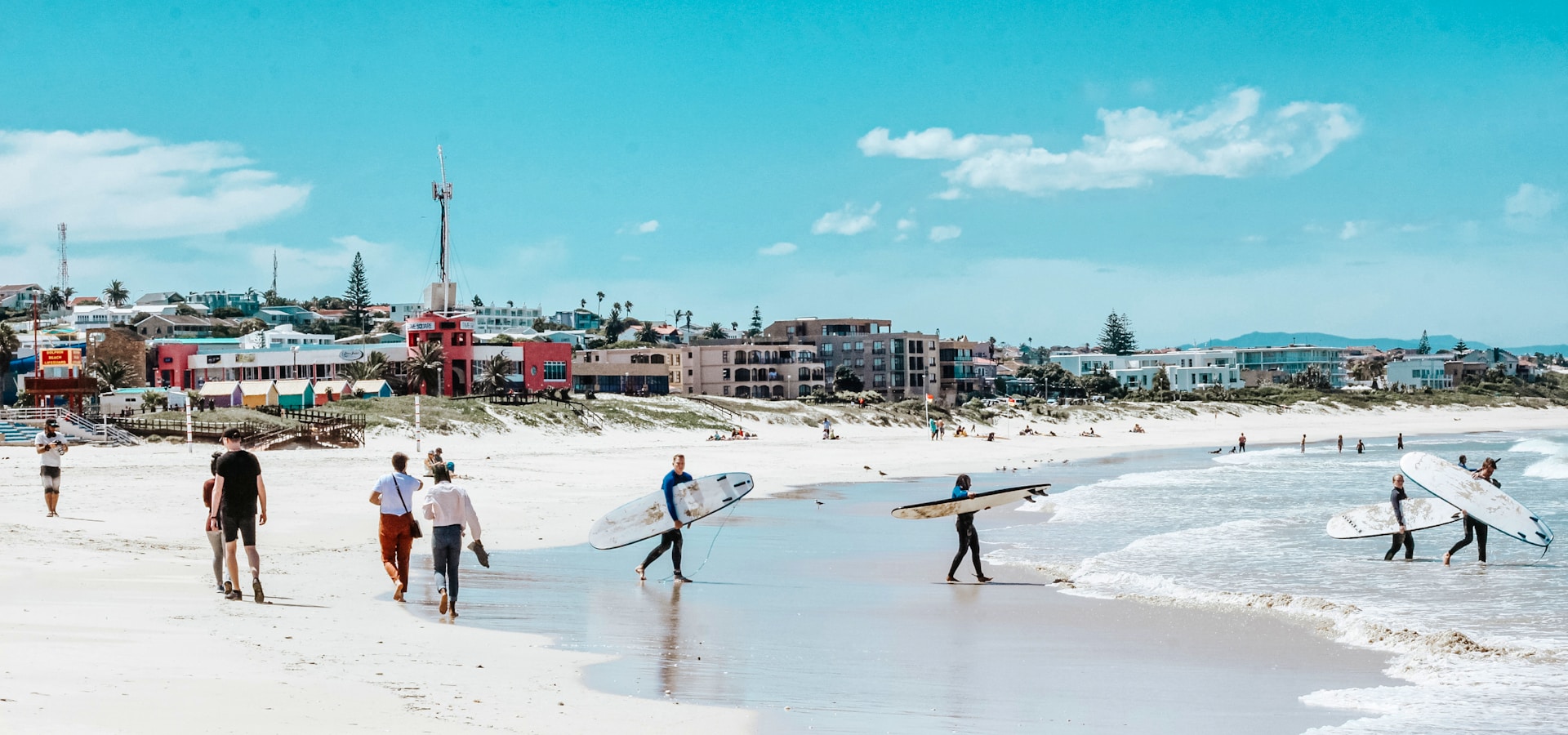
One wave defines Jeffreys Bay — Supertubes, a 200–500m right-hand point that has hosted the WSL Championship Tour every year since the 1990s, 75km from Gqeberha.
About Jeffreys Bay
Jeffreys Bay sits on South Africa's Eastern Cape coast, 75km west of Gqeberha, and the town orbits one wave — Supertubes, a 200–500m racing right-hand point that has hosted the WSL Championship Tour every year since the 1990s. Surfers rank it among the planet's three best right-hand point breaks.
The point splits into named sections: heavy Boneyards at the top, the racing main stretch, Impossibles linking through, and mellower The Point on the inside corner near the parking.
Surf level
| Skill level | Jan-Feb | Mar-Apr | May-Jun | Jul-Aug | Sep-Oct | Nov-Dec |
|---|---|---|---|---|---|---|
| Beginners | ||||||
| Intermediate | ||||||
| Advanced |
- Best time to go
- Good time to go
- Ok time to go
- Less desirable time to go
- Not recommended time to go
Weather & Travel Comfort


| Metric | Jan-Feb | Mar-Apr | May-Jun | Jul-Aug | Sep-Oct | Nov-Dec |
|---|---|---|---|---|---|---|
| Weather | ~18–25°C | ~16–24°C | ~12–20°C | ~10–19°C | ~12–20°C | ~16–23°C |
| Rainy days | 6d | 6d | 5d | 6d | 7d | 7d |
| What to Pack |  Water Temperature~21°C Water Temperature~21°C | Water Temperature~20–21°C | Water Temperature~18–19°C | Water Temperature~18°C | Water Temperature~18°C | Water Temperature~19–21°C |
- Boots if neededFor cold water or reef breaks
- Full protection wetsuitCold water
- Shorty / springsuitMild conditions
- No wetsuitWarm water
Tips for Surfing Jeffreys Bay
South Africa's most famous right runs at dawn — Supertubes goes sideways with the SE wind by midday and Boneyards locals enforce a strict order. The four tips below cover Kitchen Windows for newcomers, the dawn-or-nothing window, and the parallel rip you'll use to paddle out.

Beginners go to Kitchen Windows
Beginners surf Kitchen Windows south of the point. School lessons run R450–R650 for two hours.

Dawn or Nothing
Surf Supertubes at dawn — the SE wind blows it sideways by midday.

Wetsuit by Season
3/2 fullsuit November–April, 4/3 May–October. Water sits 17–21°C. Booties help on the rocky takeoff.

Sit Wide at Boneyards
Sit wide at Boneyards for three sessions. Use the parallel rip to paddle out.
Frequently Asked Questions
When is the best time to surf in Jeffreys Bay?
Skill drives the answer. Beginners score November to January at Kitchen Windows, when 2–4ft summer surf and 20°C water make for forgiving sessions. Intermediates peak October to March — workable swell at The Point and Tubes, smaller crowds, warm water. Advanced surfers come February to October for 4–10ft SW swell wrapping into Boneyards and Supertubes, with dawn E offshores grooming the point before the SE wind kicks in.
Is Jeffreys Bay good for beginners?
Yes, but only at the right spot. Kitchen Windows, a protected beach break a short walk south of the main point, has a sand bottom, smaller waves and a lifeguarded inside section that suits learners. Schools set up here daily through summer. Stay off Boneyards, Supertubes and Impossibles in your first week — they break over rock and the local pecking order is strict.
How big do the waves get in Jeffreys Bay?
Waves run 2–6ft through summer (November–March) and 4–10ft through winter (May–October). Supertubes holds clean overhead rides on a 6–8ft SW swell, while Magna Tubes absorbs anything over 8ft on the outer reef. Boneyards turns hollow and dangerous above 6ft. On smaller days, Kitchen Windows and Albatross take the overflow at chest-high or under.
Do I need a wetsuit to surf in Jeffreys Bay?
Yes, year-round. Water sits between 17.5°C in winter and 21°C in summer. A 3/2 fullsuit covers November through April, while a 4/3 handles the May–October winter window when the water drops below 18°C. Booties help on the rocky takeoff at the point regardless of season; gloves and hood are not needed. Pack the warmer suit if you are visiting for the WSL contest in July.
How do I get to Jeffreys Bay from Gqeberha?
Fly into Gqeberha (Port Elizabeth) International (PLZ), then drive 1h west on the N2 to J-Bay. Airlink and FlySafair run direct flights several times daily from Johannesburg, Cape Town and Durban. Shuttles to J-Bay cost R350–R500 each way, but a rental car is easier if you want flexibility between breaks. Cape Town to J-Bay along the Garden Route is a 7–8h road trip.
Where should I stay in Jeffreys Bay for surfing?
Stay on Da Gama Road and the point neighbourhood if you want a 5-minute walk to Supertubes, the surf shops and the cafes — most first trips work best here. Marina Martinique, 10 minutes south, is a quieter canal-front pick with self-catering apartments at lower rates. Wavecrest and the inland blocks above the N2 are the budget option: 5-minute drive to every break with lower nightly rates than the point.
Other regions in South Africa
The Ultimate Guide to Surfing in Jeffreys Bay
Why Jeffreys Bay works for surfers
Jeffreys Bay — J-Bay to anyone who has been — is the rarest kind of surf town: it exists for one wave. Supertubes, the long racing right-hand point that wraps the headland, has been ranked among the planet's three or four best right-hand point breaks since travelling Australians and Bruce Brown's Endless Summer 2 found it in the late 1960s. The WSL Corona Open J-Bay has run almost every year since the 1990s, dragging the entire Championship Tour to the Eastern Cape's Sunshine Coast each July. The bay sits 75km west of Gqeberha (formerly Port Elizabeth), shaped by the Cape St Francis system that grooms raw Southern Ocean SW swell into the long, even lines that have defined the place. Da Gama Road, the town's surf strip, still clusters around Country Feeling Surf, the Billabong factory and the Quiksilver outlets that grew up alongside the wave. For the rest of South Africa, J-Bay is the pilgrimage stop.
Jeffreys Bay surf spots by skill level
Boneyards is the heaviest, most exposed section at the top of the Supertubes point. Hollow takeoff, shallow reef shoulder, a tight local crew. Advanced only — best on a clean SW swell from June to August with E offshore wind.
Supertubes itself is the racing mid-section. Rides of 200–500m link top-to-bottom on a clean 4–8ft SW swell, breaking over a sand-and-rock bottom with offshore E wind. Peak is May to September. Advanced.
Impossibles is the linking section between Supertubes proper and the inside reform. Faster than Tubes, mellower than Boneyards, and the place to read the rest of the point. Intermediate to advanced.
Tubes is the inside reform: shorter, friendlier rides, still hollow on its day. Intermediate.
The Point is the inside corner closest to the parking lot. Mellow walls, longer paddle than it looks, a dependable warm-up wave. Intermediate.
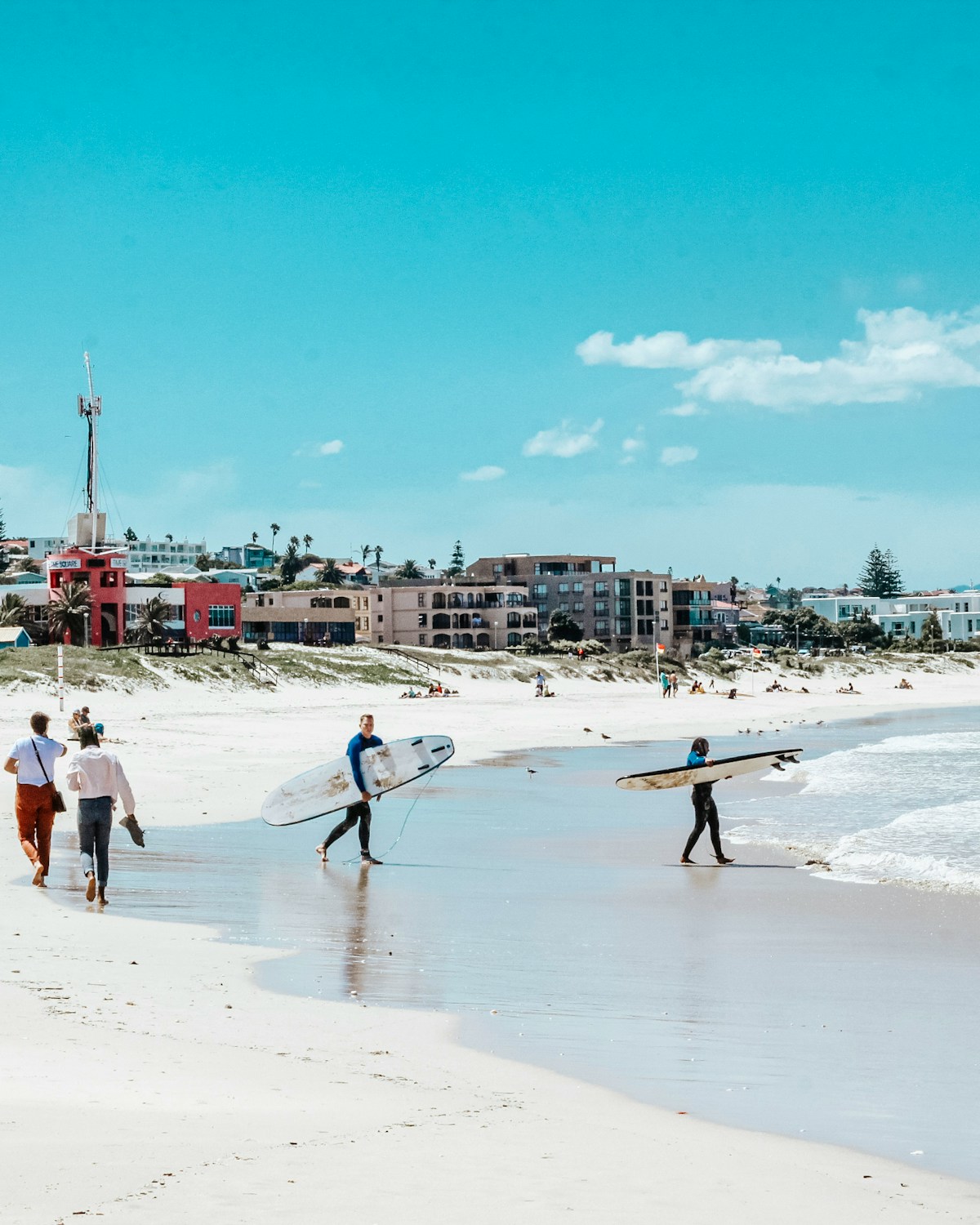
Kitchen Windows is the protected beach break a short walk south of the main point. Sand bottom, smaller waves, lifeguarded inside section. Beginner-friendly.
Magna Tubes is the outer reef section that breaks bigger than Supertubes when the swell jumps over 8ft. Deep-water takeoff, advanced only. Albatross, further south again, is the overflow — intermediate when the point packs out on contest weeks.
When to surf Jeffreys Bay: month-by-month
Southern Hemisphere seasons — flip what you know.
May to October (winter) is the marquee window. Waves run 4–10ft on stacked SW Southern Ocean swell, water cools to 17.5°C in July and August, and dawn E offshores groom the point. The WSL contest sits inside this window for a reason. November to January (early summer) softens to 2–5ft, water climbs through 19–21°C, and the SE summer wind starts blowing the point out by 11am — dawn patrol or shorter sessions. February to March is the tactical sweet spot: water at its warmest 21°C, swell rebuilding, and the December holiday crowd gone home. April transitions back into winter swell with 19.7°C water and the cleanest dawn glass-offs of the year.
Where to stay in Jeffreys Bay
Da Gama Road and the point neighbourhood put you a 5-minute walk from the Supertubes parking lot, the surf shops and the cafes — the obvious pick if you want every dawn session within walking range. Marina Martinique, a 10-minute drive south, is a quieter canal-front neighbourhood with self-catering apartments at lower nightly rates; better for families or longer stays. Wavecrest and the inland blocks above the N2 highway are the budget play — 5-minute drive to the point, lower prices, less walkable. Most travelling surfers spend their first trip on Da Gama Road and graduate to Marina Martinique on the second.
How to get to Jeffreys Bay from Gqeberha
The closest airport is Gqeberha (Port Elizabeth) International (PLZ), 1h drive west on the N2. Airlink and FlySafair run direct flights several times daily from Johannesburg, Cape Town and Durban. Shuttle services from PLZ to J-Bay run R350–R500 each way; book ahead through your accommodation. A rental car is easier if you want to chase swell along the Sunshine Coast or visit Cape St Francis. Cape Town to J-Bay along the Garden Route — through Mossel Bay, Knysna and Plettenberg Bay — is a classic 7–8h road trip and one of the great surf drives.
Surf schools, gear and shark awareness in Jeffreys Bay
Three schools anchor the lesson scene: Son Surf School, Jeffreys Bay Surf School and Wave Crazy J-Bay, plus Surf Eden for camps. Lessons run R450–R650 for two hours, board rentals R200–R350/day for soft-tops and R350–R500/day for performance shortboards.
A note on sharks. White sharks are present along the South African coast, and during the 2015 J-Bay Open final, three-time world champion Mick Fanning was approached by one live on broadcast and punched it away — globally televised, no injuries, but it permanently shaped how locals talk about ocean safety. Follow lifeguard guidance, check SharkSafe advisories, and don't surf alone at dawn or dusk in murky water.
On the lineup: the Supertubes pecking order is severe and goes back five decades. Sit wide on your first three sessions. Do not paddle through the inside at Boneyards. Use the parallel rip running off the point to get out fast, then drop into the mid-section. Wear booties if you are not confident on a rocky take-off — the inside cleanup zone is unforgiving.