

SIARGAO
Cloud 9 anchors a 437km² tear-shaped island off eastern Mindanao — Siargao packs 10+ named reefs, year-round 26–30°C water and a peak Aug–Nov typhoon swell window.
About Siargao
Siargao is a tear-shaped 437km² island off the eastern coast of Mindanao, the Philippines' surf capital. The marquee wave is Cloud 9, a heavy right-hand reef break first surfed in 1989 and named in 1992 after a chocolate bar — it has hosted a continuous WSL Asia QS event since 1995.
Around General Luna town, ten named breaks span every level: Tuason Point offers a long peeling right for intermediates, while Daku Reef in the middle of the island runs friendly for beginners. Water stays 26–30°C year-round.
Surf level
| Skill level | Jan-Feb | Mar-Apr | May-Jun | Jul-Aug | Sep-Oct | Nov-Dec |
|---|---|---|---|---|---|---|
| Beginners | ||||||
| Intermediate | ||||||
| Advanced |
- Best time to go
- Good time to go
- Ok time to go
- Less desirable time to go
- Not recommended time to go
Weather & Travel Comfort


| Metric | Jan-Feb | Mar-Apr | May-Jun | Jul-Aug | Sep-Oct | Nov-Dec |
|---|---|---|---|---|---|---|
| Weather | ~25–28°C | ~26–29°C | ~26–29°C | ~25–28°C | ~25–28°C | ~25–28°C |
| Rainy days | 11d | 6d | 1d | 0d | 2d | 8d |
| What to Pack |  Water Temperature~27°C Water Temperature~27°C | Water Temperature~28–29°C | Water Temperature~30–31°C | Water Temperature~30°C | Water Temperature~29°C | Water Temperature~27–28°C |
- Boots if neededFor cold water or reef breaks
- Full protection wetsuitCold water
- Shorty / springsuitMild conditions
- No wetsuitWarm water
Tips for Surfing Siargao
The Philippines' Pacific surf island peaks August through November with typhoon-fed swell at Cloud 9 — book early and watch lifeguard advisories. The four tips below cover Daku Reef for beginners, the typhoon window, and Cloud 9's protected channel-only paddle-out.

Beginners go to Daku
Beginners go to Daku Reef. Group lessons run PHP 1,500–2,500 for two hours.

Time the typhoon window
Prime swell lands August to November — book early and watch typhoon advisories from local lifeguards.

Boardshorts year-round
Water sits 26–30°C year-round. Pack a long-sleeve rashguard and reef booties.

Channel out at Cloud 9
Cloud 9 is a protected zone — paddle the channel only and sit wide initially.
Frequently Asked Questions
When is the best time to surf in Siargao?
Skill drives the answer. Beginners score from January to July at Daku Reef and Sayak, when 2–4ft mush and 28–30°C water make for forgiving sessions. Intermediates peak January to August on cleaner shoulder swell at Tuason Point and Salvacion. Advanced surfers come August to December for 4–10ft typhoon-swell pulses at Cloud 9, Quiksilver and Burgos, with light dawn winds grooming the reefs and the WSL event running in October.
Is Siargao good for beginners?
Yes — but only at the right spot. Daku Reef in the middle of the island runs soft and friendly over forgiving reef, and Sayak near the airport offers a beach-and-reef peak that schools use daily. Both work best from January to July when swell sits at 2–4ft. Avoid Cloud 9, Quiksilver and Burgos in your first week: they're heavy reef breaks with shallow takeoffs and a strict pecking order.
How big do the waves get in Siargao?
Waves run 2–4ft from May to July and 4–10ft from August to November. Cloud 9 holds clean 6–10ft rights on a solid NE swell during the typhoon-swell window, Pacifico absorbs bigger pulses when the south maxes out, and Tuason Point stays rideable up to 8ft thanks to the channel softening size. Small days send everyone to Daku, Sayak and the Cloud 9 inside reform.
Do I need a wetsuit to surf in Siargao?
No — water sits between 26°C and 30°C year-round, so boardshorts and a long-sleeve rashguard cover every season. The rashguard matters more for sun protection than warmth; a 1mm vest is the most anyone wears, and even that is rare. Pack reef booties for the inside sections of Cloud 9 and Quiksilver, where shallow reef cuts up bare feet on small days. Skip the wetsuit entirely.
How do I get to Siargao from Manila?
Fly direct to Sayak Airport (IAO) from Manila in about 2 hours on Cebu Pacific or Philippine Airlines — round-trip fares run PHP 5,000–9,000 (US$90–160). Cebu also has direct 1-hour flights. From Sayak, a tricycle or van to General Luna takes 30 minutes for around PHP 300–500. Ferry alternative: Surigao City to Dapa port, 3 hours. Motorbike rental on the island runs PHP 350–500/day.
Where should I stay in Siargao for surfing?
Stay in General Luna if you want walkable cafes, hostels and a 5-minute scooter to Cloud 9 — most trips work best here. Pick the Cloud 9 / Tourism Road strip if you surf the marquee break daily and want 30-second beach access. Choose Pacifico, an hour north, if you want quiet, lower nightly rates and access to north-coast reefs without the General Luna crowd. All three areas were fully rebuilt after Typhoon Odette by 2023.
Other regions in Philippines
The Ultimate Guide to Surfing in Siargao
What makes Siargao unique
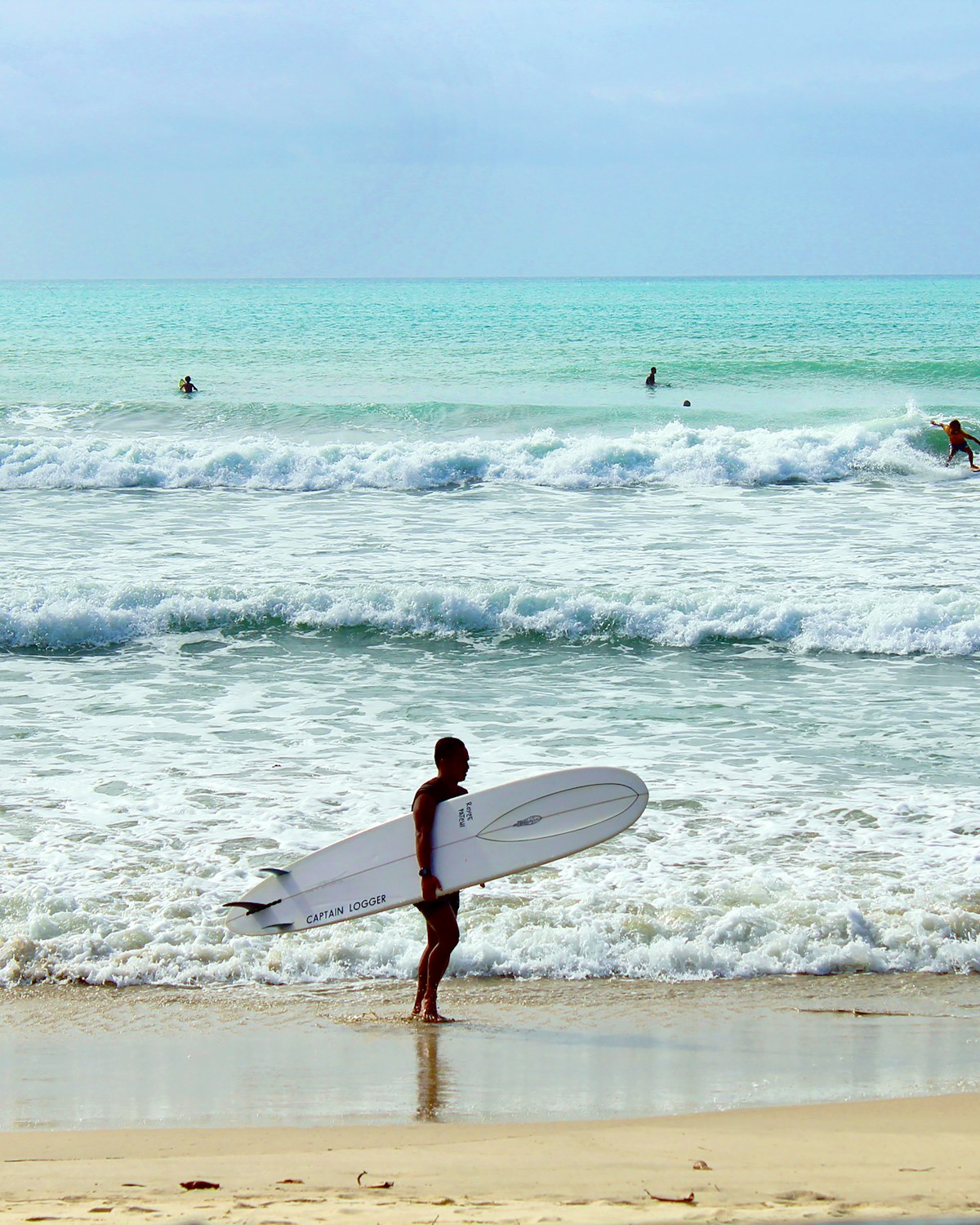
Siargao sits 800km southeast of Manila, a tear-shaped 437km² island off the eastern coast of Mindanao that catches every Pacific swell rolling toward the Philippines. The island's marquee wave, Cloud 9, was first surfed in 1989 and named in 1992 by surf-photographer John Callahan — after the chocolate bar Australian Tony Arruza was eating during the first photo shoot. Through the 1990s, surf films and Surfer magazine coverage made Cloud 9 internationally famous, and the WSL Asia QS Siargao Surfing Cup has run on the wave continuously since 1995. Typhoon Odette flattened most of General Luna in December 2021; the rebuild was complete by 2023, and as of 2024 every school, resort and boardwalk is operating again. What you get today is ten named breaks inside a 30-minute scooter radius, water that never drops below 26°C, and a Surigaonon-speaking local population that earns most of its income from surf travel.
Siargao surf spots by skill level
Cloud 9 is the headline. A heavy right-hand reef with a steep, hollow inside section that holds 3–10ft on E-to-NE swell, breaking over shallow reef in front of a viewing tower and boardwalk. Peak season runs August to November. Advanced only — the takeoff is enforced by a tight regular crew.
Quiksilver (formerly Stimpy's) sits next door to Cloud 9 — a fast, hollow right reef that picks up the same swell. Advanced.
Tuason Point peels long and mellow across the channel from Cloud 9. Right-hand reef, slower takeoff, forgiving shoulder. Intermediate — the easiest way to surf the Cloud 9 zone without the inside crowd.
Pacifico, an hour north of General Luna, is an exposed sandy beach and reef setup that holds bigger swell when the south of the island maxes out. Intermediate to advanced.
Salvacion on the west coast is a sand-and-reef A-frame that breaks left and right, far less crowded than the Cloud 9 zone. Intermediate.
Burgos, on the north tip, is a fast right reef that lights up on big NE swells. Advanced.
Daku Reef in the middle of the island runs soft and friendly over forgiving reef. Beginner to intermediate. Sayak and Anajawan near the airport offer beach-and-reef peaks suitable for first-timers, and Carmen north of General Luna is a secluded reef for intermediates and up.
When to surf Siargao: month-by-month
August to November is prime — 4–10ft typhoon-swell pulses, light winds at dawn, and the WSL event window. Water sits at 28–30°C, rainy days are minimal in August and September. December and January still produce solid 4–8ft NE swell, but rain picks up to 10–12 days a month. February to April is the shoulder — 2–5ft swell, dry weather, water at 27–28°C, and Cloud 9 manageable for confident intermediates. May to July is the smallest window with 2–4ft mush, the cleanest dry-season weather of the year, and beginner conditions at Daku, Sayak and Cloud 9 inside reform — exactly when first-timers should book.
Where to stay in Siargao
General Luna is the obvious base — the surf town that sits a 5-minute scooter from Cloud 9, with the densest cluster of cafes, hostels and rentals. Higher prices, walkable nightlife, and the boardwalk on your doorstep. Cloud 9 / Tourism Road puts you 30 seconds from the wave itself, ideal if you surf the marquee break daily; quieter at night. Pacifico, an hour north, is the budget and quiet play — surf-and-stay guesthouses on the beach for surfers who want to skip the General Luna scene and ride less crowded north-coast reefs.
How to get to Siargao from Manila
Sayak Airport (IAO) sits on the island itself, 30 minutes by tricycle or van from General Luna. Direct flights from Manila (MNL) take about 2 hours on Cebu Pacific and Philippine Airlines, and from Cebu (CEB) about 1 hour. Round-trip fares from Manila run roughly PHP 5,000–9,000 (US$90–160) depending on season. Boat alternative: ferry from Surigao City to Dapa port, 3 hours. On the island, motorbike rental costs PHP 350–500/day (~US$6–10), and habal-habal tricycles handle short hops between General Luna and the Cloud 9 boardwalk for PHP 50–100. See the Department of Tourism Philippines site for current entry and visa details.
Surf schools, gear rentals and local culture
Three operators anchor the lesson scene: Cloud 9 Surf School, Harana Surf Resort and Kermit Siargao — all rebuilt fully after Typhoon Odette, all running 2-hour group lessons for PHP 1,500–2,500 (US$27–45). Lokal Lab and Siargao Surf School round out the options. Board rentals run PHP 500–800/day for soft-tops and PHP 1,000–1,500/day for performance shortboards.
A word on the lineup: Cloud 9's tower-and-boardwalk zone is a protected ZSV reserve, so always paddle out via the channel — never through the tower break. The pecking order at Cloud 9 and Quiksilver is real; sit wide for at least two sessions before competing for the inside takeoff. Reef cuts from the shallow inside are common — keep cipro, betadine and gauze in your kit. Tipping at restaurants is around 10% — appreciated, not expected — and a hello in Surigaonon ("Maayong adlaw") gets a smile every time.