

SANTA CATALINA
Single-road Pacific fishing village 7h west of Panama City — Santa Catalina pairs the long right-hand reef at La Punta with Coiba National Park boat trips offshore.
About Santa Catalina
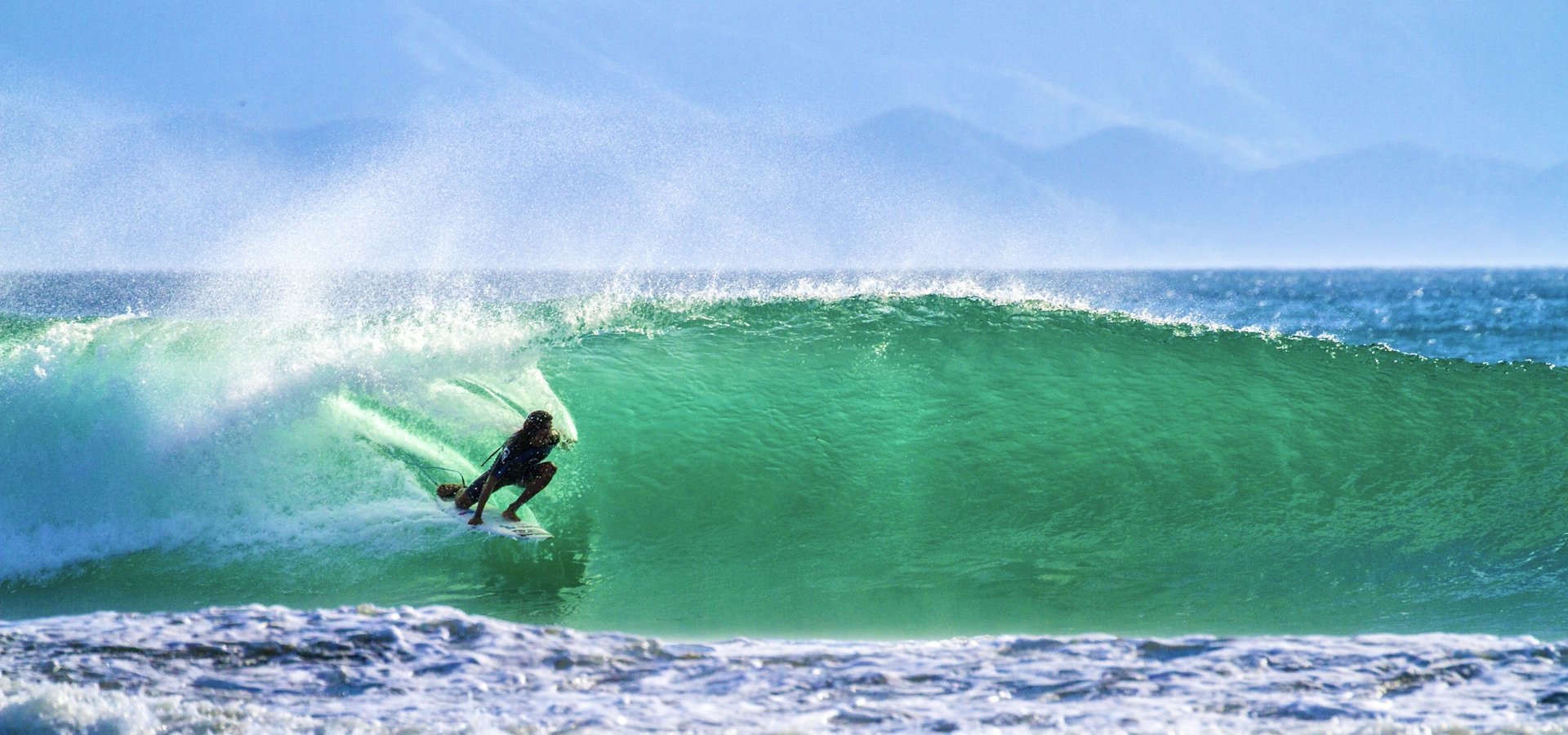
Santa Catalina is a 600-resident fishing village on Panama's central Pacific coast, in Veraguas province, with one dirt road and a cluster of right-hand reef breaks at its tip. The signature wave is La Punta, a long peeling cobblestone right that international surfers found in the 1990s.
Next door, Punta Roca turns hollow and heavy on a solid south swell. The town doubles as the launching point for boat trips to Coiba National Park, the UNESCO marine reserve 30km offshore.
Surf level
| Skill level | Jan-Feb | Mar-Apr | May-Jun | Jul-Aug | Sep-Oct | Nov-Dec |
|---|---|---|---|---|---|---|
| Beginners | ||||||
| Intermediate | ||||||
| Advanced |
- Best time to go
- Good time to go
- Ok time to go
- Less desirable time to go
- Not recommended time to go
Weather & Travel Comfort


| Metric | Jan-Feb | Mar-Apr | May-Jun | Jul-Aug | Sep-Oct | Nov-Dec |
|---|---|---|---|---|---|---|
| Weather | ~24–31°C | ~25–32°C | ~24–28°C | ~24–28°C | ~24–27°C | ~24–28°C |
| Rainy days | 3d | 8d | 21d | 22d | 21d | 17d |
| What to Pack |  Water Temperature~29°C Water Temperature~29°C | Water Temperature~29°C | Water Temperature~29°C | Water Temperature~29°C | Water Temperature~29°C | Water Temperature~28–29°C |
- Boots if neededFor cold water or reef breaks
- Full protection wetsuitCold water
- Shorty / springsuitMild conditions
- No wetsuitWarm water
Tips for Surfing Santa Catalina
Panama's Pacific swell window runs April–October, with La Punta's cobblestones rewarding patience and demanding reef booties from the first session. The four tips below cover Estero for beginners, the SSW season, and the unreliable ATM situation that requires US$300+ cash.

Beginners Start at Estero
Beginners: walk 10min to Estero beach. Group lessons run US$35–$50 for 2 hours.

April to October Pumps
South-southwest swell window runs April–October — sit wide at La Punta when crowded mid-season.

Boardies and Booties
Water 28°C year-round — boardshorts plus long-sleeve rashguard. Reef booties for La Punta cobblestones.
Bring Cash and Repellent
ATMs are unreliable — carry US$300+ cash for a week. Mosquito repellent essential at dusk.
Frequently Asked Questions
When is the best time to surf in Santa Catalina?
Skill drives the answer. Beginners score November to April at Estero and Playa Santa Catalina, when 2–4ft sand-bottom reform and dry skies make for forgiving sessions. Intermediates peak April to November when La Punta wraps cleanly. Advanced surfers come May to October for 4–10ft S and SW swell at Punta Roca and the outer reefs around Cebaco Island, accepting 20+ rainy days per month as the trade-off.
Is Santa Catalina good for beginners?
Yes — at the right spot. Estero, a sand-bottom beach 10 minutes' walk from town, is the beginner basecamp with mellow whitewater and every school setting up daily. Group lessons run US$35–$50 for 2 hours. Avoid La Punta and Punta Roca in your first week: both are cobblestone or rock reef bottom with a tight local pecking order. Stay on Estero and Playa Santa Catalina until you can stand-up reliably.
How big do the waves get in Santa Catalina?
Waves run 3–6ft most of the year and 4–10ft on prime S and SW pulses April through October. La Punta holds head-high-plus rights with a long peeling shoulder, Punta Roca turns hollow and heavy once chest-high, and the outer reefs at Cebaco Island absorb the bigger long-period swells. Small days send everyone to Estero and the inside reform at Playa Santa Catalina.
Do I need a wetsuit to surf in Santa Catalina?
No wetsuit needed. Water sits at 28–29°C year-round — boardshorts and a long-sleeve rashguard cover every session, with the rashguard mostly for sun protection at this latitude. Reef booties are recommended at La Punta and Punta Roca because the cobblestone bottom gets sharp on the inside. Skip the bootie at Estero and Playa Santa Catalina, where the bottom is forgiving sand.
How do I get to Santa Catalina from Panama City?
Two routes work. Drive 7 hours west from Tocumen International (PTY) on the Pan-American Highway, turning south at Soná — most travellers overnight in Santiago de Veraguas. Or fly PTY to David (DAV) in 1 hour on Air Panama, then drive 4 hours back east. From Santiago, the bus colectivo runs Santiago–Soná–Santa Catalina three times daily for around US$5; private taxi runs about US$80.
Where should I stay in Santa Catalina for surfing?
Stay in the village centre along the single main road if you want walkable fonda restaurants, the boat ramp for Coiba trips and a 10-minute stroll to Estero — the easiest base for most trips. Pick the hill above La Punta if you surf the point daily and want ocean views. Estero road is the budget option: simple cabinas on the dirt track, lower rates, and 5 minutes' walk to either lineup.
The Ultimate Guide to Surfing in Santa Catalina
What makes Santa Catalina unique
Santa Catalina is a single dirt-road fishing village on the central Pacific coast of Panama, in Veraguas province, with around 600 residents and one signature wave that put it on the international map. International surfers found La Punta in the 1990s and the village stayed small — cash-only, patchy power, no chain hotels. What sets it apart from every other Central American surf town is the combination on offer: a long right-hand cobblestone reef that holds head-high-plus, and a 2-hour boat ride out to Coiba National Park, the UNESCO-listed marine reserve where you snorkel with whale sharks from August to October. The park was Panama's penal colony until 2004; the abandoned prison on Coiba Island is now a ranger station with restricted access.
Santa Catalina surf spots by skill level
La Punta (also called Punta Brava) is the marquee. A long peeling right-hand reef and cobblestone point break at the southern tip of the village, holding head-high-plus on a clean S or SW swell with N or NE offshore wind. Intermediate-to-advanced. The cobble bottom rewards reef booties.
Punta Roca sits next door, a heavier right-hand reef that turns hollow on the inside section once swell jumps over chest-high. Shorter ride, more critical takeoff. Advanced.
Estero is the beginner basecamp, a sand-bottom beach a 10-minute walk from town. Mellow whitewater and forgiving banks; every school sets up here. Beginners.
Brava Cove is a protected reef cove that smooths out on side-shore wind days when La Punta is blown out. Intermediate.
Playa Santa Catalina is the sand-bottom beach in front of the village, knee-to-waist-high reform that suits first-week surfers and longboarders. Beginners.
Cebaco Island is the boat-access outer reef, an hour by panga from the village, with several uncrowded right-hand reef setups. Advanced.
When to surf Santa Catalina: month-by-month
April to October is the prime window. South and southwest pulses out of the southern Pacific drive 4–10ft sets at La Punta and Punta Roca, with the biggest days landing on May, June and July long-period swells. Water sits at 28–29°C, daily afternoon rain from May onward (20+ rainy days a month June–October). November to April is the dry, smaller season — 3–5ft typical, 23 dry days a month January–February, water still 28°C, and the lineup mellow enough that beginners and improvers move from Estero out to the inside of La Punta. April is the tactical sweet spot: dry skies hanging on, the swell window opening, and the May–October crowd not yet arrived.
Where to stay in Santa Catalina
Village centre along the single main road is the obvious pick — walking distance to Estero, the fonda restaurants and the boat ramp for Coiba trips. Power and water can drop out for a few hours at a time, so confirm hot water and Wi-Fi before booking. The hill above La Punta holds the cluster of mid-range surf camps and lodges with ocean views and 3-minute walks down to the wave. Higher rates and the steepest climb back up. Estero road is the budget play: simple cabinas on the dirt track toward the beginner beach, lower nightly rates, and a 5-minute walk to either lineup.
How to get to Santa Catalina from Panama City
Two airport options work. The standard route lands at Panama City Tocumen International (PTY) and drives 7 hours west on the Pan-American Highway, turning south at Soná. Most travellers break the trip in Santiago de Veraguas overnight. The faster option flies PTY to David (DAV) in 1 hour with Air Panama — daily departures — then drives 4 hours back east to Santa Catalina. From Santiago, the bus colectivo runs Santiago–Soná–Santa Catalina three times daily for around US$5; private taxi from Santiago is roughly US$80. Inside the village everything is walkable; the breaks south of town are 5–15 minutes on foot.
Surf schools and local culture
Three operators anchor the lesson scene: Surf Catalina, Santa Catalina Surf School and Hibiscus Garden Surf Camp — useful reference points whether you book with them or not. Kayan Surf School Catalina rounds out the list. Soft-top rentals run US$15–$20/day, performance shortboards US$25–$35/day; reserve early in May and June.
A word on village reality: Panama uses the US dollar as legal tender, so bring cash — ATMs in the village are rare and often empty. The local fonda kitchens serve fresh ceviche and grilled snapper for US$8–$12, paired with a Balboa beer. Mosquitoes get intense at dusk — repellent is non-negotiable. Out at the lineup, the small crew expects respect and eye contact: sit wide at La Punta for two sessions before paddling for the inside takeoff. Burn one and the wave count closes fast.