

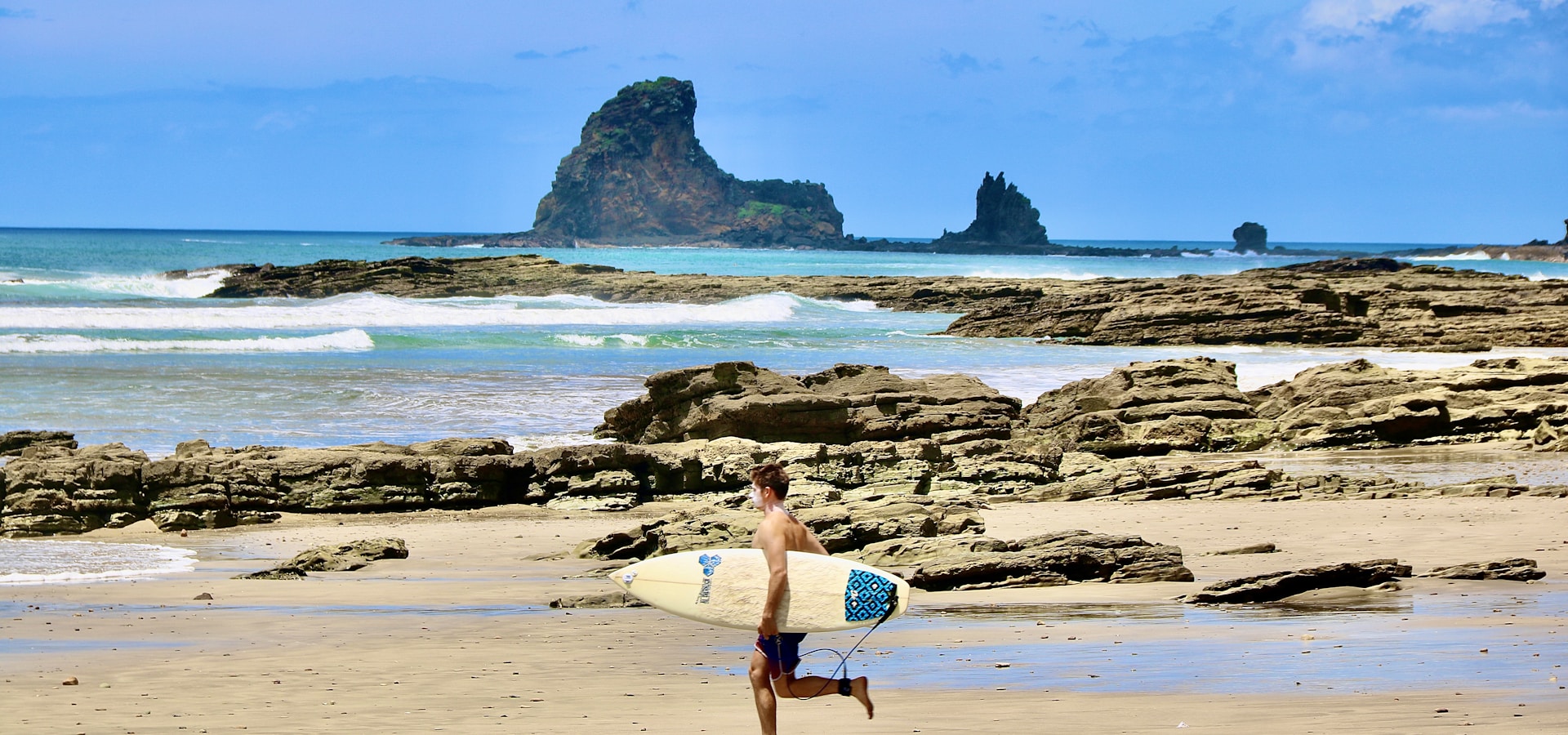
POPOYO
Lake Nicaragua creates a daily offshore-wind machine 30km inland — Popoyo grooms 250+ glassy days a year across reef and beach breaks 2h 30min south of Managua.
About Popoyo
Popoyo is a rural Pacific village in Nicaragua's Rivas department, and the region's defining quirk sits 30km inland: Lake Nicaragua heats faster than the ocean each morning, generating a steady offshore wind that grooms the coast for 250+ days a year. Combined with a year-round S/SW Pacific swell window, Popoyo lands more clean-faced sessions than almost anywhere on Earth.
The marquee waves are Popoyo Outer Reef, a heavy left-and-right pass that holds 15ft, and Lance's Left, a long peeling point break south of the main beach.
Surf level
| Skill level | Jan-Feb | Mar-Apr | May-Jun | Jul-Aug | Sep-Oct | Nov-Dec |
|---|---|---|---|---|---|---|
| Beginners | ||||||
| Intermediate | ||||||
| Advanced |
- Best time to go
- Good time to go
- Ok time to go
- Less desirable time to go
- Not recommended time to go
Weather & Travel Comfort


| Metric | Jan-Feb | Mar-Apr | May-Jun | Jul-Aug | Sep-Oct | Nov-Dec |
|---|---|---|---|---|---|---|
| Weather | ~24–29°C | ~24–31°C | ~25–29°C | ~25–28°C | ~25–28°C | ~24–28°C |
| Rainy days | 5d | 3d | 17d | 21d | 20d | 11d |
| What to Pack |  Water Temperature~26°C Water Temperature~26°C | Water Temperature~26–28°C | Water Temperature~28°C | Water Temperature~28°C | Water Temperature~28–29°C | Water Temperature~26–28°C |
- Boots if neededFor cold water or reef breaks
- Full protection wetsuitCold water
- Shorty / springsuitMild conditions
- No wetsuitWarm water
Tips for Surfing Popoyo
Nicaragua's Tola coast runs on lake-effect offshores — wind blows clean dawn through 11am, then onshore arrives and protected reefs glass off by afternoon. The four tips below cover Beginner's Beach, the timing window, and why Outer Reef demands a local guide.

Beginners on the inside
Start at Beginner's Beach or Manzanillo — soft sand, lessons run US$35–US$50 for 2 hours.

Surf the dawn glass-off
Lake-effect offshores blow dawn–11am; midday onshore arrives, leaving protected reefs glassy until afternoon.

Boardshorts year-round
Water sits 26–28°C all year — boardshorts plus a long-sleeve rashguard, no wetsuit needed.
Reef-bottom respect
Never paddle Outer Reef without a local guide; pack reef booties and betadine for cuts.
Frequently Asked Questions
When is the best time to surf in Popoyo?
Skill drives the answer. Beginners score October to April when the Main Beach and Manzanillo run 2–4ft over soft sand. Intermediates peak May to October — clean SW swell, dawn offshores, water at 28°C. Advanced surfers come May to September for 6–15ft+ on the Outer Reef and long walls at Lance's Left, with the lake-effect offshore grooming the reefs every morning until 11am.
Is Popoyo good for beginners?
Yes — but only at the right spot. Beginner's Beach inside the Popoyo headland and Manzanillo 10 minutes north are the safe basecamps: soft sand bottoms, gentle A-frames, schools running daily lessons. Avoid the Outer Reef, Lance's Left and Playgrounds in your first week — they're rocky reef breaks with heavy takeoffs. October to April delivers the cleanest beginner conditions, smaller swell, and warmer mornings.
How big do the waves get in Popoyo?
Waves run 3–6ft on a typical day and 4–10ft on prime S/SW pulses April to October. Popoyo Outer Reef is the size hold — it absorbs 15ft+ on giant winter pulses with a deep-water takeoff. Lance's Left stays rideable up to 8ft thanks to the headland filtering size, while the Main Beach and Manzanillo soften to 2–4ft from November to April for friendlier sessions.
Do I need a wetsuit to surf in Popoyo?
No — water sits 26–28°C year-round. Boardshorts plus a long-sleeve rashguard is the local kit, mainly for sun protection on long sessions. No wetsuit, no booties for the sand breaks. Bring reef booties for the Outer Reef and Lance's Left — the volcanic rock is sharp. UV is strong year-round, so reef-safe SPF 50 and a zinc stick for the face are non-negotiable.
How do I get to Popoyo from Managua?
Fly into Managua International (MGA) — direct from Houston, Miami, Atlanta and Mexico City via Avianca, Copa, United and Spirit. The drive south takes 2h 30min: Pan-American Highway, then a 30-minute dirt-road stretch into Guasacate. Surf-camp shuttles run US$80–US$100, private taxis around US$120. There's no direct public bus — backpackers bus to Rivas town for US$3, then taxi the final hour.
Where should I stay in Popoyo for surfing?
Stay in Popoyo village (Guasacate) if you want walking access to the Main Beach, restaurants and the social scene — most trips work best here. Pick Playgrounds or Las Salinas for quieter lodging close to Lance's Left. Manzanillo and Las Lajas are 10–15 minutes north, sleepier and better for families. Camps span every budget, from Popoyo Surf Lodge in the village to Magnific Rock Lodge on the clifftop above Playgrounds.
Other regions in Nicaragua
The Ultimate Guide to Surfing in Popoyo
What makes Popoyo unique
Popoyo's geometry is one of surfing's quirks. Thirty kilometres inland sits Lake Nicaragua, the largest lake in Central America, and every morning the lake heats faster than the Pacific Ocean. The temperature differential pulls air seaward — a steady offshore wind that grooms the coast from dawn until roughly 11am, every day, for more than 250 days a year. Layer that on a Pacific swell window that delivers S and SW pulses from April through October, plus shoulder-season N-hemisphere swell from November to March, and you get a region producing more clean-faced sessions than almost anywhere on Earth. The town itself is the antidote to Tamarindo: a single dirt road, no banks, patchy mobile signal, and surf camps spread along a 10km stretch of Rivas coast. Modern surf travel reached Popoyo in the late 1990s when American and Canadian surfers found the wind anomaly — see the Visit Nicaragua tourism board for the wider regional context, or the Save The Waves network for coastal-protection background. The country page sits at Nicaragua.
Popoyo surf spots by skill level
Popoyo Outer Reef is the marquee. A heavy left-and-right reef pass on the outside that holds 6–15ft+ on solid S/SW swell with E offshore wind. Deep water, fast takeoff, sharp volcanic rock below. Peak season runs April to September. Advanced only — never paddle out without local guidance.
Popoyo Main Beach Break is the all-rounder. A long sand-bottom beach in front of the village with multiple A-frame peaks and a forgiving shoulder when the size drops below 5ft. Intermediates.
Lance's Left is the long peeling point south of the main beach. Left-hand walls run 100+ metres on a clean SW pulse, sand-and-reef bottom. Intermediate-to-advanced.
Las Lajas is the quiet alternative — a long sandy beach 5km north of Popoyo, fewer crowds, mellow A-frames. Intermediates.
Manzanillo sits a 10-minute drive north and offers a wider, softer sand beach ideal for first-timers and improvers. Beginner-to-intermediate.
Beginner's Beach (the protected sand inside the Popoyo headland) is where most schools take total beginners — small reformed waves and a calmer paddle. Beginners.
Playgrounds rounds out the menu — a sandy beach plus reef south of the main town, a useful overflow when Lance's crowds up. Intermediates.
When to surf Popoyo: month-by-month
April to September is the prime window. Pacific S/SW swells stack 4–10ft on the Outer Reef, with the lake-offshore grooming dawn sessions to glass. Water sits 27–28°C, days are hot, and Lance's runs at full length. June to September is the wettest stretch — afternoons bring tropical squalls — but mornings stay glassy. October is the tactical sweet spot: swell still pulsing, crowds thinning, rain easing. November to April is the dry season — lighter swell at 3–5ft, the Main Beach and Manzanillo at their friendliest, water still 26–27°C, and crowds peaking around Christmas and New Year. January to March is dry and sunny but smaller — beginner heaven, advanced surfers shoulder-season prices.
Where to stay in Popoyo
Popoyo village (Guasacate) is the obvious base — walking distance to the Main Beach, a cluster of restaurants and surf camps, the social heart of the region. Playgrounds and Las Salinas sit just south and offer quieter accommodation with quick access to Lance's Left. Manzanillo and Las Lajas are 10–15 minutes north by car — sleepier beaches, better for families and beginners. Surf camps anchor the lodging scene at every price point: Popoyo Surf Lodge sits in the village, Surf Sanctuary runs a wellness-leaning operation outside town, Magnific Rock Lodge holds a clifftop perch above Playgrounds, and Tribal Hotel Popoyo offers a boutique alternative inland.
How to get to Popoyo from Managua
Managua International (MGA) is the only major airport, with direct flights from Houston, Miami, Atlanta and Mexico City via Avianca, Copa, United and Spirit. From MGA, the drive to Popoyo runs 2h 30min — south on the Pan-American Highway, then a 30-minute dirt-road stretch into Guasacate. There's no public bus direct to Popoyo: most travellers either book a surf-camp shuttle (US$80–US$100) or take a private taxi (US$120). Backpackers ride the bus to Rivas town (US$3) then taxi the final hour. Bring US dollars — Nicaragua uses the córdoba but USD is widely accepted, and the village has no banks.
Surf schools, gear rentals and local culture
Three operators anchor lessons and rentals: Popoyo Surf Lodge, Surf Sanctuary, and Magnific Rock Lodge — useful reference points whether you book a package or walk in. Group lessons run US$35–US$50 for 2 hours; soft-top rentals US$15/day, performance boards US$25–US$30/day.
Popoyo's modern surf scene took shape in the late 1990s when foreign surfers locked onto the wind anomaly. The 2018 political unrest depressed tourism temporarily, but by 2023 the camp scene was operating fully again. Local culture stays visible: the Chorotega Indigenous heritage shows up in pottery sold at Rivas market, gallo pinto (rice, beans and plantains) is the morning standard, and the village remains rural — single dirt road, limited mobile signal in patches. Bring repellent for dusk mosquitoes, cipro and betadine for reef cuts, and respect the heavy-water etiquette at Lance's and Outer Reef. See Lonely Planet Nicaragua and the WSL for wider context on Central American surf travel.