

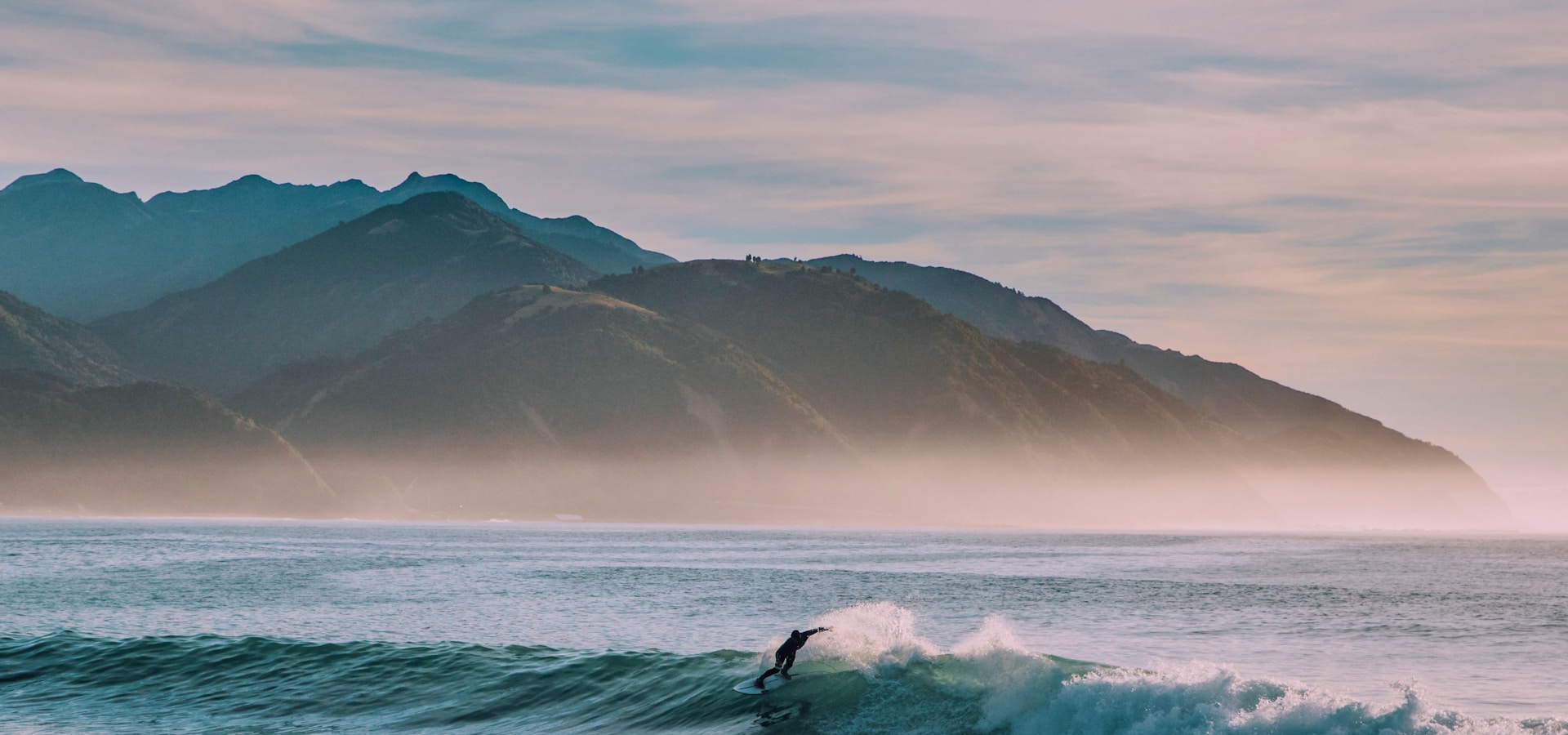
NORTH ISLAND
Bruce Brown's *Endless Summer* put Raglan on the map in 1966 — the North Island stitches 5 surf clusters from Manu Bay's left point to Mt Maunganui's beaches.
About North Island
The North Island holds five distinct surf clusters around its coastline, anchored by Manu Bay in Raglan — the long left-hand point that Bruce Brown filmed for The Endless Summer in 1966 and pitched to the world as the longest left ever ridden. Beyond Raglan, the island offers Auckland's black-sand west coast at Piha, the sand-bottom Mount Maunganui in the Bay of Plenty, the Surf Highway 45 reefs of Taranaki, and Gisborne on the East Cape.
Different cluster, different swell window — five distinct trips on one island.
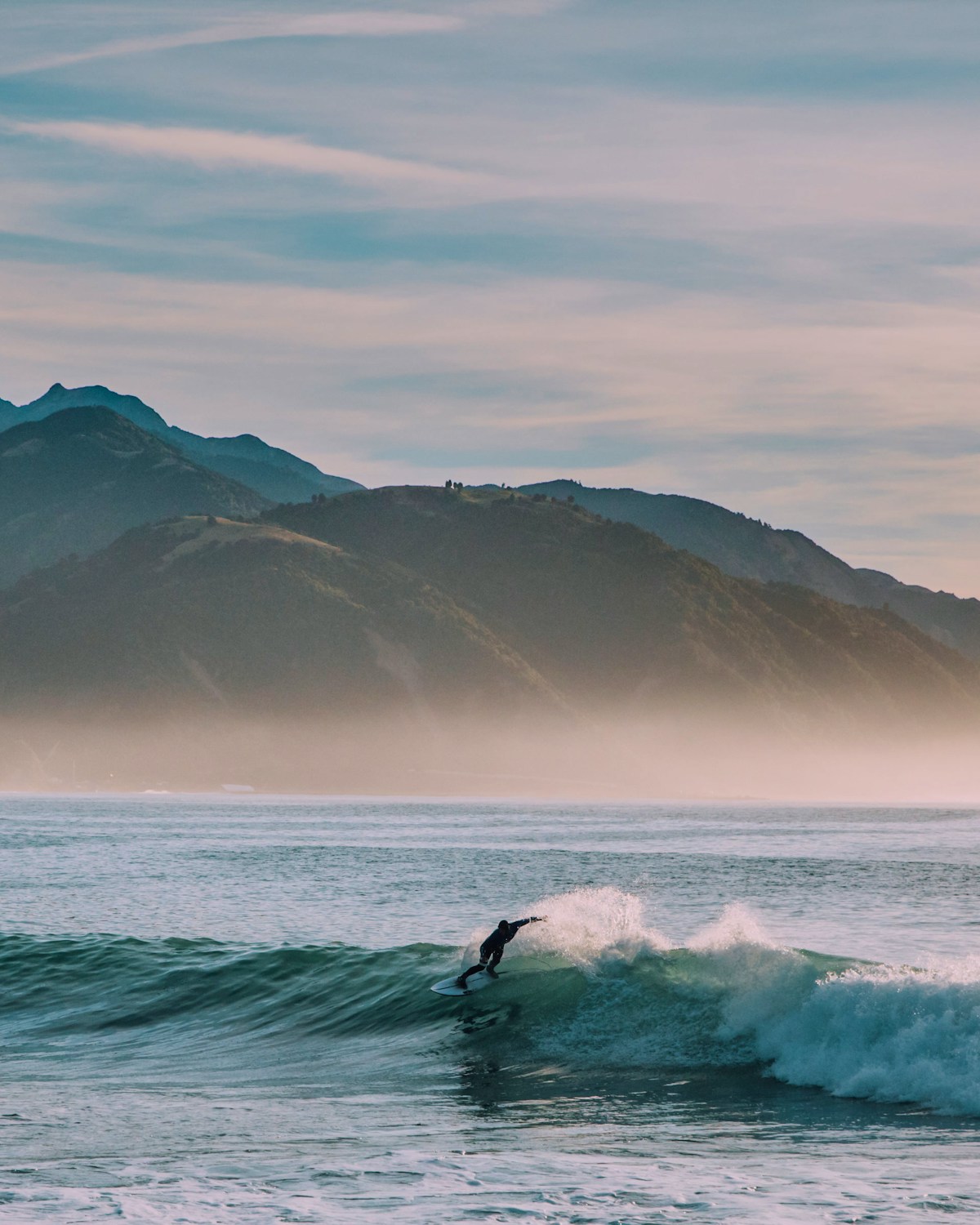
Surf level
| Skill level | Jan-Feb | Mar-Apr | May-Jun | Jul-Aug | Sep-Oct | Nov-Dec |
|---|---|---|---|---|---|---|
| Beginners | ||||||
| Intermediate | ||||||
| Advanced |
- Best time to go
- Good time to go
- Ok time to go
- Less desirable time to go
- Not recommended time to go
Weather & Travel Comfort


| Metric | Jan-Feb | Mar-Apr | May-Jun | Jul-Aug | Sep-Oct | Nov-Dec |
|---|---|---|---|---|---|---|
| Weather | ~16–22°C | ~13–19°C | ~9–15°C | ~8–13°C | ~10–15°C | ~13–18°C |
| Rainy days | 8d | 8d | 11d | 12d | 11d | 10d |
| What to Pack |  Water Temperature~21°C Water Temperature~21°C | Water Temperature~20°C | Water Temperature~16–18°C | Water Temperature~14–15°C | Water Temperature~14–16°C | Water Temperature~17–19°C |
- Boots if neededFor cold water or reef breaks
- Full protection wetsuitCold water
- Shorty / springsuitMild conditions
- No wetsuitWarm water
Tips for Surfing North Island
New Zealand's surf-rich north strings together Mount Maunganui beach breaks and Raglan's left points two hours apart. The four tips below cover lessons at Mount Maunganui, the rental car economics between clusters, and Manu Bay's decades-deep pecking order.

Beginners Hit Mt Maunganui
Beginners: book at Mount Maunganui. Hibiscus Surf School runs 2-hour group lessons on sand banks.

Drive Between Clusters
Rent a car at Auckland Airport — Raglan is 2h south on State Highway 23.

Cold-Water Wetsuit Reality
Water 13–21°C. 3/2 December–April, 4/3 + boots May–November, 5/4 + hood July–September on Piha.

Sit Wide at Manu Bay
Manu Bay enforces a decades-deep pecking order. Sit on the shoulder for two sessions first.
Frequently Asked Questions
When is the best time to surf on the North Island?
Skill drives the answer. Beginners score November to February at Mount Maunganui and Wainui Beach, when 2–4ft mush and 19–21°C water make for forgiving sessions. Intermediates have the broadest window from August to May. Advanced surfers come March to October for 4–12ft SW Tasman swell at Manu Bay, Stent Road and the Auckland west-coast points, with E offshore winds grooming the reefs at dawn.
Is the North Island good for beginners?
Yes — at the right cluster. Mount Maunganui in the Bay of Plenty is a wide sand-bottom beach in front of the dormant volcano, with Hibiscus Surf School running daily lessons on forgiving banks. Wainui Beach in Gisborne is a second strong option. Avoid Piha, Muriwai and any of the Raglan points in your first week — the west-coast rips are heavy and the Manu Bay pecking order is enforced.
How big do the waves get on the North Island?
Waves run 2–6ft typical and 4–12ft on prime SW pulses from March to October. Manu Bay holds 8ft+ cleanly when lines align, peeling 200–600 metres over cobblestones. Piha can absorb overhead west-coast pulses, while Mount Maunganui stays rideable up to 6ft on the main beach. Cyclonic east swells from December to April send short-window overhead days to the Bay of Plenty and Gisborne.
Do I need a wetsuit to surf the North Island?
Yes, year-round — water sits between 13°C in August and 21°C in February. A 3/2 fullsuit covers December through April, while a 4/3 fullsuit + boots handles May through November. On the colder west-coast breaks like Piha and Muriwai, a 5/4 + hood is honest gear from July to September. Pack the warmer suit if in doubt; locals tend to wear less than visitors.
How do I get to the North Island from overseas?
Fly into Auckland (AKL) — direct flights from Sydney (3h), Los Angeles (12h), Singapore (10h), Doha (16h) and London (~24h via Singapore). Domestic connections via Air New Zealand and Jetstar reach Tauranga, New Plymouth and Gisborne. Auckland to Raglan is a 2-hour drive south on State Highway 23. A rental car is essential — public transport between surf clusters is limited.
Where should I stay on the North Island for surfing?
Pick your cluster first. Raglan village is the Manu Bay basecamp — walkable cafes and 5 minutes to all three points. Mount Maunganui is the beginner pick: beachfront apartments steps from the sand-bottom main beach. New Plymouth anchors Taranaki's Surf Highway 45 circuit, and Gisborne town puts you 5 minutes from Wainui Beach with the country's cheapest surf-town rates.
The Ultimate Guide to Surfing in North Island
What makes the North Island unique
Few waves carry the cinematic weight of Manu Bay in Raglan. When Bruce Brown's The Endless Summer hit screens in 1966, the long peeling left over cobblestones became the foundation myth of global surf travel — the film's claim of the longest left in the world is the single fact most people associate with surfing in New Zealand. What the film hid is that Manu Bay is just one of five distinct surf clusters on the North Island. Each cluster faces a different swell window: Raglan and the Auckland west-coast catch the long Tasman SW pulses, the Bay of Plenty filters cyclonic east swell from the Pacific, Taranaki sits exposed to wraparound from both sides, and Gisborne on the East Cape collects the first sunlight on Earth and the cleanest east-facing groundswell. The geographic spread — and the volcanic black-sand geology of the west coast — is what makes one trip feel like five.
North Island surf spots by skill level
Manu Bay (Raglan, west coast) is the marquee. A long left-hand point break peeling 200–600 metres over cobblestones on a clean SW swell with E offshore wind. Featured in The Endless Summer. Intermediate-to-advanced — pecking order is real and decades-deep.
Indicators is the section before Manu Bay, slower and mellower with a forgiving shoulder. Intermediate.
The Point is the outside Raglan section that connects through to Manu Bay on bigger swells. Long paddle, deep-water takeoff. Advanced.
Whale Bay is the third Raglan point — harder, rockier, less forgiving, lower crowd numbers. Advanced.
Piha sits 40 minutes west of Auckland under Lion Rock — a heavy black-sand beach break with strong rip currents and powerful shore-pound. Intermediate-to-advanced.
Muriwai is Piha's longer, friendlier neighbour up the coast — wide black-sand beach with multiple banks. Intermediate.
Mount Maunganui is the Bay of Plenty basecamp — a long sand-bottom beach in front of the dormant volcano. Beginner-to-intermediate.
Stent Road anchors Taranaki's Surf Highway 45 circuit — a long left-hand reef with a workable shoulder on a clean SW. Intermediate-to-advanced.
Wainui Beach in Gisborne is a long sand-bottom beach in the surf town that catches the first sunrise on Earth. Intermediate.
When to surf the North Island: month-by-month
Remember: Southern Hemisphere, so seasons flip. March to October is the prime window for advanced surfers — 4–12ft SW Tasman swell stacks into Raglan and the Auckland west coast, and Manu Bay holds 8ft+ cleanly when the lines align. Water cools from 20°C in March to 13°C in August. November to February is summer — water climbs to 19–21°C, swells drop to 2–4ft, the rain eases (driest months January–April), and Mount Maunganui and Wainui Beach run beginner-friendly daily. August to May is the broadest intermediate window across all five clusters. Cyclone season on the east coast (December–April) sends overhead pulses to the Bay of Plenty and Gisborne — short windows, fast crowds.
Where to stay on the North Island
Pick your cluster first, then your town. Raglan village is the Manu Bay basecamp — walkable to the harbour, cafes on Bow Street, 5-minute drive to all three points. Mount Maunganui is the family/beginner pick: high-rise apartments steps from the main beach, beachfront cafes, easy logistics. New Plymouth anchors the Taranaki cluster for the Surf Highway 45 circuit — quieter, lower prices, mountain views. Gisborne town puts you 5 minutes from Wainui Beach with the country's cheapest surf-town nightly rates. Piha has a small accommodation pool — book the bach (Kiwi beach cabin) months ahead in summer; otherwise stay in Auckland city and drive 40 minutes.
How to get to the North Island from overseas
Auckland (AKL) is New Zealand's main international gateway. Direct flights run from Sydney (3h), Los Angeles (12h), Singapore (10h), Doha (16h) and London (~24h via Singapore). Domestic connections via Air New Zealand and Jetstar reach Tauranga (Mount Maunganui), New Plymouth (Taranaki) and Gisborne in under 90 minutes from Auckland. From Auckland city to Raglan is a 2-hour drive south on State Highway 23 — a rental car is essential, since public transport between surf clusters is limited to slow long-distance buses. Pick up the rental at the airport and budget for fuel between regions.
Surf culture on the North Island
Three established schools cover the main clusters: Raglan Surf School and Manu Bay Surf School for the west coast, Hibiscus Surf School at Mount Maunganui, and Piha Surf School under Lion Rock. Group lessons run NZ$80–$120 for two hours; board rentals are NZ$25–$45/day for soft-tops.
Māori culture is the operating cultural framework — every surf town has a marae (meeting house) and kia ora is the standard greeting. Hangi (earth-oven feast) and pavlova are post-session food culture. Safety is non-trivial: Piha and Muriwai are heavy west-coast beaches with strong rip currents, so surf between Surf Life Saving NZ flags and never paddle out alone. White sharks exist along the coast but attacks are rare. The country sits on the Pacific Ring of Fire — if water ever recedes unusually fast, head inland immediately. The black sand at Piha and Muriwai comes from Pliocene-era volcanic eruptions of the Waitākere Range, and the Tourism New Zealand board treats the Raglan reserve as a national identity asset.