

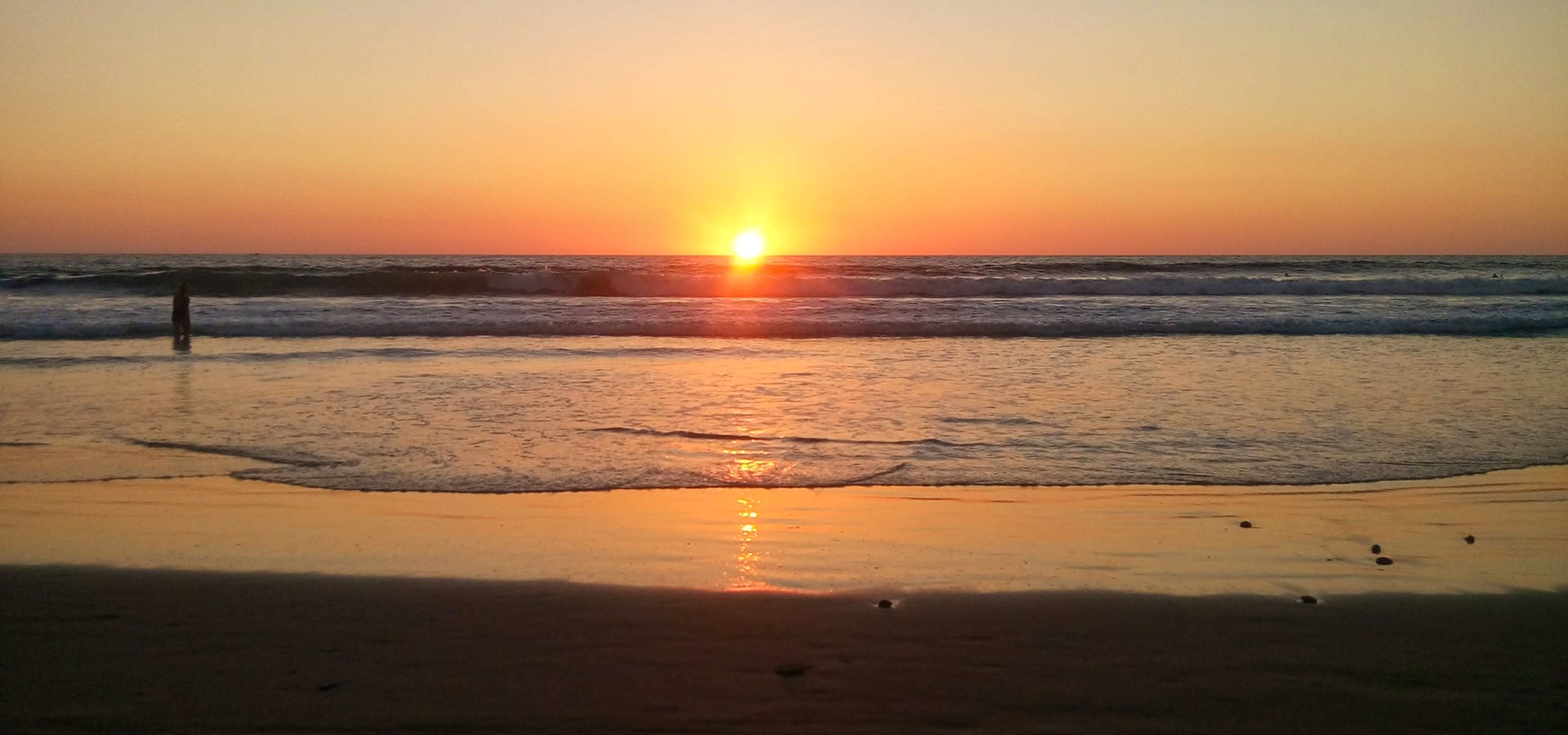
MONTANITA
South America's most concentrated backpacker surf town sits 3h north of Guayaquil — Montañita pairs a long left point at La Punta with warm 24°C water year-round.
About Montanita
Montañita is a former fishing village on Ecuador's Ruta del Sol, 3 hours north of Guayaquil and 200km south of the equator — the closest-to-equator surf town with a real point break. The signature wave is La Punta, a long left-hand point that peels at the north end of the beach on a clean SW swell.
Inside that, La Pared offers a mellower rock-bottom section. The town hosted the ISA World Surfing Games in 2014 and 2016, cementing its place as the heart of Ecuadorian surf culture.
Surf level
| Skill level | Jan-Feb | Mar-Apr | May-Jun | Jul-Aug | Sep-Oct | Nov-Dec |
|---|---|---|---|---|---|---|
| Beginners | ||||||
| Intermediate | ||||||
| Advanced |
- Best time to go
- Good time to go
- Ok time to go
- Less desirable time to go
- Not recommended time to go
Weather & Travel Comfort


| Metric | Jan-Feb | Mar-Apr | May-Jun | Jul-Aug | Sep-Oct | Nov-Dec |
|---|---|---|---|---|---|---|
| Weather | ~23–27°C | ~23–27°C | ~22–26°C | ~20–25°C | ~20–25°C | ~21–26°C |
| Rainy days | 12d | 13d | 8d | 3d | 4d | 4d |
| What to Pack |  Water Temperature~26°C Water Temperature~26°C | Water Temperature~26°C | Water Temperature~25–26°C | Water Temperature~23–24°C | Water Temperature~23°C | Water Temperature~24–25°C |
- Boots if neededFor cold water or reef breaks
- Full protection wetsuitCold water
- Shorty / springsuitMild conditions
- No wetsuitWarm water
Tips for Surfing Montanita
Ecuador's Pacific party town fires June through September on SW swell at La Punta, with summer months staying mellow for beginners at Olón fifteen minutes north. The four tips below cover lessons, the SW season window, and La Punta's small lineup etiquette.

Beginners go to Olón
Beginners: head to Olón Beach, 15min north. Surf Shak lessons run 2 hours.

Chase the SW Season
Surf June–September for prime SW swell at La Punta — summer months stay 2–4ft.

Wetsuit by Season
Boardshorts and rashguard all year. Add a 2mm shorty June–September when water hits 23°C.

Ask Before La Punta
La Punta's lineup is small — ask a local who's up before paddling inside.
Frequently Asked Questions
When is the best time to surf in Montañita?
Skill drives the answer. Beginners score year-round at Olón and Manglaralto, with the calmest conditions running January to April when surf sits at 2–4ft. Intermediates peak October to April — clean shoulder swell, warm 25–26°C water, fewer crowds. Advanced surfers come June through September for the prime SW season, when La Punta and Las Tunas hold 4–8ft on stacked Pacific swell.
Is Montañita good for beginners?
Yes — and year-round. Olón Beach, 15 minutes north, is a wide sandy beach with multiple sand-bottom A-frames and gentle whitewater that suits whole sessions. Manglaralto, immediately south, is a protected pocket beach that schools also use. Avoid La Punta and Las Tunas in your first week: both are rock or reef, and La Punta's small lineup expects rotation discipline from anyone paddling for the inside.
How big do the waves get in Montañita?
Waves run 2–4ft most of the summer (December–April) and 4–8ft on the prime SW season from June to September. La Punta holds head-and-a-half lefts on the right pulse and occasionally pushes double-overhead on stacked Pacific swell. Las Tunas, 30 minutes south, picks up similar size on its right reef. Small days send everyone to Olón Beach and the inside section at La Pared.
Do I need a wetsuit to surf in Montañita?
Mostly no. Water sits between 23°C and 26°C year-round, so boardshorts and a rashguard cover most sessions. From June to September, when the Humboldt current cools the water to 23°C, a 2mm shorty is comfortable for dawn surfs and longer sessions. Hood, gloves and boots are not used here. The rashguard is the priority — equatorial sun is intense even on overcast mornings.
How do I get to Montañita from Guayaquil?
Take a CLP Reina del Camino coach from Guayaquil's main terminal to Santa Elena — buses run roughly every 30 minutes, the trip takes about 3h 30min, and tickets cost around US$5. A local ruta bus then runs the final stretch into Montañita. A private taxi or shuttle direct from Guayaquil airport costs US$80–US$120 and takes 3 hours. Manta airport (2h 30min north) is the alternative if flying from Quito.
Where should I stay in Montañita for surfing?
Stay near La Punta at the north end of town for a 5-minute walk to the point and quieter nights — best pick for dawn-patrol surfers. The village centre puts you on Calle de los Cocteles with its 30+ cocktail bars, but expect noise until 4am. Olón, 15 minutes north, is the calm family option with wide sandy beach, lower rates and easy taxi access back to Montañita for dinner and lessons.
The Ultimate Guide to Surfing in Montanita
What makes Montañita unique
Montañita sits on Ecuador's Ruta del Sol, the Pacific coastal highway, 3 hours by road north of Guayaquil and roughly 200km south of the equator. Locals — with reason — call it the closest-to-equator surf town with a genuine point break. A tiny fishing settlement until the early 1980s, it grew into South America's most concentrated backpacker surf town inside a decade and now defines coastal-Ecuador surf culture. The signature wave is La Punta, a long left-hand point that peels at the north end of the village beach on a clean southwest swell. The ISA World Surfing Games landed here in 2014 and 2016, and the annual ISA Aloha Cup and other regional events frequent the same lineup. For surf trips into Ecuador, Montañita is almost always the first stop — and for many travellers, the only one.
Montañita surf spots by skill level
La Punta is the marquee. A long, peeling left-hand point at the north end of Montañita beach that holds head-to-double-overhead on a clean SW swell, breaking over a rock-and-sand bottom. Peak season runs June to September. Intermediate to advanced — the lineup is small and territorial, so sit wide and watch the rotation before paddling for the inside.
La Pared is the inside section south of La Punta — a smaller, mellower wave over rocks that handles overflow when the point gets crowded. Intermediate.
Olón Beach is the beginner basecamp, 15 minutes north of town. A wide sandy beach with multiple A-frame sand-bottom peaks and gentler whitewater that suits whole-session learning. Beginner-friendly.
Manglaralto is the protected pocket beach immediately south of Montañita — short paddle, mellow shape, also a solid school option. Beginners.
Las Tunas is a right-hand reef break 30 minutes south of town. Hollower, less forgiving, and best on a solid SW pulse. Intermediate to advanced.
Ayampe, an hour north, is a quiet long sandy beach with mellow A-frames — the calm alternative when Montañita's nightlife gets too loud. Beginner to intermediate.
San José rounds out the menu south of town as a quieter overflow option. Intermediate.
When to surf Montañita: month-by-month
Note the southern hemisphere: January and February are summer, July and August winter. June to September is the prime SW season — waves run 4–8ft on stacked Pacific swell, La Punta lights up daily, and the Humboldt current cools water to 23°C. Humpback whales migrate past the coast through these months and are regularly spotted from the lineup. October to December transitions: 3–5ft surf, water climbing back to 25°C, fewer crowds, and clean morning conditions before the onshore. January to April is the wet, warm season — 2–4ft mellow surf, 26°C water, beginner-perfect at Olón and Manglaralto, and rideable points before mid-morning. May is the swing month, with swell rebuilding and the first real SW pulses arriving.
Where to stay in Montañita
Montañita town centre is the obvious pick if nightlife and walkable everything are part of the trip — the famous "Calle de los Cocteles," a single block of 30+ cocktail bars, runs through the middle of the village and stays loud until 4am. The north end of town near La Punta is quieter, puts the point break a 5-minute walk away, and suits dawn-patrol surfers. Olón, 15 minutes north along the beach road, is the calm family option — wide sand, lower nightly rates, and easy taxi access back into town for dinner.
How to get to Montañita from Guayaquil
The closest airport is Guayaquil José Joaquín de Olmedo (GYE), about 3 hours south. The cheapest route is a CLP Reina del Camino coach — buses run roughly every 30 minutes from Guayaquil's main terminal to Santa Elena (around US$5, 3h 30min total), then a short local ruta bus into Montañita. Private taxi or shuttle from Guayaquil airport runs US$80–US$120 and takes 3 hours direct. Manta (MEC), 2h 30min north, is a useful alternative if you fly domestic from Quito. Once in town, every break south or north of Montañita is reachable by a 5–60 minute local bus or shared taxi.
Surf schools, gear rentals and local culture
Three operators anchor the lesson market: Surf Shak, Otra Ola Surf School and Balsa Surf Camp Montañita — Ola Wave Surf School is a fourth solid pick. Group lessons typically run US$25–US$40 for 2 hours including board and rashguard. Soft-top rentals are US$10–US$15 per day; performance shortboards US$20–US$25.
The surf history matters here. Manuel "Pato" Carrera, an early-1980s pioneer, is widely credited with bringing competitive surfing to Ecuador, and Montañita has carried that identity ever since — backpacker, surf, party, in roughly that order. The lineup at La Punta still operates on small-town rules: eye contact, ask who's up, and earn your rotation before paddling for the inside. Get that right and the wave count opens. Burn a takeoff and the trip turns awkward fast. For broader context on Ecuador's coastal surf zones, see Visit Ecuador and the Lonely Planet Ecuador Pacific Coast guide.