

CHICAMA
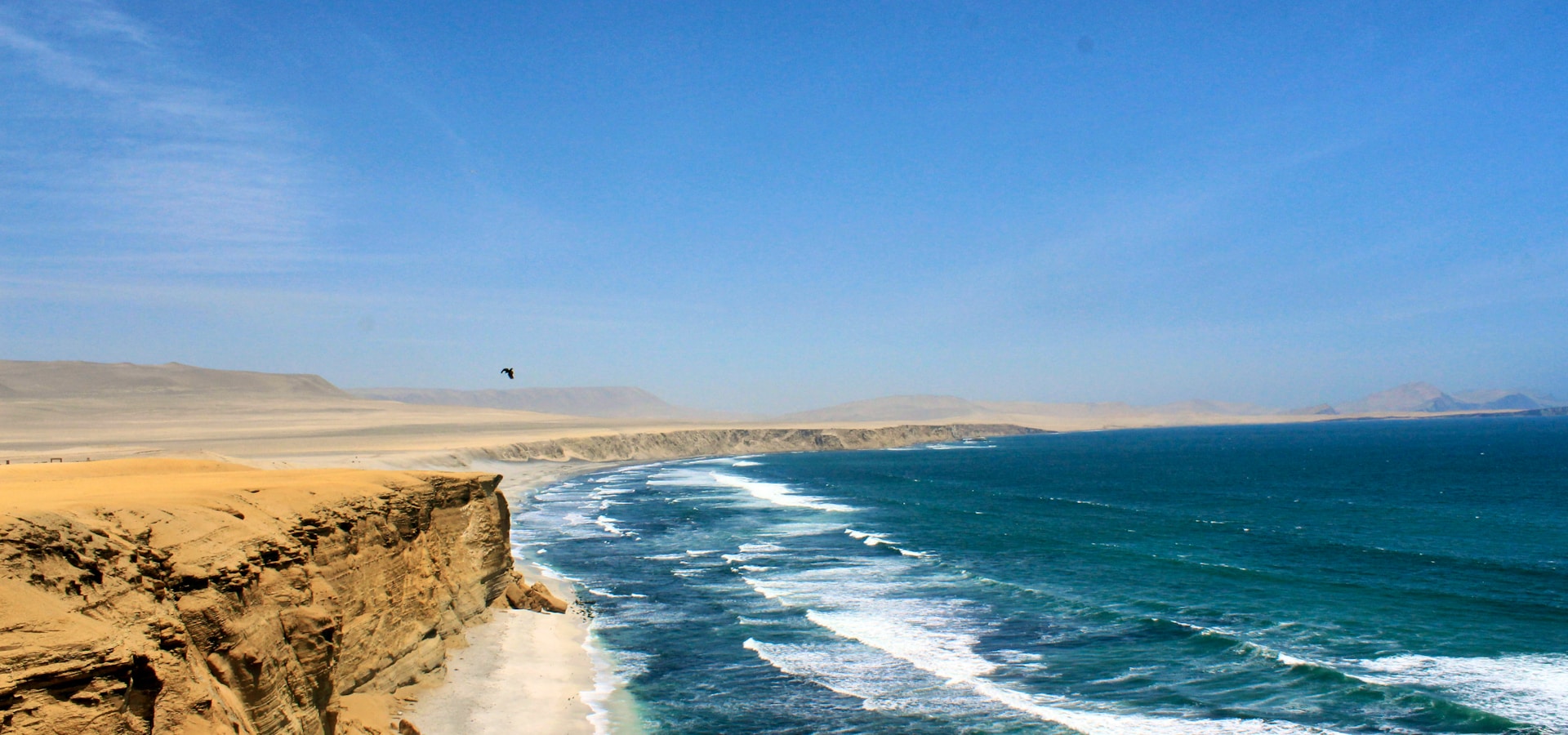
The longest left-breaking wave on earth runs up to 4km across four named point sections — Chicama sits 70km north of Trujillo on Peru's cold Humboldt desert coast.
About Chicama
Chicama holds the official record for the longest left-breaking wave on earth, with rides claimed up to 4km on a clean SW Antarctic swell. The wave breaks across four sequential point sections 70km north of Trujillo on Peru's desert coast — locals call the full ride 'the marathon'.
Punto is the workable middle section most visiting surfers ride, while El Cape at the top hands out heavy first take-offs to advanced surfers only. Cold Humboldt-current water keeps the lineup honest despite sitting 7° south of the equator.
Surf level
| Skill level | Jan-Feb | Mar-Apr | May-Jun | Jul-Aug | Sep-Oct | Nov-Dec |
|---|---|---|---|---|---|---|
| Beginners | ||||||
| Intermediate | ||||||
| Advanced |
- Best time to go
- Good time to go
- Ok time to go
- Less desirable time to go
- Not recommended time to go
Weather & Travel Comfort


| Metric | Jan-Feb | Mar-Apr | May-Jun | Jul-Aug | Sep-Oct | Nov-Dec |
|---|---|---|---|---|---|---|
| Weather | ~20–25°C | ~19–25°C | ~17–22°C | ~15–21°C | ~15–21°C | ~17–23°C |
| Rainy days | 9d | 10d | 1d | 0d | 1d | 2d |
| What to Pack |  Water Temperature~20–21°C Water Temperature~20–21°C | Water Temperature~21–22°C | Water Temperature~18–20°C | Water Temperature~16°C | Water Temperature~16–18°C | Water Temperature~19–20°C |
- Boots if neededFor cold water or reef breaks
- Full protection wetsuitCold water
- Shorty / springsuitMild conditions
- No wetsuitWarm water
Tips for Surfing Chicama
Northern Peru's longest left fires at El Hombre by dawn before onshore wind ruins it by 11am. The four tips below cover beginner-friendly inside sections, the 5:30am moto-taxi up the point, and why you should never paddle Punto alone.

Beginners Ride El Hombre
Paddle out at El Hombre inside section. Lessons run US$30–US$45 for two hours.

Dawn Patrol Or Bust
Onshore wind blows the wave out by 11am — book a 5:30am moto-taxi up.

Cold Humboldt Wetsuit
Water 15–22°C: 3/2 fullsuit May–November, 2mm shorty December–April for warmer months.
Never Surf Alone
Multiple kilometres of empty water at Punto — partner up and watch for offshore upwellings.
Frequently Asked Questions
When is the best time to surf in Chicama?
Skill drives the answer. Beginners score January to April at El Hombre, when 3–5ft inside reform and 20–22°C water make for forgiving sessions. Intermediates peak March to October at Punto, when consistent SW swell builds long workable walls. Advanced surfers come May to September for 6–12ft SW Antarctic pulses on Keys and El Cape. Note the Southern Hemisphere — May, June and July are winter, and that is the prime swell window.
Is Chicama good for beginners?
Yes — at the right section. El Hombre, the fourth and innermost section, mellows into the bay with sand-bottom whitewater and a friendlier shoulder when the swell is 3–5ft. Schools run from the surf hotels January through April when water is warmer. Avoid El Cape and Keys until you are confidently riding green waves: those upper sections break over rock-shelf bottom and the take-off zone at El Cape is shallow and fast.
How big do the waves get in Chicama?
Waves run 3–6ft most of the year and 6–12ft on the prime SW season from April to October. Punto holds clean head-high lefts on every solid swell, Keys turns on at overhead-plus and connects through to El Cape on the biggest pulses, and Hombre Solo absorbs advanced size south of town. Flat days happen — Chicama needs SW Antarctic swell to wrap onto the points, so check the forecast before flying.
Do I need a wetsuit to surf in Chicama?
Yes, year-round. The cold Humboldt current keeps water 15–22°C despite the 7°-south latitude. A 3/2 fullsuit covers May through November when water sits at 15–18°C. A 2mm shorty handles December through April when the water climbs to 19–22°C. Pack the warmer suit if in doubt — offshore upwellings can drop the temp 3–4°C in one session.
How do I get to Chicama from Lima?
Fly Lima to Trujillo (TRU) on LATAM or Sky Airline — about 1 hour, around US$60–US$120 one-way. Book a hotel transfer for roughly US$25 per person and you reach the point in 1h 15min. Budget option: a combi-van from Trujillo's Santa Cruz terminal costs around PEN 8. From Lima direct, Cruz del Sur runs an 8-hour overnight bus from PEN 80.
Where should I stay in Chicama for surfing?
Stay in Puerto Chicama (Malabrigo) village above the point — every surf-focused trip works best here. The Chicama Surf Hotel and Hotel El Hombre sit directly above Punto and Keys with sea-view rooms for swell-watching. Chicama Surf Resort is the higher-end pool-and-restaurant option a short walk back from the cliff. Trujillo, 1h 15min south, is the alternative if you want city food and Moche archaeology, but you lose dawn-patrol access.
Other regions in Peru
The Ultimate Guide to Surfing in Chicama
Why Chicama works for left-handers
No other wave on the planet runs as long as Chicama. On a clean April-to-October SW Antarctic swell, surfers link four sequential point sections — El Cape, Keys, Punto and El Hombre — into a single ride that has been measured up to 4km from take-off to kick-out. Locals call the full link-up 'the marathon', and it is the entire reason every long-board left-hander on earth has Puerto Chicama on a list. The wave sits 70km north of Trujillo on the desert north coast of Peru, in front of a working artisanal fishing port where caballitos de totora — reed canoes used since the Moche civilization between 100 and 800 CE — still launch from the same beach. The cold Humboldt current keeps water at 15–22°C despite the 7°-south latitude, which is why the lineup never feels Caribbean even on a 30°C summer afternoon. Carlos Dogny's protégé surfers identified the wave in 1965, but the remoteness kept it off the global map for decades. That same remoteness is why a five-day trip here can still mean an empty 1km wall to yourself.
Chicama surf spots by skill level
Chicama is one wave broken into named sections, plus a separate point break south of town.
El Cape (also called Malpaso) is the northernmost section and the heavy first take-off. SW swell hits the rock shelf, throws a fast wally bowl, and feeds into Keys if you make the section. Advanced only — the take-off zone is shallow and the inside lip throws.
Keys is the second section, faster and racing, with a long workable wall on solid swell. Best on overhead-plus SW. Intermediate-to-advanced.
Punto ('The Point') is the long middle section and the most-rideable wave for visiting surfers. Mellower shoulder, sand-and-cobble bottom, peels for several hundred metres on every clean swell. Intermediate. Most moto-taxi paddle-outs drop here.
El Hombre is the inside fourth section that mellows into the bay before the harbour. Smaller, friendlier whitewater, sand bottom on the inside. Beginner-friendly when small.
Cherry is the softer overflow section that runs on bigger swells when the upper points overload. Intermediate.
Hombre Solo is a separate point break south of Chicama town that holds advanced size when the main wave is too big — short, hollow, advanced.
When to surf Chicama: month-by-month
Note the Southern Hemisphere — May, June and July are winter, and that is when the SW Antarctic engine is at full strength.
April to October is the prime season. SW swell stacks in, waves run 6–12ft on the bigger pulses, water sits 15–18°C, and the air feels desert-cool at 21–23°C. Expect the lineup at Punto to fill within an hour of dawn on a forecast day, but unlike Indonesia or Hawaii the 'crowd' rarely tops 25 surfers. November and December are the shoulder — 3–6ft swell, water climbing toward 19–20°C, fewer surfers, longer flat windows between pulses. January to March flips warm: 19.8–21.8°C water, 24–25°C air, smaller 3–5ft swell, and rainy-season humidity inland (though the coast itself stays dry — only 7–14 rainy days per month). This is the window for beginners who want to learn at El Hombre without 4mm rubber. Flat days happen all year — the wave needs swell to wrap onto the points.
Where to stay in Chicama
Puerto Chicama (Malabrigo) village is the obvious pick. The cluster of surf hotels sits directly above the point, with windows looking out at Punto and Keys — you can read the swell from your bed. The long-running Chicama Surf Hotel and Hotel El Hombre anchor this strip. Chicama Surf Resort is the higher-end pool-and-restaurant option a short walk back from the cliff. Surfari Chicama runs a smaller surf-camp model with package deals. Outside the village there is essentially nothing — Puerto Chicama is a fishing town of around 5,000 people and the surf accommodation is the tourism economy. Trujillo, 1h 15min south, is the alternative if you want city food and the Moche archaeology, but you sacrifice dawn-patrol access to the wave.
How to get to Chicama from Lima
Fly Lima to Trujillo (TRU) on LATAM or Sky Airline — the flight runs about 1 hour and tickets sit around US$60–US$120 one-way. From Trujillo airport, most surfers book a hotel transfer for around US$25 per person, which lands you at the point in 1h 15min. Budget option: take a combi-van from Trujillo's Santa Cruz terminal to Puerto Chicama — they leave roughly every 30 minutes and cost around PEN 8 (about US$2) for the 90-minute ride. From Lima direct, Cruz del Sur runs an 8-hour overnight bus to Trujillo from around PEN 80, then connect by combi or transfer.
Surf schools, gear rentals and local culture
Chicama is unique in one way you should plan around: you can take a moto-taxi up the point and paddle out at the section that suits your level — locals call this 'going up the point'. A ride costs PEN 5–10 and saves a 30-minute paddle. The afternoon onshore wind blows the wave out by 11am, so dawn patrol is mandatory; sleep early. Multiple kilometres of empty water sound dreamy until you cramp up — never surf alone, and watch for the freezing offshore upwellings that occasionally drop water 3–4°C in a single morning. Board rentals at the surf hotels run around US$15–US$25/day for longboards, US$20–US$30/day for fish and shortboards. Pair the trip with the Moche-era Huaca de la Luna ruins 1h south near Trujillo for one of the best surf-plus-archaeology combinations on the continent — see Lonely Planet's North Coast guide and the Visit Peru tourism board for context. The wave was added to Save The Waves advocacy lists as a protected surfing reserve under Peruvian law in 2013 — the first surf wave on earth granted that legal protection.